RSS
Showing posts with label garner. Show all posts

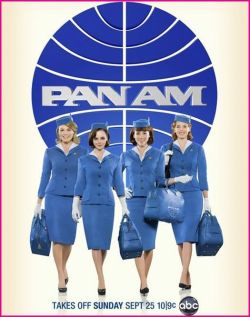
THE SKED'S MIDSEASON RETURN: "Pan Am"


Although nothing is likely to be official until May, the odds are that PAN AM is heading into its final landing.  The series received a short back order from ABC, and will be off the air after February, when Good Christian Bitches (or whatever they're calling it this week) will take its Sunday 10PM slot.  Nevertheless, the studio and producers can still hope for the best, so let's see how the series returned from its winter break.

WHERE WE LEFT OFF:  The team was very busy in London:  Colette (Karine Vanasse) had finally hooked up with pilot Dean (Mike Vogel); budding photographer Laura (Margot Robbie) would have become involved with First Officer Ted (Michael Mosley) if only he hadn't reacquainted himself with a pretty old family friend (played by Ashley Greene, from the Twilight movies); lefty Maggie (Christina Ricci) found herself attracted to a Republican congressman and managed to burn down his hotel room, but in a cute way (don't ask); and most dramatically, stewardess/part-time CIA and MI6 agent Kate (Kelli Garner) killed an opposing agent in the course of a mission.


WHERE WE ARE:  All the previous episode's plotlines moved forward.  The Dean/Collette relationship was set asunder by the reemergence of the original stewardess/part-time CIA and MI6 agent Bridget (Annabelle Wallis), whom Dean at first resisted but then, after she confessed all, fell into the arms of.  Ted continued to fall for Greene, much to Laura's heartbreak (although the promo for next week made pretty clear why Ted's new relationship won't be lasting very long).  Maggie couldn't help herself from giving into her attraction for the Republican, who had such an inspiring back-story that he may turn up on the New Hampshire primary ballot on Tuesday.  And Kate successfully passed a polygraph even though she was lying about not having shot the other agent, and after insisting she wanted out of the spy business, she only needed a short MI6 pep talk before throwing herself back into it.

Pan Am is more likable than plenty of shows on network air, and it has an exceptionally charming cast and great production values.  But it's never found a reason to exist, or a straightforward tone.  The mix of glossy romance and Cold War spy story has now had half a season to fit together without ever coming close, and the retro 60s setting (tonight featured sore-thumb references to the Beatles and the start of Robert Redford's Broadway career) has had no point of view other than cutesy nostalgia.  Pan Am has had everything a show needs to work except a strong creative voice, and that was the one thing it needed most.

It'll be a bit of a shame to see the series go--based on its pilot, Good Christian Bitches looks strident and buffoonish in comparison--but one can't really say that a TV treasure is being lost.  Pan Am never mastered its own flight plan.

  • Digg
  • Del.icio.us
  • StumbleUpon
  • Reddit
  • RSS

THE SKED'S PILOT + 1 REVIEW: "Pan Am"


A lot can happen between the creation of a TV pilot in the spring and production of episodes for the regular season:  a writing/producing team is hired, audience focus groups weigh in, networks and studios (which may have had their own turnover in the off-season) give plenty of notes, both helpful and otherwise, and critics begin to rear their ugly heads.  The results can include changes to tone, pace, casting and even story.  Here at THE SKED, we're going to look past the pilots and present reviews of the first regular episodes of this year's new series as well.

Previously... on PAN AM:  In the early 1960s, 4 stewardesses fly glamorously from continent to continent, hungry for adventure and juggling personal issues.  Maggie (Christina Ricci) is a Greenwich Village intellectual who puts on the Pan Am girdle to see the world; Colette (Karine Vanasse) has been having an affair with a married man; and Kate (Kelli Garner) and Laura (Margot Robbie) are sisters--Kate helped her younger sibling escape the conformity of her wedding day, but the two have jealousy issues.  Also, a fifth stewardess named Bridget (Annabelle Wallis) has vanished, and it turns out she's been working for the CIA and MI5 as a spy--and now Kate is her replacement.


Episode 2:  A very smooth flight, all things considered.  The main change from the original version of the pilot is that Dean, the pilot at the head of our heroines' crew, has been recast with Mike Vogel--he's fine, but this show belongs first and foremost to its women.  Also, as with last week's Charlie's Angels, ABC moved this episode up from being 3d to air to 2d, which since Pan Am is somewhat serialized, required some deft editing to avoid references to things we won't see till next week. (This presumably means we shouldn't get our hopes up for the quality of next week's episode.)

Pan Am is very much the airline that the men of Sterling Cooper would fly on their expense account business trips (before they became the more budget-conscious Sterling Cooper Draper Pryce):  sleek, luxurious and loaded with beautiful, interesting women.  The second (or "second") episode, written by series creator/Executive Producer Jack Orman and Producer Mike Daniels, and directed by Christopher Misiano (like Orman, a veteran of ER), follows the flight plan of the pilot, with the first two-thirds set on an overseas flight (this time to Paris) interspersed with a few flashbacks, and the last 20 minutes in the city itself

The episode resolves several of the stories set up in the pilot, while setting up some new ones.  Kate's spy intrigue this time leads her to a reunion with Bridget, who explains that she had been compromised on a previous mission and now has to go into the spy equivalent of witness protection with a new identity (presumably taking her out of the show); meanwhile, now that Dean, who had been in love with Bridget, and Colette, who's done with her married boyfriend, are both single, the two of them seem aimed for romance.  In the other main plotline, Kate and Laura's mother shows up as a passenger on the flight, and she's brought Laura's ex-fiance to Paris.  By episode's end, Laura has told her ex that the two of them are really over, and Kate and her mother have had a heart-to-heart.  There's also a nod to Mad Menesque sexual mores when a boozy passenger makes a pass at Maggie and she stabs him with a fork.

It's likely to take a bit of time for Pan Am to balance its triple goals of telling soapy stories, mixing in some espionage, and tackling the changing era of the 60s.  Right now, it's an uncertain mix--the spy story feels like it was carried in bodily from another show, and any time the series invites direct comparison to Mad Men, it's asking for trouble.  Also, both the pilot and initial episode weirdly underuse Christina Ricci, who's supposed to be the star of the ensemble.  Still, the show is entertaining enough to make its bumpy take-off endurable.  The women are far less bluntly drawn than their parallels on The Playboy Club, and there's some bright dialogue and breezier storytelling. The production design and photography are pure pleasure to watch, perhaps not achieving the stunning artistry of, yes, Mad Men, but far more accomplished than Playboy Club.

Pan Am got off to a good ratings start last week, and we'll know soon enough how many passengers boarded for the connecting flight.  So far, it's one of the season's higher-flying new dramas.

Original Verdict:  If Nothing Else Is On...

Pilot + 1:  Gaining Altitude

  • Digg
  • Del.icio.us
  • StumbleUpon
  • Reddit
  • RSS

THE BIJOU @ TIFF: "Butter"

Jim Field Smith's comedy BUTTER, which premiered at the Toronto Film Festival, ambitiously makes a play for both the heartwarming indie Little Miss Sunshine audience and the satire-minded Election crowd.  That may be one play too many, but the movie is worth seeing anyway.


Jason A Micallef's first produced script is set in the unfamiliar (for those of us not hailing from the midwest, at least) world of competitive butter sculpting.  In the small Iowa town where the story is set, Bob Pickler (Ty Burrell) is a local legend, winner of the local contest for 15 consecutive years as the creator of epic artworks that include a life-size recreation of Da Vinci's "Last Supper" and another inspired by Schindler's List.  Bob is so unbeatable, in fact, that his town has decided, in the most respectful possible way, to disqualify him from further competition.  

This is unacceptable to Bob's wife Laura (Jennifer Garner, essentially playing Reese Witherspoon's Election character in middle age), an unstoppable engine of ambition; when it becomes clear that Bob really won't be allowed to compete, Laura decides to enter the fray herself.  Her competition consists of Bob's biggest fan (Kristen Schaal), a stripper with a very specific grudge against the Pickler family (Olivia Wilde)--and most dangerous of all, a preternaturally composed 10-year old African-American foster child not accidentally named Destiny (Yara Shahidi).  When it becomes clear that Destiny has a natural gift for butter sculpting, for Laura the war is on.

When Butter sticks to the personalities of the butter sculptors and those around them, it can be very funny and even heartfelt; it sometimes recalls Michael Ritchie's 1976 smalltown beauty pageant gem Smile.  Destiny's wary relationship with her new foster parents (Rob Corddry and Alicia Silverstone) is lovely; Shahidi is charming,  and Corddry may be indie film's most lovable dad since J.K. Simmons in Juno.  (The two of them have an irresistible bit--you can see it's improvised in the outtakes that accompany the end credits--where Corddry tries to help the girl gather the courage to enter the contest by trading the most horrible possible outcomes with her.)  Olivia Wilde has all the best lines (not to mention the best storyline) as the stripper, and she's got genuine comic spark to go along with her almost-invisible outfits.  Burrell pretty much plays his Modern Family part (not that there's anything wrong with that), and Hugh Jackman turns up late in the game and overplays his silly part, but Garner--also a producer of the film--seizes her role by the throat and plays her with absolute conviction, fully realizing both Laura's fiendishness and the desperation that drives her.  

Butter gets into trouble when it tries to shoehorn itself into political allegory.  (Instead of Smile, its model seems to become Nasty Habits, a 1977 flop that transferred Watergate into a nunnery.)  The picture's opening sequence pushes the parallels hard, with Garner instantly identifiable as a Palin/Bachmann clone, and after establishing Bob Pickler as an apolitical blank, having him mix his DaVinci and Spielberg sculptures with a Newt Gingrich portrait feels like an out-of-character gag.  Smith's only other feature film was the cruddy comedy She's Out Of My League, and subtlety isn't his strong point--giving him material that calls for a "You get it?  Do you get it?" emphasis is a bad idea.  (There's also a clumsily obvious post-production alteration to the third-act plot, effected with voice-over narration.  It's easy enough to see why the change was made--the eternal Hollywood need for characters to be likable--but it weakens the story, and the slipshod way it's been done doesn't help.)

Butter is a mixed bag, and its efforts to Make A Statement tend to melt away more often than they work.  When the movie is content to simply depict its slightly mad millieu and daffy characters, though, it's a sharp, satisfying entertainment.

  • Digg
  • Del.icio.us
  • StumbleUpon
  • Reddit
  • RSS

ARTHUR: 12-Step Programmer


Watch It At Home.

Were the executives at Warner Bros so desperate to be in business with Russell Brand that they huddled together in a conference room one day, frantically going through their library titles in search of alcoholic lead roles he could play?  ("Days of Wine and Roses... a little dark.  Clean and Sober... no, that's coke--too edgy.  Who's Afraid of Virginia Wolff... not quite yet.")  The new remake of ARTHUR only exists because playing drunks is what Brand does; it's not as though they were going to make the picture with Lindsay Lohan if he turned it down (although that might have been a more interesting movie). 

Even in 1981, Arthur was an anachronism, a throwback to the screwball comedies of the Depression era in which very rich people often lost their dignity but never their wit.  It was an enormous hit--$95M in the US alone, and those were 1981 dollars--and was the only film written and directed by Steve Gordon, who died just a year later at the tragically young age of 43.  (He was long gone in 1988 when the dreadful sequel Arthur On the Rocks came and went.)   It provided Dudley Moore with his signature role and John Gielgud with a lifetime achievement Oscar, as well as winning another for the inescapable Christopher Cross song.  

Both the original and the remake tell the same basic story:  Arthur is a not-so-young man born to a huge family fortune; he's spent his entire life drinking and carousing, chronically irresponsible but also, at the core, utterly likable.  His family pushes him to marry an equally wealthy woman, and it's just then that he meets the poor girl of his dreams, forcing him finally to grow up.  In the new version, there are some notable gender switches:  the butler who's cared for Arthur all his life (Gielgud) is now a nanny (Helen Mirren), and the parent
forcing Arthur into marriage is likewise his mother rather than his father.  A few supporting characters have been dropped, like Arthur's grandmother and the poorer girl's dad. The role of Arthur's enforced fiancee (Jill Eikenberry before, now Jennifer Garner) has been greatly expanded--she didn't even enter the original film until the halfway point--presumably to make the role appealing to someone of Garner's stature.  And some concession has been made to political correctness, as Arthur now eventually has to attend AA meetings as the price for being gleefully drunk, and even tries to work for a living when he decides to give up his fortune for love.


None of these changes are necessarily damaging in Peter Baynham's script.  But comedy is a fragile thing, and under the direction of Jason Winer (a TV veteran whose credits include the terrific pilot for "Modern Family"), the new film doesn't capture the fizz or charm of the original.  In 1981, the comedy was founded on classic New York verbal wit, and marvelous supporting players showed up in practically every scene (when Arthur buys some flowers, the florist is Lou Jacobi).  The love of Arthur's life was Liza Minnelli's Linda, a fast-talker not above shoplifting; she's transformed into Greta Gerwig's Naomi, who's been made idealistic and salt-of-the-earth (the police cite her only because she gives unauthorized, sentimental tours of the city), draining her of all humor.  Gerwig deserves better:  she comes from the mumblecore school of improvisational film and was the best thing in Noah Baumbach's Greenberg; here she mostly looks puzzled.   Mirren is, as always, impeccable, and she has better chemistry with Brand than either Gerwig or Garner, but she isn't permitted to be the implacable snob that Gielgud was, and softening the character dulls the movie out.  Garner's been given a lot of not particularly funny broad humor (in an odd shift, the original Arthur loved horses, while here Garner forces a terrified Brand to ride with her), and Nick Nolte as her bullying father (Stephen Elliott in 1981) is close to embarrassing.


But of course Arthur is all about Arthur, and the film rests on that actor's back.  Dudley Moore's performance was dotted with lovely grace notes and superb physical comedy; the delicate way he balanced a glass of Scotch on a rounded car bumper and checked if it was safe is a lesson in off-hand balletics.  Brand is essentially doing a PG13 version of the same guy he played in Forgetting Sarah Marshall and Get Him To the Greek (he's in danger of turning into Foster Brooks), and even though he gets his laughs, there's not a single surprising moment in his performance.  Worse, we never believe in the soulful innocence of his Arthur underneath it all--he just seems cynical and flip.  Brand gives us the TMZ version of Arthur.

A great comic structure is no small thing, and Arthur is far from unpleasant to watch, particularly when Mirren and Brand play off one another.  It's a decent enough piece of studio entertainment.  This time, though, too much gets in the way between the moon and New York City. 

(ARTHUR - 110 min. - Warners - PG 13 - Director:  Jason Winer - Script:  Peter Baynham - Cast:  Russell Brand, Helen Mirren, Greta Gerwig, Jennifer Garner, Nick Nolte - Wide Release)

  • Digg
  • Del.icio.us
  • StumbleUpon
  • Reddit
  • RSS