THE TWILIGHT SAGA - BREAKING DAWN PART 1: Watch It At Home - The Saga Sags In Slow Prelude To The End
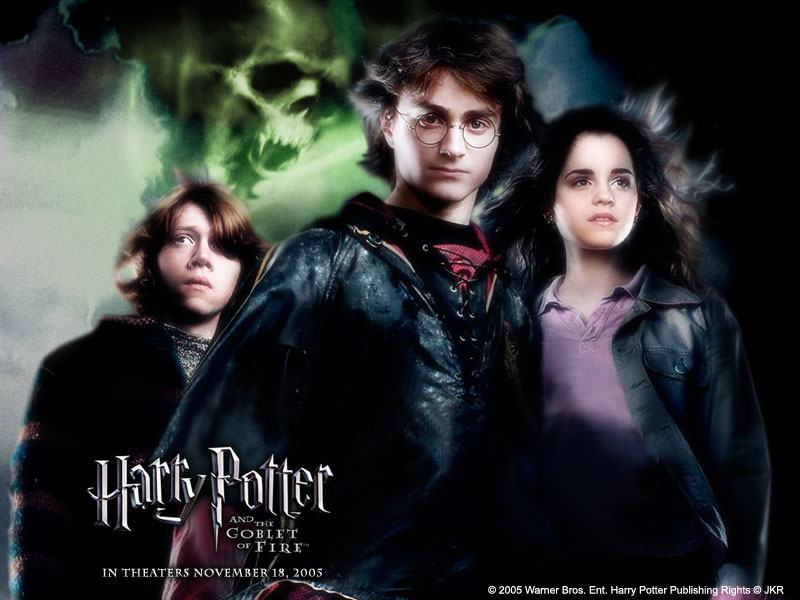
The worldwide phenomenon that is Twilight often finds itself compared to Harry Potter, and for obvious reasons: both are multi-film, multi-billion dollar franchises aimed at young audiences and telling a single continuous story. The two series, however, are more different than they are similar: even leaving aside evident disparities in quality, the Potter films, like J. K. Rowling's novels, are crammed with plot, character and mythology, such that when Warners made the decision to split the final Potter novel into 2 feature-length films, the only disappointment was that even with 4 1/2 hours of screen time, there was still plenty in the book that had to be left out.
This appears not to have been the case with Stephenie Meyer's final Twilight novel, because until things liven up in the last half hour or so, BREAKING DAWN PART 1 is a long, slow slog through the romantic lives of everyone's favorite supernatural threesome, Bella, Edward and Jacob (in case names are needed, respectively Kristen Stewart, Robert Pattinson and Taylor Lautner). The first half of the movie is almost exclusively concerned with the marriage and honeymoon of the Cullens, as Bella continues to practically vibrate in her impatience for vampiric sex and Edward continues to put off her loss of virginity for as long as inhumanly possible. Finally he gives in on the private island where the two are honeymooning, and while the PG-13 rating doesn't permit us to see more than a tiny bit of what happens, the indications are that he just barely manages to restrain himself from killing her in the act--much, by the way, to her satisfaction.
 A great deal has been written, of course, about Meyer's metaphoric treatment of virginity and her equivalence in the novels of premarital sex with death, and Breaking Dawn 1 makes that even more uncomfortable, mixing in implications of rough sex that results in Bella being covered in bruises that only leave her hungry for more (the kind of bruises that disappear entirely, to be sure, once Bella wants to don a sexy negligee). Then we move on to a weird anti-abortion screed, as Bella instantly becomes supernaturally pregnant, and refuses to end the pregnancy despite the fact that the demon child is literally eating her alive from the inside. (Even though she's not a vampire herself, Bella has to drink human blood to keep the little fetus--baby, an apparently pro-life vampire insistently corrects another--happy.) But however disquieting this particular story's messages may be, the fact is that the horror genre will always be a landing place for queasy allegory, as everything from David Cronenberg's films to American Horror Story can testify.
Once Edward and Bella hurry home to tend to her dangerous pregnancy, we get the return of the fifth-est wheel in all supernatural romance: Jacob the werewolf, who alternates between scowling and swearing undying loyalty to Bella even though she's rejected him an infinite number of times. There's also way more about the werewolf code and pack politics than we could possibly need. Meanwhile Kristen Stewart convincingly looks emaciated, while her vampire family hovers around with concerned expressions. (Why is it, incidentally, that only Peter Facinelli's Carlisle has the complexion of Casper the Friendly Ghost?) It isn't until Demon Baby is born (almost entirely off-screen, again presumably to avoid an R rating) that things spark with a little excitement before the finale's end of Act 1 of the story.
 As a movie, Breaking Dawn 1 is better than the last chapter of the saga, but not as compelling as the original Twilight. Bill Condon is known best these days as director of the classy Dreamgirls and Kinsey, but his early low-budget movies were in the horror genre, and even his biography of James Whale, Gods and Monsters, had genre sequences. Aside from a few fun nightmare bits, though, he doesn't bring much personality to the film. He's hindered by the plodding script (the adaptation, as always, is by Melissa Rosenberg), the need for a PG-13 rating and the format and styles that had already been set in place--Condon was presumably in no position to change the cruddy CG look of the werewolves. One would like to think he wasn't responsible for some of the movie's truly terrible ideas, like a conversation among the werewolves played out in voice-over that's like a scene from a bad DreamWorks Animation flick (the audience laughed out loud at it), or the changes taking place in one character's body conveyed by CSI-type sequences of the camera zooming along CG veins and ganglia.
 Another difference between the Twilight and Harry Potter series is that the actors here haven't found anything new or deeper in their characters as their stories have continued. Stewart is less mannered than she was early in the series--not so much stuttering or hair twisting--and is the best of them, but Bella still has little to do beyond casting looks of yearning, emotional agony and grim determination. Pattinson is so much a pretty-boy that when the movie revealed that his sexual savagery had caused physical injury, the audience laughed once again. And Lautner just plain can't act very well. The supporting cast, virtually all of them back from previous installments, do what they'd done before, although it's odd now to see Anna Kendrick, a bona-fide leading lady in 50/50, reduced to playing a wisecracking high schooler again. (Incidentally, for those who miss some of the most high camp characters of the entire saga, be sure to stay for a coda scene in the middle of the end credits.)
The Twilight franchise has also never had the visual or technical wizardry (sorry) of the Potter films. Breaking Dawn 1 is glossily shot by Guillermo Navarro (his previous work includes Pan's Labyrinth), but its sets often look like they're shot on soundstages, much of the CG is second-rate, and even by the standards of movies aimed at a teen crowd, it has an unusually insipid score of pop songs.
Honestly, though, it doesn't matter much what one says about a Twilight movie: the picture will doubtless make hundreds of millions of dollars both in the US and overseas, and the series will happily move along to its ultimate conclusion just about a year from now. And make no mistake, compared to Jack and Jill, Breaking Dawn 1 is Kurosawa and Gone With the Wind combined. Audiences who want a satisfying, sexy, scary vampire story, however, would be better of tuning in to The Vampire Diaries on TV instead.