RSS
Showing posts with label musical. Show all posts

THE SKED'S PILOT + 1 REVIEW: "Smash"


A lot can happen between the creation of a TV pilot in the spring and production of episodes for the regular season:  a writing/producing team is hired, audience focus groups weigh in, networks and studios (which may have had their own turnover in the off-season) give plenty of notes, both helpful and otherwise, and critics begin to rear their ugly heads.  The results can include changes to tone, pace, casting and even story.  Here at THE SKED, we're going to look past the pilots and present reviews of the first regular episodes of this year's new series as well.

Previously... on SMASH:  No sooner does the Broadway songwriting team of Julia Houston and Tom Levitt (Debra Messing and Christian Borle) decide to develop a musical about the life of Marilyn Monroe than the whole town is battering down their door.  Before long, they have a producer (Anjelica Huston) struggling for funding after a tough divorce, a demanding director (Jack Davenport), and not one but two hopefuls competing for the lead role:  midwestern neophyte and part-time waitress Karen Cartwright (Katherine McPhee) and the more experienced chorus veteran Ivy Lynn (Megan Hilty).


Episode 2Smash was by far the most distinctive and promising pilot of the last development season, and it's no surprise that the first regular episode--while still very worthwhile--doesn't quite live up to the pilot's level of accomplishment.  Written by series creator Theresa Rebeck and directed by pilot director Michael Mayer, the episode points up some of what may turn out to be problems as the show goes forward.  Most notably, it missteps badly whenever it steps out of its Broadway millieu.  The storyline with Julia's husband thinking of abandoning their Chinese-baby adoption plan because it would take so long, culminating with his appearance at the prospective parents support group (that he wasn't going to attend) exactly as Julia reads her incredibly eloquent letter to the birth mother she'll never meet (come on, she's a lyricist by trade--was the letter going to be illiterate?) was pretty much armrest-clenchingly bad from beginning to end.  Similarly, once Karen had told her boyfriend (Raza Jaffrey) five times over that she knew just how important the dinner with his boss was, did anyone doubt that she wouldn't show up in time?

Even some of the Broadway scenes had their share of cliches, as when director Derek oh-so-earnestly tells Ivy "Don't do Marilyn... Be her," because that's the kind of advice that really has any practical effect.  But Smash is generally on much meatier and more enjoyable ground when it stays in the theatre world.  The scenes of exhaustive, indecisive callbacks for the lead felt true, and so did the fact that even though the TV series all but begs us on its knees to fall in love with Katherine McPhee, the musical's creators rationally decide--although just temporarily, one assumes--that they have to give the Marilyn role to Ivy. Like the show-within-the-show, Smash itself is blessed with two legitimate leading ladies who can carry its dramatic and musical heavy lifting.

The musical numbers this week were grouped at the episode's beginning and end, and again emphasized McPhee, who got a fantasy rendition of "Call Me," a reprise of the pilot's power ballad, and the lead in the callback number, while Hilty did have the (literally) 11PM number at the episode's close (which could have used a touch better lip-synching).  The original songs by Marc Shaiman and Scott Wittman were excellent, and beautifully staged by Mayer.

Smash got off to a great start in the ratings last week, and we'll find out in a few hours how much of that audience will settle in for the long term with a mostly smart, expert, unapologetic show about all things Broadway.  Like many real musicals, it has a book that could use some work... but it nevertheless earns its ovation.


Original Verdict:  Potential DVR Alert

Pilot + 1:  Still Tuneful


  • Digg
  • Del.icio.us
  • StumbleUpon
  • Reddit
  • RSS

THE SKED PILOT REPORT: PREMIERING TONIGHT - "Smash"


Disclaimer:  Network pilots now in circulation are not necessarily in the form that will air in the Fall.  Pilots are often reedited and rescored, and in some cases even recast or reshot.  So these critiques shouldn't be taken as full TV pilot reviews, but rather as a guide to the general style and content of the new shows coming your way.

SMASH -  Midseason Mondays 10PM on NBC:   Potential DVR Alert

Cards on the table, I'm a native New Yorker who's been going to Broadway shows since my age was in single digits.  So I'm not the the audience NBC needs to win over for their midseason musical drama SMASH to be a mainstream network hit.  That being said, and with just a handful of pilots left to be seen, Smash could be the show of the season.


Jumping to the obvious:  Smash is not Glee.  Theresa Rebeck's script (she's worked mostly on procedurals like NYPD Blue, Law & Order:  Criminal Intent and Canterbury's Law, but her more notable credit may be the excellent play Mauritius) is unapologetically smart, and with the exception of a couple of characters, its protagonists aren't lovable misfits trying to win your heart.  They're theater professionals, good at what they do and not necessarily nice people.  The songs will largely be original compositions and not Top 10 hits.  The show's tone is even and relatively realistic, without the wild leaps and broad humor of FOX's hit.  (It's not clear how often characters on the show will burst into song outside their professional context; in the pilot, there's only one such scene, at the very end, and even that involves only the performer characters.) 


Smash is the story of the making of a Broadway musical, in this case a biography of Marilyn Monroe.  (There are supposedly plans to bring the actual show-within-the-show to Broadway once the TV series is on the air.)  In real life, the music and lyrics are by Marc Shaiman and Scott Wittman, whose credits include Hairspray and Catch Me If You Can; Shaiman also co-wrote the hilarious songs for the South Park movie.  The pilot's director is Michael Mayer, who has shaky film credits (A Home At the End of the World and--weirdly--Flicka), but whose Broadway work includes American Idiot and Spring Awakening

In Smash, the roles of composer and lyricist are taken by Christian Borle and Debra Messing, as the songwriting team of Tom and Julia (of course it's not Messing's first go at playing sidekick to a gay buddy, but to her credit she's dialed it way down from Will & Grace days).  The show's manipulative director is Derek (Jack Davenport), and while the TV series is produced by, among others, Steven Spielberg, Craig Zadan and Neil Maron, the musical's producer is Eileen (Anjelica Huston), who's going through a rough divorce.

The pilot sets up two potential Marilyns:  Megan Hilty as Ivy, a veteran of the chorus who's the physically obvious choice for the part, and Katherine McPhee as Karen, the nice small-town Iowa girl who's making ends meet as a waitress while trying to make it in the Big City.  (Both are series regulars, so Smash presumably has something up its sleeve.)  The Karen character is of course supposed to be the entry port for non-Broadway fans to find someone with whom to identify; she runs the risk of being a cliche, but at least in the pilot, McPhee and the writing are strong enough to overcome that.  (The pilot's one misstep is the character of Ellis, Tom's eager assistant played by [corrected] Jaime Cepero--he's the one who has to deliver speeches about what a joy it is to work in the theater, and unless there turns out to be more to him, he's already worn out his welcome.)

Smash is a pleasure to watch, with a fluid pace that carries you past the weaker scenes (Karen's parents don't really believe she'll ever get her big break) and a fine ensemble feel to the dialogue.  Since the show-within-the-show is still in the process of being put together at this point in the series, they've come up with the visual device of providing glimpses during rehearsals and casting sessions of the way the characters envision the final show working, and that's effective.  One could question why the Marilyn musical, which is supposedly being written right now, has to feel like it was composed before Stephen Sondheim picked up his pen, but the fact that I'm pondering the stage show's real-life viability on Broadway means the TV show is working.  (And in fairness, Shaiman and Wittman provide one hell of an 11PM number for the pilot's finale.)

NBC is holding Smash until midseason, when it'll be given the one truly prime position NBC has to offer:  behind the return of their only real hit The Voice.  That should be as compatible an audience as the network is going to find, and with Castle and Hawaii 5-0 as the competition, Smash will have every opportunity to shine.  Does America want to watch singing and dancing that doesn't take place on a reality series or in a wacky high school?  Has Glee given the country an appetite for actual musical theater?  Stay tuned.  

Read more about TV's new shows at THE SKED PILOT REPORT.

  • Digg
  • Del.icio.us
  • StumbleUpon
  • Reddit
  • RSS

THE BIJOU REVIEW: "The Muppets"


THE MUPPETS:  Watch It At Home - Nonstop Cuteness
 
When it was announced that Disney's new movie of THE MUPPETS (the Mouse House bought the entire franchise from Jim Henson's company some years ago) was going to be written by Jason Segel and Nicholas Stoller, previously behind Forgetting Sarah Marshall (and Stoller also directed Get Him To the Greek), and directed by James Bobin of Da Ali G Show and Flight Of the Conchords, the prospect of a reboot both fun and a little bit subversive was tantalizing.  Perhaps those old felt darlings could come back to life, kick-started in the way Ron Moore had given new life to Battlestar Galactica or Chris Nolan to Batman (except, you know, a little less viciously dark).  A Muppets that was looser and more improvisational, yet still with enough wholesomeness for the entire family.

What The Muppets is instead is... a Muppets movie.  Which is absolutely fine for the 7-year old goofball in all of us, but a little lame if you were hoping for more.  


Segel and Stoller have smartly approached the comeback of the Muppets with a story about the fuzzy crew needing exactly such a comeback.  In the story, the Muppets have mostly gone their separate ways:  Kermit still lives in their now disapidated mansion, but Miss Piggy has become a fashion editor, Fozzy performs in a Muppet tribute band, and so on.  When evil zillionaire Tex Richman (Chris Cooper) plans to seize the land of the old Muppet Studios for the oil beneath it, the Muppets can only regain control by, darn it, getting back together and putting on a show.  

The hokiness of all this, of course, is deliberate, and perfectly in keeping with Muppet tradition.  Where things go more than a little overboard is with the introduction of the major new characters:  human Gary (Segel) and his Muppet brother Walter (the story of how that came about would probably have been more interesting than this movie), as well as Gary's longtime girlfriend Mary (Amy Adams), who naturally only exists in order to long for Gary to propose to her.  (Lest we worry that Gary and Walter share a man-felt love that truly dare not speak its name.)  When the three of them go on a trip to Hollywood, they become the catalysts for the Muppet reunion.  These three characters are so aw-shucks sweet and laboriously naive that the Muppets themselves seem like Quentin Tarantino characters in comparison.  Despite some bright songs (especially one for Gary and Walter by Bret McKenzie, also of Conchords, that's probably the highlight of the entire movie), the three are all utterly one-dimensional and tiresome, without enough wit to be self-parodies.  That's particularly disappointing in Adams' case, because in Enchanted she did such a wonderful job of both embodying and satirizing family musical conventions at once, while Segel is just dull.  Bobin's direction, conservative throughout, lets these scenes play out in broad sit-com style.

That doesn't mean there's no fun to be had at The Muppets.  For one thing, the return of the lovable Muppets themselves is certainly welcome, even though it's odd not to hear Jim Henson's and Frank Oz's voices coming from Kermit and Piggy (it's the same feeling you get watching one of the modern day Looney Toons shorts that don't have Mel Blanc's legendary vocals).  There are also some clever celebrity cameos, like Emily Blunt as Piggy's assistant and Zach Galifianakis as a member of the show audience.  (And also more than a few utter throwaways, like appearances by Selena Gomez and Modern Family's Rico Rodriguez.)  Chris Cooper even gets to rap, quite possibly the last thing anyone ever expected to see him do on screen.

The Muppets is harmless and mildly enjoyable, with the emphasis on "mild."  It's the anti-Hugo:  one may be too Tiffany for many kids, while the other is a little too happy to be Wal-Mart.

  • Digg
  • Del.icio.us
  • StumbleUpon
  • Reddit
  • RSS

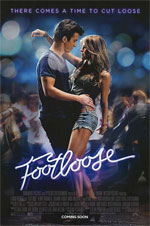
THE BIJOU REVIEW: "Footloose"


FOOTLOOSE:  Watch It At Home - Faithfully Reproduces the Original For Good and Bad

1980s week at the multiplex continues with a remake of FOOTLOOSE, a trip back to the territory of Herbert Ross's 1984 hit.  (Financially, by the way, there was no contest between the 1980s versions of this weekend's entries:  the original Footloose grossed $80M, while John Carpenter's The Thing only managed $20M 2 years earlier.)  

Meddling with Footloose isn't exactly like defacing Citizen Kane--while the movie made a lot of money, it was never iconic in the way that Saturday Night Fever was in 1977, or that The Breakfast Club would be in 1985--but not to worry, it's been treated with a remarkable amount of respect.  In fact, under Craig Brewer's direction, the surprise of the new Footloose is how sturdy the old script (the revised version is credited to Brewer and original screenwriter Dean Pitchford) has turned out to be.


For anyone who missed the 80s, the story is set in the small town of Bomont, where teenager Ren McCormack (Kenny Wormald in the Kevin Bacon role) moves from the big city.  (In 1984, his hometown was Chicago; this time it's Boston.  Also, Ren has a more tragic back-story this time--instead of arriving in Bomont with his mom, he's moving in with his uncle and aunt after having nursed his mother until her death from leukemia.)  Ren feels stifled as soon as he arrives, and he doesn't even know the bad news:  as a result of a fatal car crash several years earlier, whose victims included the son of the local minister (Dennis Quaid now, John Lithgow then), the town has passed a variety of ordinances to control teen behavior, the most egregious being a ban on any public dancing that isn't supervised by the church or school.  Ren also makes the acquaintance of the minister's hot, rebellious daughter Ariel (Julianne Hough in lieu of Lori Singer), and together, they unite the town's other teens to fight the good fight for free dancing in Bomont. 

The remake is quite faithful to the original, including any number of overt and subtle nods to Ross's film.  However, the politics--which weren't exactly radical even then--have been toned down (there's no longer a book burning to teach the minister he's gone too far), the sexuality is slightly more open (although Ren and Ariel still share only a setting-sun kiss), and the soundtrack mixes some of the original pop songs with country and hip-hop.  So this isn't Gus Van Sant's shot-by-shot reenactment of Psycho, but the fidelity does mean that as in 1984, the movie slows down quite a bit in the second half as it begins to take itself seriously and Ren morphs from a smartass city boy to an extremely earnest young politician who knows when to quote from the Bible. 

Herbert Ross started as a choreographer, and by the time he made the original Footloose, his films as a director included the dance-intensive Goodbye, Mr. Chips, Funny Lady, The Turning Point, Nijinsky and Pennies From Heaven.  (Although it turned out to be one of his biggest hits, the teen-oriented Footloose was originally considered a step back for Ross after the classy films he'd been making for more than a decade, something he undertook because of the recent flops of Nijinsky, Pennies and a couple of Neil Simon vehicles.)  One of the reasons the original Footloose is remembered so fondly is because of his very effective dance sequences, and a disappointment of the new film is that although Craig Brewer's Hustle & Flow and Black Snake Moon were deeply engaged with music, Brewer turns out not to be very gifted as a director of dance.  Wormald and Hough are both trained musical performers and--unlike Bacon and Singer--able to pull off their own numbers without doubles, but you could barely tell that from the flat, rhythmless way most of the dances are shot and edited.

The casting is uneven.  Wormald simply doesn't have Kevin Bacon's acting chops (by the time he did Footloose, Bacon had already been one of the leads in Diner, among other films), and Dennis Quaid, although a fine actor, was simply the wrong choice as the minister; pursed-lips disapproval isn't something that comes to him naturally, certainly not as compared with John Lithgow in the first film.  Hough, on the other hand, is charismatic and surprisingly strong as Ariel, even in the heavy-lifting acting scenes toward the end.  And Teller, like Chris Penn before him, practically steals the movie out from under the leads with great timing and some inspired comic dancing.  

Did Footloose need to be remade?  Of course not, although better that the studios play around with a negligible old hit like this than a genuine classic.  And it hasn't been particularly improved, on balance.  But as in 1984, it remains an entertaining story with some tuneful songs that provides diversion for a couple of hours.

  • Digg
  • Del.icio.us
  • StumbleUpon
  • Reddit
  • RSS

SHOWBUZZDAILY MUSIC: ALICEN SCHNEIDER INTERVIEW

With the kind permission of Crushable.com, the following are excerpts from a recent interview conducted by Celine Geiger of Crushable with Alicen Schneider as part of their Hollywood Jobs feature. 


How did you get started in this business?

I worked part-time during college for a music supervision/clearance company and got some of my chops that way. It was enough to get me hired by Warner Special Products right out of college, which was the Film & TV licensing arm of the Time Warner record labels. I was also a college DJ for KXLU in Los Angeles, I interned at Elektra, and worked as a production intern at a TV production house that specialized in celebrity EPKs (electronic press kits).

Explain what exactly a Music Supervisor does. “Supervisor” seems pretty important.

A music supervisor manages almost all things music related in a production — selecting songs for scenes, managing the music budget, making sure all of the legal rights are secured in order to use the music, finding bands to perform on camera when applicable, etc.

What are some important things to consider when you’re choosing music for a scene?

It’s important to have a set tone so all of the music choices flow seamlessly. I also try to come up with a soundtrack that fits each character’s personality. The not-so-fun part is also having to choose music based on the show’s budget and make sure that I can actually successfully license everything that I’m suggesting.

How do you know when a song is working?

It’s weird in that you just feel it in your gut. It’s a totally instinctive process and it can totally change depending on whether or not you’re tired or the hour of the day or whether you can even be creative at that time. I have some days when I can’t be creative at all. That tends to come from burning the candle at both ends, stress, etc. If I’m working on a pitch too late at night, I sometimes get loopy and think I’m a genius and when I relisten in the morning I can’t figure out how I could ever think that a song was working for a scene.

What’s your work week like?

It’s crazy and totally unpredictable. In any given week I’m working with producers to find music, taking meetings with labels, publishers, managers, composers, artists like The National and St. Vincent…. all looking to get exposure for their priorities or to try to collaborate on projects. I also host music showcases. We had Ida Maria come in this week and play for our staff… We’ve also hosted the likes of Katy Perry when she was just starting out, The Airborne Toxic Event, Ozomatli, Train, The Fray, Ingrid Michaelson, Ron Sexsmith, Old 97′s, Grant Lee Phillips and countless others… It’s pretty exciting to have these amazing people be willing to come in and perform for us right outside our offices.

Are you constantly going out to shows and meeting awesome people?

I go out to maybe one show a week. I mostly save my show attendance for the music festivals. I travel to roughly 4 or 5 a year around the world to scope out what’s on the horizon.

Jealous! Where’s your favorite place you’ve been? Do you have a favorite festival?

Iceland was incredibly amazing! I also really love Australia, Denmark and Norway. The Oya Festival in Oslo is one of the coolest festivals I’ve ever attended, but I’m extremely loyal to South By Southwest as well!

Was there ever a band that you felt like you “broke” into mainstream?

I’m pretty indie-oriented, so that’s a tough one. I like to think that I’ve had a little bit of a hand in helping to push The Airborne Toxic Event out there as much as humanly possible. I also got a multiplatinum plaque for Enya for placing a song of hers in promos a few years back for Friends that ran for a year and supposedly saved her record, which had come out virtually unnoticed a few months before that.

Who are you listening to right now?

I’m always all over the place. I’m digging the new Bon Iver, Death Cab For Cutie, The Airborne Toxic Event, Other Lives, Kathryn Calder, Naked & The Famous, Joy Formidable, and countless one-offs by a ton of indie artists. I’m also always revisiting old comforts like the Dark Was The Night compilation.
 
What’s the secret to a perfect mixtape?

Love, fun, theme, and flow.


  • Digg
  • Del.icio.us
  • StumbleUpon
  • Reddit
  • RSS

SHOWBUZZDAILY BROADWAY JOURNAL: "Follies"


FOLLIES may be the strangest of all Broadway masterpieces; after 40 years, it's still the most avant-garde work of Stephen Sondheim's career.

It's easy enough to make the show sound linear:  set in 1971 (which was present-day when the musical was written), it takes place at a theatre that had, for some decades, housed the Weismann's Follies musical shows, but is now about to be torn down and turned into a parking lot.  A group of Follies performers from the 1930s and 40s, hosted by Dimitri Weismann himself, have come to the darkened, emptied-out theatre to salute their pasts and air out their dissatisfaction with their presents.  Chief among these are 2 couples:  Sally and Buddy Plummer (Bernadette Peters and Danny Burstein) and Phyllis and Benjamin Stone (Jan Maxwell and Ron Raines).  Back in the 1940s when Sally and Phyllis were showgirls and best friends, Ben was Phyllis' boyfriend but secretly courted Sally as well; now Ben is a millionaire and Sally yearns for what she remembers as the love of her life.


That's pretty much the narrative of the musical, but Follies isn't fundamentally about its narrative.  Indeed, much of the first act has little overt storyline, instead following the characters almost formlessly around their reunion, dialogue interspersed with the former performers reenacting some of their old musical numbers.  What makes Follies remarkable and to some extent enigmatic is a theme underlying all this:  the relationship between the Follies performances themselves, content and style, and the crises afflicting the characters.  Visually, the Weismann theatre is inhabited by ghosts, unseen by the modern characters but sharing space with them at all times.  Some of them are the youthful versions of Sally, Buddy, Phyllis, Ben and other characters, while others are observers, outfitted in almost godlike versions of the old-time costumes.  

More essentially, Sondheim's score is an amazing collection of pastiches making use of the grammar used in musical numbers of the era:  operetta, torch song, vaudeville, musical comedy and more.  In the first act, these songs ("Beautiful Girls," "Rain On the Roof," "Ah, Paris!") are somewhat separate from the modern-day numbers, although the latter often comment on the former ("Waiting For the Girls Upstairs," "Broadway Baby," "The Road You Didn't Take").  As the characters' mental states fall apart, however, and they become ever more obsessed by their memories and fantasies, the past and present merge.  This culminates in the extraordinary "Loveland" sequence, in which each of the protagonists sings a pastiche-influenced song ("Losing My Mind," "The God-Why-Don't-You-Love-Me Blues," "The Story of Lucy and Jessie," "Live, Laugh, Love") about their own psychologies.  Perhaps the oddest thing about this sequence, which takes up most of the act, is that it provides no "objective reality," but instead envelops both us and its characters in their increasing madness.  The songs themselves are deeply emotional statements as well as commentary about the source, power and danger of show business and romantic myth.  

As you might expect, tackling a project like Follies is not a task to be taken on lightly.  The legendary original production, directed by Hal Prince and Michael Bennett, and with sets by Boris Aronson, won 7 Tonys (although not Best Musical, which went to Two Gentlemen of Verona) and ran more than a year on Broadway, but was a tremendous financial failure.  Subsequent productions and revivals have routinely changed songs and the James Goldman book, trying to find a clarity (and some sense of redemption) in the difficult material.

In the new Eric Schaffer production, which originated at the Kennedy Center in Washington and opens officially in a few days on Broadway, the biggest surprise is that the emotional center has moved from Sally, whose longing for Ben and a different life has usually been the spoke around which the show revolves, to Phyllis.  It's not clear whether that was a conscious decision by Schaffer or simply a function of the magnificent performance Maxwell gives in the role--she's like a Martha in Who's Afraid of Virginia Woolf? who can sing and dance like a demon; her renditions of "Could I Leave You?" and "Lucy and Jessie" are unmatched.  This isn't to take anything away from Peters, who sings beautifully and whose vulnerability in the role is moving, but her Sally is all desperation, her psyche not nearly as complex as Phyllis'.  Maxwell is well-matched with Raines, who is able to make Ben's selfishness comprehensible.  Burstein is a weaker link in the weakest of the main parts; his self-destructiveness is never quite compelling.  (In fairness, the Goldman book has always been sparse, particularly because it barely exists in the second act, where the Loveland sequence takes over what would ordinarily have required dramatic exposition.)

Follies is also a cornucopia of splendid supporting roles--in what other musical do landmark numbers like "Broadway Baby" and "I'm Still Here" go to minor characters?--and they're played wonderfully here.  Most prominent is Elaine Paige as Carlotta, who gets "I'm Still Here," and other notable parts are played by Mary Beth Peil, Rosiland Elias, Susan Watson, Don Correia and Jayne Houdyshell.  The ghostly young people are represented by, among others, Lora Lee Gayer, Kirsten Scott, Christian Delcroix and Nick Verina.

Although no revival of Follies will probably ever be as spectacular as the Aronson original, Derek McLane, Gregg Barnes and Natasha Katz provide sets, costumes and lighting that are atmospheric and evocative of the dim past and troubled present.  Warren Carlyle's choreography, especially in the "Who's That Woman" and "Lucy and Jessie" numbers, is exceptional.

Any production of Follies is an event, because it's the rare musical that reveals more shadings and possibilities the more it's delved into.  (In this production, it's interesting to view the show as a companion piece to Company, Sondheim and Prince's previous musical, and its more comic analysis of bad marriages.)   The show will always be spectacularly problematic--in a way, a production that solved all its mysteries would be most problematic of all--and this version, anchored by Maxwell's brilliance, particularly demands to be seen.

  • Digg
  • Del.icio.us
  • StumbleUpon
  • Reddit
  • RSS

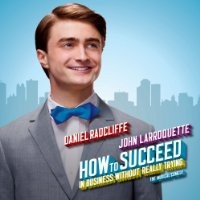
SHOWBUZZDAILY BROADWAY JOURNAL: "How To Succeed In Business Without Really Trying"


Few things bring audiences as much joy as the sight of a well-known actor or actress revealing a side of their talent that's never been seen before.  (It's not just general audiences, either--those roles become instant favorites for Oscar nominations and wins.)  It can be as simple as Halle Berry, Julia Roberts or Nicole Kidman deglamorizing themselves for Monster's Ball, Erin Brockovich and The Hours, and as immense as Daniel Day-Lewis' paralysis in My Left Foot or Robert DeNiro's weight gain in Raging Bull.  The most reliable type, though, may be the revelation that a dramatic performer can sing or dance:  Amy Adams in Enchanted, Meryl Streep in Mamma Mia!, Jeff Bridges in Crazy Heart, Rene Zellweger in Chicago... the list goes on.  The same is true on Broadway, of course--think Antonio Banderas in Nine, and practically everyone who's starred in the revival of Chicago;   Right now, the star with unexpected abilities is Daniel Radcliffe, in the new (and not particularly necessary) revival of Frank Loesser's HOW TO SUCCEED IN BUSINESS WITHOUT REALLY TRYING.


Radcliffe is, and probably always will be, known above all for the role that he spent his entire childhood playing, but Harry Potter was never called upon to sing or dance away from evil.  As J. Pierrepont Finch, the outrageously ambitious protagonist of the 50-year old musical, Radcliffe has to do both, and while his singing voice is merely decent, the man can dance.  Numbers like "Grand Old Ivy" and "The Brotherhood of Man" pretty much bring down the house, in large part because of his footwork.  

For those unfamiliar with How to Succeed, the title itself refers to a handbook used by Finch as he rapidly climbs the ranks at Worldwide Wickets, moving from window washer, to the mailroom, to a junior executive office, to the notice of boss J.B. Biggley (John Larroquette), and so forth.  Along the way, secretary Rosemary (Rose Hemingway) falls madly in love with him, and he struggles between the pulls of ambition and love, not to mention the competition posed by Biggley's evil nephew Bud Frump (Christopher J. Hanke).  The book by Abe Burrows, Jack Weinstock and Willie Gilbert provides the mildest sort of corporate satire, although it has an off-hand structural skill, effectively conveying the story as needed between Loesser's songs, that seems impressive today.

Rob Ashford's production is pleasant enough entertainment--he's a better fit for this material than he was for last year's revival of Promises, Promises, which was more character-and dialogue-based.--and Loesser's songs are always a pleasure to hear, but there's nothing revelatory going on at the Hirschfeld Theatre.  Ashford seems to have approached the material with the viewpoint that it should be played entirely as it would have been in 1961, with no allowance made or irony taken to acknowledge changes in society since then.  So there are no italics around the worship of corporate success, or the sexism the show takes for granted (the song title "Happy To Keep His Dinner Warm" says it all), and no interest in Mad Men-like commentary about the social revolutions that were just a few years away.  Radcliffe's performance is similarly straightforward, even more so than Robert Morse's somewhat maniacal one in the original version (at least as preserved in the 1967 film) and Matthew Broderick's in the 1995 Broadway revival, both of whom took a more cartoonish approach.  Given the broad nature of the material, a taste of that might have been a good idea, both for Radcliffe and for Hemingway; the actors who broaden their performances, notably Larroquette, Hanke and Tammy Blanchard as the self-explanatory Hedy LaRue, fare better.

How to Succeed is an enjoyable 2 1/2 hours, brightly choreographed by Ashford and designed by a team that includes Derek McLane (sets), Catherine Zuber (costumes) and Howell Binkley (lighting), supporting a talented, hard-working cast.  Is it worth $132 for a standard ticket?  Probably not, but discounts are available.  And there is a kick in finding out that The Boy Who Lived is also The Actor Who Can Dance.

  • Digg
  • Del.icio.us
  • StumbleUpon
  • Reddit
  • RSS

SHOWBUZZDAILY BROADWAY JOURNAL: "Spider-Man: Turn Off the Dark"


Haven't all the jokes been made?  In the history of Broadway, there may never have been a show as relentlessly ridiculed as SPIDER-MAN:  TURN OFF THE DARK.  At this point, it may be that the only interesting thing that could be said about the show would be if it weren't as bad as you'd expect.  Sadly, though, that isn't the case.

The long and miserable history of this misbegotten project is well known and has been exhaustively detailed elsewhere.  Very briefly:  the celebrated director Julie Taymor (Broadway's smash hit, hugely profitable version of The Lion King) teamed with no less than U2's Bono and The Edge to create a stage extravaganza based on the comic-book series.  They planned and worked on the musical for years, and as its ambitions mounted, so did the cost.  Investors fell in and out, the scheduled start of production slipped, the biggest names in the original cast (which was to feature Evan Rachel Wood and Alan Cumming) left, and finally, at a cost of $65M--by far the most expensive show in Broadway history--a version of the show began "preview" performances in late November 2010.


This should have been the beginning of the end of the show's troubles, but it turned out only to be the end of the beginning.  Word of mouth was deadly, and the performances themselves were, if not deadly, certainly dangerous, with repeated injuries to cast members who had to fly around the theatre on wires and harnesses.  Even when people weren't hurt, often the flying system balked, and performances had to be delayed while the actors hung in mid-air and waited to be rescued.  However, tickets continued to be sold at a brisk pace, and the producers apparently decided they were in no hurry to spoil the fun by inviting the press.  Thus began the longest "preview" period in the history of Broadway, with successive "opening nights" postponed.  Finally critics decided they'd had enough, and began to review the "unfinished" version of the show.  Their reviews were as catastrophic as everyone expected they'd be, and the producers decided to dump Taymor and a great deal of her original, myth-laden conception, and bring in a new creative team, including "Creative Consultant" Philip Wm McKinley as director, and Roberto Aguirre-Sacasa as a new book writer.   This new, streamlined, and reportedly less bizarre version of the show finally opened to the critics in June 2011 (drawing a tepid, but less vitriolic response), and is now officially playing on Broadway.

And after all that... it's for the most part a dull, tuneless waste of time, and certainly a waste of $150 for a weeknight orchestra ticket.  Even Spider-Man 3, by far the worst of the Sam Raimi film series, is far superior to this formless, atonal bore.  

The Frankenstein-like cobbled-together nature of this beast is clear from the outset, as its tone is all over the place.  Act I is the origins story familiar from every version of the Spider-Man tale:  Peter Parker (here played by Reeve Carney, who had been in Taymor's movie of The Tempest), a high-school student much-bullied and hopelessly in love with the beautiful Mary Jane Watson (Jennifer Damiano, from Broadway's Next To Normal and Spring Awakening), is bit by a mutated spider, and finds himself spinning webs and leaping up and down the sides of buildings.  (The musical makes little use of his "Spidey sense," or some of his other comic-book powers.)  In order to earn a paycheck, Peter finds a job working as a photographer for the awful J.Jonah Jameson (Michael Mulhearn here) at the Bugle, where his convenient specialty is taking photos of the elusive Spider-Man.  Along the way, Peter learns that With Great Power Comes Great Responsibility.  In the Broadway version, all this is recounted ploddingly, with little attempt at style or imagination. (The Greek figure Arachne, turned into a spider by the gods, was apparently a key part of Taymor's conception, but appears only briefly in the current version of the show.) 

Act II is more of an overt mess.  The spider that bit Peter was owned by Norman Osborn (Patrick Page), who becomes the Green Goblin--however, his story as presented here is far more like the Doc Octopus storyline from the Spider-Man 2 movie, crossed with Jack Nicholson's Joker in Tim Burton's first Batman picture.  In an apparent bid to get some laughs, the Goblin speaks in an exaggerated Southern accent, re-enacts a voice-mail comedy routine that's at least a decade old, and ultimately plays a burlesque version of "I'll Take Manhattan" on a green piano on the top of the Chrysler Building.  None of this is scary, exciting or humorous--it's just desperate (similarly, when the strains of an old U2 song are faintly heard at one point, it's a mildly funny bit, but when, after that, "Vertigo" is used in a dance scene, it's a little pathetic). The cast does what it can, but only Damiano emerges with much coherence.  (It should be said, though, that the more Page overacts, the more he pleases the audience.)  Meanwhile, many minor characters wear outsized cartoon heads, an idea that one assumes traces back to Taymor and her fascination for puppetry and masks, while the production design is a mix of giant forced perspective sets and semi-animated projected backdrops.

Even the much-vaunted flying scenes are a disappointment.  Although they've apparently been ramped up since McKinley came in (he's directed as much for the circus as for Broadway), and feature a number where multiple Spider-Men pop up around the theatre using confetti for webs, there's simply no way the sight of men wearing heavy harnesses and thick wires to fly can substitute for what we routinely see in the movies these days, with those details CG'd out.  Even worse, for the most part, the flyers aren't the actual actors who play Spider-Man or the Goblin, they're stuntpeople who circle around while pretaped quips play over the soundsystem, dubbed by the real actors--the effect is so hokey and fake that it's impossible to suspend disbelief, the opposite of what live theatre is supposed to provide.

The best that can be said for Spider-Man:  Turn Off the Dark is that it serves as a fine trailer for the upcoming movie reboot of the series:  after watching all these amateurs screw up a very serviceable, entertaining franchise, one wants nothing more than to see fine actors like Andrew Garfield and Emma Stone in these parts.  As for the musical itself, can it make back its gargantuan investment?  Although grosses have remained over $1M per week and most seats are filled, the show is so expensive to produce that most of that goes to running costs, and little to reimbursing the budget--and it can't be a good sign that the show has half-price tickets available, not to mention online discounts.    There's been talk of taking the show on the road, to Vegas and other locales, with sort of a Cirque de Soleil model, and that may be where its future lies. As a Broadway musical, though, its web is downright murderous.

  • Digg
  • Del.icio.us
  • StumbleUpon
  • Reddit
  • RSS