RSS
Showing posts with label thriller. Show all posts

THE SHOWBUZZDAILY REVIEW: "Silent House"


SILENT HOUSE:  Watch It At Home - A Curiosity

SILENT HOUSE isn't the first feature-length film to provide the illusion that it's all been shot in a single continuous take.  The most famous was Hitchcock's Rope, but in his era, it was technologically impossible to actually shoot for 90 minutes straight, because rolls of film were only so long, and cameras had to be reloaded.  Digital video, however, has made the stunt doable, and recently Alexander Sokurov's Russian Ark apparently pulled off the feat, with extraordinarily complicated content that included battle scenes and banquets as part of its history of Russia.  


Even though technology now permits genuine feature-length takes, Silent House cheats--a few cuts are hidden in moments where the screen goes dark or blindingly light and in sudden camera movements.   Still, one has to give directors Chris Kentis and Laura Lau (and cinematographer Igor Martinovic) credit for sustaining graceful, lengthy shots in constant motion that must have been enormously challenging to light and continuously reframe.  

When discussing Silent House, the emphasis is always going to be on the movie's camerawork, because there's not much else there.  The picture itself is an increasingly muddled haunted house thriller.  Sarah (Elisabeth Olsen) has come back to the house where she grew up, which she and her father (Adam Trese) and uncle (Eric Sheffer Stevens) are cleaning out in preparation for selling it.  The windows are boarded over, most of the doors are padlocked, and there's no electricity, so when Dad goes missing a short time into the story, what remains is an awful lot of Elisabeth Olsen stumbling from one room to another, armed much of the time with little more than a (not to be relied-upon) flashlight and becoming increasingly frazzled as creaks and slammed doors give way to bodies.

This is all fun for a while, and Kentis and Lau, who previously directed the legitimately terrifying Open Water, know how to draw out moments of suspense.  Olsen, alone on screen for most of the movie, does a terrifically charismatic job of finding gradations of fear, determination and hysteria that have to be sustained for the extended length of each very long shot.  Things become monotonous, though, because the limitations of the movie's gimmick and its content mean that not very much can actually happen, just a lot of unexpected noises and shadowy figures glimpsed in the corner or background of the frame scurrying about.  Although the movie provides explanations for why Sarah doesn't just leave the damn house, one gets progressively more impatient with her.  And eventually, even a low-budget horror movie has to be about something, and that's where the script by Lau (based on a 2010 Uruguayan film that was barely released in the US) really falls apart.  The last reel or so grows increasingly confused in that hey-what's-really-going on here? kind of way that's become its own cliche, raising more questions than it answers.

As cinematic stunts go, Silent House is reasonably fun--it's certainly a nice change of pace from the endless "found footage" thrillers pouring in these days, and Olsen again proves herself a magnetic presence on screen.  The movie's attic, however, is ultimately empty.


  • Digg
  • Del.icio.us
  • StumbleUpon
  • Reddit
  • RSS

THE SHOWBUZZDAILY REVIEW: "Gone"


GONE:  Not Even For Free - Gone?  Not Soon Enough

When was the last time you saw a non-ironic, non-parody movie where someone was sneaking around in a room belonging to a possible villain, searching in almost total silence for evidence in the recesses of a dark closet, when--literally!--a cat came jumping out of nowhere, yowling with an ear-splitting screech?  Not just a generic fake-shock, but an actual leaping cat?

Welcome to GONE.


It's understandable that Amanda Seyfried wants to prove that she can handle a Hollywood lead outside of the rom-com and soap genres where her anime eyes and girl-next-door beauty would so easily pigeonhole her.  But Red Riding Hood didn't work, and while In Time was surprisingly successful overseas, Seyfried was just "the girl" to Justin Timberlake's lead.  Gone is her attempt to establish herself as a youthful Ashley Judd action heroine, which wouldn't necessarily be a bad idea--Judd had a lot of successful years riding those vehicles--if the movie itself weren't so terrible.

Jill (Seyfried) was abducted by a madman a year ago, and thrown into a pit among the body parts of earlier, less fortunate victims while she waited to die.  She managed to escape, but could produce no evidence that she'd ever been taken, and combined with some pre-existing psychological issues, that was enough for the police, in the person of Detective Powers (Daniel Sunjata) to completely dismiss her story and instead have her committed to a mental institution.  She came out paranoid and anxiety-ridden, a control freak for herself and her roommate younger sister Molly (Emily Wickersham).  When Molly herself goes missing one night, Jill is absolutely positive that her own attacker is the one who's taken her sister.  And since Molly is an alcoholic and the police give Jill no credence whatsoever, they're more interested in putting her back in the loony bin than investigating the situation.  So Jill, armed with a pistol and some ability to fabricate stories when needed, has to track him down on her own.

As potboiler premises go, this is reasonably serviceable stuff.  Allison Burnett's script, though (her recent credits include the Diane Lane thriller Untraceable, the Fame remake and this year's Underworld Awakening) is far more idiotic than necessary, with the police presented as portraits of cardboard insensitivity and incompetence, and a set of increasingly far-fetched clues for Jill to follow.  The third act veers into a full-fledged revamp of the classic Dutch thriller The Vanishing--except, y'know, completely stupid--until it reaches an anti-climactic conclusion that almost feels like it's being played for laughs. 

Seyfried remains an appealing young actress, but Gone doesn't give her much to work with, as she alternately widens her eyes with shock and squints them in determination.  Talented actors in support like Sunjata, Jennifer Carpenter (very briefly, as Jill's only friend), Nick Searcy and Katherine Moenig have little opportunity to show even traces of their talent.   Director Heitor Dhalia, making his Hollywood debut, does nothing to elevate this beyond the level of a TV procedural.

Gone, fittingly, won't be around long, and unlike--to pick a name at random--Katherine Heigl, Seyfried seems to have more people rooting for her than against her, so a few missteps won't cause her too much damage.  Next up, and far more important to her career, is her Look-At-Me-I'm-Acting indie showcase as the lead of the already much-hyped biography of Linda Lovelace.  Maybe Gone was all part of her research into surviving the most rudimentary of scripts...
   

  • Digg
  • Del.icio.us
  • StumbleUpon
  • Reddit
  • RSS

THE SHOWBUZZDAILY REVIEW: "Safe House"


SAFE HOUSE:  Watch It At Home - You've Seen It
 

SAFE HOUSE feels like a remake, even though technically it's not.  It's a little bit Training Day, a little Bourne, a little Man On Fire (and everything else Tony Scott has ever done), with almost nothing added of its own, an exercise in craft and professionalism that fades into a "People Who Liked This Also Liked..." IMDB list.

The setting is South Africa, where the (young, naive, untested) keeper of the local CIA safe house, Matt Weston (Ryan Reynolds), is finally going to get some excitement in his life:  rogue ex-agent Tobin Frost (Denzel Washington) has turned himself in after years on the run, and is being brought to the safe house for interrogation. No sooner has the waterboarding begun than the safe house itself is under assault, and Matt has to escape with his prisoner, who instantly turns the tables and proves himself--he's Denzel Washington, for god's sake--in complete control of the situation.  Matt, reluctantly or not, is aboard for the ride.


Safe House purportedly wants us, and Matt, to ponder whether Tobin Frost is really a good guy gone bad, a bad guy gone good again, or some combination thereof, but don't spend too much time worrying about it:  the script by David Guggenheim never really makes the situation clear, and serves more as an excuse to run through the paces of contemporary post-Bourne action movies.  There's the flurry of combat at close quarters, the squeal of chase scene auto tires, and the incessant reversals and double-crosses that come with such clockwork predictability that they're never very surprising.

There are, meanwhile, regular cuts to senior Agency professionals in Washington (Sam Shepard, Vera Farmiga, Brendan Gleeson), who stare at video screens and computer graphics and bark out orders with crisp urgency.  At least one of these people--spoiler alert!--turns out to be a traitor, and if you can't figure out who that's going to be 15 minutes into the story, you need to see more movies.   Along the way, Matt has his CIA agent bar-mitzvah, becoming a man and presented with knowledge of the way the world really works instead of a fountain pen.  

Safe House is directed with efficiency rather than inspiration by Daniel Espinosa, a Swedish director making his US debut.  Espinosa has seen all the movies that went into this screenwriting-class compendium of a script, and he's borrowed the pungently overexposed cinematography from Tony Scott and the lucid fast cutting from Paul Greengrass (both cinematographer Oliver Wood and editor Richard Pearson are veterans of the Bourne franchise).  The movie jumps through its familiar hoops with great professionalism and zero substance.

Washington, himself a veteran of 5 Tony Scott thrillers, is completely in his comfort zone here.  He delivers every ambiguous shade of Tobin Frost, every character reverse and shifting tone of craftiness, cynicism, weariness and dry humor, with precision and star power.  Even when his character is enacting cliches, Washington is riveting.  Reynolds, though, is becoming oddly more bland with every role he takes.  Reynolds, at 36, feels too old to be playing a neophyte agent--with him in the part, Matt feels like a loser rather than a newbie--and Reynolds doesn't find anything in the role to make Matt distinctive or interesting.  After a while, you become aware that it's Washington outmatching Reynolds at every turn, not just Tobin outmatching Matt, and that's not so much fun to watch.   Shepard, Gleeson and Farmiga grimly earn the paychecks that pay for their more substantial indie work.

If movie theaters still ran double features, Safe House would be the perfect picture to run as the bottom half of one.  It's an acceptable--and yes, safe--piece of undemanding entertainment that doesn't exert itself in any way to attempt something more.


  • Digg
  • Del.icio.us
  • StumbleUpon
  • Reddit
  • RSS

THE SKED'S PILOT + 1 REVIEW: "The River"


A lot can happen between the creation of a TV pilot in the spring and production of episodes for the regular season:  a writing/producing team is hired, audience focus groups weigh in, networks and studios (which may have had their own turnover in the off-season) give plenty of notes, both helpful and otherwise, and critics begin to rear their ugly heads.  The results can include changes to tone, pace, casting and even story.  Here at THE SKED, we're going to look past the pilots and present reviews of the first regular episodes of this year's new series as well.

Previously... on THE RIVER:  A small boat called the Magus heads up the Amazon, in search of vanished TV nature series host Dr. Emmet Cole (Bruce Greenwood).  The crew is a mix of Cole's family and friends--wife Tess (Leslie Hope), son Lincoln (Joe Anderson) and Lena (Eloise Mumford), the daughter of his trusted cameraman--and a TV crew headed by Clark (Paul Blackthorne) that's documenting the search.  Also along are mercenary Brynildson (Thomas Kretschman) providing security, and the boat's engineer (Daniel Zacapa) and his adolescent daughter Jahel (Paula Gaitan).  There are plenty of tensions among this group as they follow breadcrumbs of clues they find in the videotapes Cole has left behind.  And along the way, at every stop they encounter all manner of supernatural phenomena.  The entire show is supposedly edited together from the footage shot by the documentary crew itself.


Episode 2:  Although The River aired as a "2-hour premiere," it was actually the original pilot with the first regular episode appended.  The building blocks of exposition and mythology having been established in the pilot, that second hour gives a good picture of what the series is planning to be.  Clearly it'll be quite a while before the Magus finds Emmet Cole, and some of the show's episodic adventures will only tangentially involve the search for him.

In the 2d hour episode, written by Executive Producers Michael Green and Zack Estrin, and directed by pilot director Jaune Collet-Serra, some kind of magic CG bug flew into Jahel's mouth and temporarily possessed her with Cole's spirit (and Bruce Greenwood's voice).  The spirit tried to talk the group into going home, but of course then there'd be no show, so they ignored him/it and pressed on.  Something the spirit said seemed to indicate that Cole was still alive but being held in captivity, which set the Magus to this week's part of the Amazon.  Cole wasn't there, but they did find the ghost of a dead colonial family's child.  The site where the girl drowned was surrounded by dolls who sometimes came alive, and since the dead girl missed her dead mother, in her loneliness she took Tess as a substitute.  (This storyline oddly echoed The Woman In Black, which opened in theatres last weekend.) 

The hour had a few creepy moments, but it never made the use that it should have of those dolls, which didn't do much more than open their eyes and stare (limited series CG budget?).  Watching Leslie Hope get pulled under muddy water was a good deal less frightening.  The episode also made clear some of the limitations of the show's concept.  Since the show-within-the-show is being filmed by a professional TV crew, the "found footage" gimmick doesn't mean much (unlike, say, the ingenious use of technical imitations in Paranormal Activity 3), because it all looks like any other TV show except for the shaky hand-held camerawork used to accentuate panic in the action sequences, and there's already overuse of genre cliches like images suddenly cutting to static or flaring in the face of the supernatural.  Also, the conventions of series television mean that the regular characters aren't in all that much mortal danger until we get near the season finale, which lessens any suspense, and thus far, the relationships between those characters are none too scintillating.

Since the hunt for Emmet Cole is a very loose underpinning for the series at this point (this week we got a B story suggesting that it's Lena, not Lincoln, who's the "chosen one" that will have to fight evil to rescue Cole), each episode of The River will mostly have to fend for itself, based on the strength of that week's story.  This episode was medium-scary, and the show will have to do better if the repeated scenes of people stumbling through jungle or looking off the side of the boat and exclaiming "What the hell was that?!?" aren't to get tiresome.


Original Verdict:  Potential DVR Alert

Pilot + 1:  Beware of Shaky-Cam Seasickness

  • Digg
  • Del.icio.us
  • StumbleUpon
  • Reddit
  • RSS

SHOWBUZZDAILY @ SUNDANCE REVIEW: "Shadow Dancer"


Plot and character revelations are a critical part of James Marsh's subtle, complex spy drama SHADOW DANCER, adapted by Tom Bradby from his own novel, so I'll be circumspect in describing its plot beyond the initial set-up.  (Then again, I saw it at an 8:30AM screening at Sundance, so I'm not altogether sure I could reconstruct the details in any case.)


The obvious point of comparison for Shadow Dancer is the work of John LeCarre, especially because we currently have a very fine film version of the master's Tinker, Tailor, Soldier, Spy on hand.  The comparison, though, is somewhat misleading.  LeCarre's template (sometimes in recent years to the point of predictability) is to place innocents into the clutches of cynical professional spies and then detail the way they're disillusioned and very often destroyed.  In Bradby and Marsh's vision, there aren't really any innocents to begin with.

We meet our protagonist Colette McVeigh as a Belfast child in a brief, unsettling prologue, in which she is unintentionally but thoughtlessly responsible for the death of her little brother in an IRA/British Army crossfire.  10 years later, as an adult (played by Andrea Riseborough, from Brighton Rock and Madonna's W.E.), Colette has responded to this tragedy by becoming a full-fledged member of the IRA, planting a bomb in a London tube station.  Things go awry, and she's arrested by MI6 in the person of Mac (Clive Owen), who informs her that she'll be in jail for decades, far distant from her young son, unless she becomes an informer for the British.

Colette feels she has no choice but to agree, and the heart of Shadow Dancer concerns the many subterfuges and betrayals that follow, on both sides of the conflict.  The Northern Island portrayed in the film is a place where no one is to be trusted, and no affiliation holds for long.  Marsh, who is having a fascinating career in film--he's also one of the world's great documentarians, with the Oscar-winning Man On Wire and Project Nim (shamefully excluded from this year's Oscar race) to his credit--has created, in a way that recalls his chapter of the Red Riding Trilogy, a dark and convincing portrait of a place in a perpetual state of dread.

The movie is extremely grim, and at times there's a certain monotonousness to its inescapable sense of doom.  Also, while Bradby's script is admirably intelligent and clear (even at 8:30AM), the fact that all the characters have to hold their cards close to the vest, since any one of them may be preparing to betray any other, means we have a limited opportunity to really know them.  Riseborough has little dialogue, and while she gives a terrific performance, conveying Colette's fear, anger and desperation, her character is in many ways opaque.  (When she has an emotional outburst with Mac late in the story, it seems to come from another movie.)  Mac is as close as the movie comes to having a heroic figure, and Owen brings the role his own charisma, but he too is presented through blinkers much of the time, and that's even more the case for the excellent supporting cast, which includes Aiden Gillen, Gillian Anderson, Brid Brennan and Domhnall Gleeson. Technical credits are uniformly first-rate:  greyish cinematography by Rob Hardy, convincing production design by Jon Hensen, and a pace that's compelling and also comprehensible under editor Jinx Godfrey.

Shadow Dancer is, in the end, so in love with its shadows that it provides little in the way of dancing, and that will likely hold it back from mainstream success.  Nevertheless, it's a beautifully executed piece of work.

  • Digg
  • Del.icio.us
  • StumbleUpon
  • Reddit
  • RSS

THE BIJOU REVIEW: "Contraband"


CONTRABAND:  Worth A Ticket - Working-Class Thriller

CONTRABAND is a B movie, but oddly enough, that's one thing in short supply these days.  Action movies in modern Hollywood usually come with giant CG-laden budgets, or with a Drive-like overweening sense of self-importance.  A modest picture that simply wants to entertain for a couple of hours, and does, increasingly feels like a rare treat.

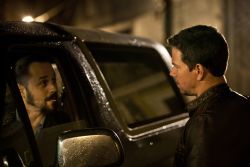
Eventually Contraband falls victim to the need to be bigger than it needed, but its first half is great fun.  Skillfully,  the picture takes us into the world of smuggling as it's practiced on a day-to-day basis in the port of New Orleans, and on a run between that city and Panama.  Our surrogate for these lessons is the ultimate in working-class millionaire movie stars, Mark Wahlberg.

Wahlberg plays Chris Farraday, who was once the best smuggler around; the most gifted member of a family in the business, he was the one who didn't get caught.  When we meet him, he's gone straight, with his own home security firm, a lovely wife (Kate Beckinsale) and 2 kids.  Of course, this being a movie, he's pulled back in for One Last Job, when his brother-in-law Andy (Caleb Landry Jones) has to dump the cocaine he's been smuggling for the evil Briggs (Giovanni Ribisi) after the Coast Guard raids the boat.  Andy will be killed unless he repays Briggs for the dope, and as an honorable man and the only person capable of handling the operation, Chris takes over.  Even when stepping away from the straight-and-narrow, Chris won't smuggle drugs.  Giant racks of counterfeit currency, however--that's a different story.  So Chris leaves Kate and the kids in the care of his best friend and former partner, recovering alcoholic Sebastian (Ben Foster), and heads to Panama.

All of this is a higher-pitched version of the 2008 Icelandic film Reykjavik-Rottterdam.  That picture was directed by Oskar Jonasson and written by Jonasson and Arnaldur Indrioason, and starred Baltasar Kormakur, also one of the producers, in the Chris role.  Here's where it gets a bit odd:  Kormakur, although not the director of Reykjavik-Rotterdam, is himself an Icelandic director of note, and he makes his US filmmaking debut as director of Contraband (script by Aaron Guzikowski).  Kormakur does a very capable job setting out the millieu of the docks without overdoing the New Orleans atmosphere, and he handles the plot set-up in a convincing, workmanlike fashion.

Once the movie gets to Panama, it becomes more of a big Hollywood production, first with a large-scale action sequence that's fun to watch but out of keeping with the movie's tone (and which doesn't justify the Wahlberg character's presence in the sequence particularly well).  Then the melodrama starts ramping up, in ways that are alternately predictable and implausible--the latter especially at the end, with a twist that feels like it was added after test screenings.  All of this may boost the movie's boxoffice, but makes it less satisfying as a narrative.  

The picture is still much more worthwhile than an empty action buffet like the Sherlock Holmes sequel.  Wahlberg, as much as any current star, casts himself (except in his occasional forays into comedy) with an old-Hollywood sense of exactly how his persona works, and while no one could say the role of Chris stretches him as an actor, he's thoroughly comfortable in the part.  Kate Beckinsale streaks her hair and has a tattoo on her wrist, but if the idea was to toughen her up in the way Amy Adams did so astonishingly in The Fighter, lightning didn't strike twice.  Ribisi turns on his Mickey Rourke as the hissable villain, and Foster's casting is probably too on the button (his very presence in the part says too much).  There are also some very fine character actors in smaller roles, like J. K. Simmons, Diego Luna and Lukas Haas.  

Contraband is well put together, with fine photography by Barry Aykroyd and slick editing by Elisabet Ronaldsdottir (who had edited the original Reykjavik-Rotterdam).  In his Hollywood debut, Kormakur handles crashing trucks and shoot-outs well enough to be considered for any mediocre franchise--but it would nice to think he might resist the call to become just another big-budget hack, and stick with the unpretentious craftsmanship he shows here.  Hollywood, and audiences, could use more of that.


  • Digg
  • Del.icio.us
  • StumbleUpon
  • Reddit
  • RSS

THE SKED'S MIDSEASON RETURN: "The Secret Circle"


After a hiatus so long that it seemed as though CW had found its own witchcraft to create more repeats of THE SECRET CIRCLE than there'd been original episodes to start, the series finally returned to original episodes.

WHERE WE LEFT OFF:  The major revelation of the fall finale was that heroine Cassie (Britt Robertson) wasn't just a member of the titular coven through the powers she'd gotten from her mother--she had also inherited "dark magic" powers from her mysterious dad.  Also (hunky) witch/witchhunter Jake (Chris Zylka) betrayed his fellow hunters to rescue Cassie from their clutches, and rode off on their boat to an uncertain future.


WHERE WE ARE:  The midseason premiere was a surprisingly self-contained hour.  Mostly it concerned the arrival of Diana (Shelley Hennig)'s grandmother played by Stepfanie Kramer (I'll pass over how old the fact that Stepfanie Kramer is playing grandmas makes me feel).  After Cassie almost killed (hunky) Adam (Thomas Dekker) out of pique, Granny confirmed that Cassie's dark powers come from an evil place--her dad was apparently much the Anakin Skywalker type--and lured Cassie to the woods to "cure" her of her evil potential.  It seemed like she was trying to murder the girl, but subsequent dialogue indicated that it was some kind of test, and the fact that Cassie lived meant she could be a force for good or evil.  This plot didn't tell us much we hadn't already guessed, but it had one good moment, with Cassie going all Kill Bill as she decisively escaped from being buried alive by Granny.

In the B story, the show increased its hunk quotient by adding a voodoo expert for Mean Witch Faye (Phoebe Tonkin) to exchange banter with as she tried to get power to perform spells without the rest of the Circle--doubtless we'll be seeing more of him.  (And of Jake, revealed at the episode's close to be done with his sea voyage.)

Although Secret Circle has Kevin Williamson as an Executive Producer, he's not the showrunner, and the show is far inferior to Williamson's own Vampire Diaries, lacking the self-aware wit and intricate plotting of that show.  Secret Circle is very much a 90210-level horror teenfest, with a cast that can't bring much shading to their bland roles.  Still, with Diaries as lead-in, Circle is CW's 2d-highest rated series, and considering how badly the rest of its schedule is slumping, the show is almost certain to be back for a 2d season.

  • Digg
  • Del.icio.us
  • StumbleUpon
  • Reddit
  • RSS

THE BIJOU REVIEW: "The Girl With the Dragon Tattoo"


THE GIRL WITH THE DRAGON TATTOO:  Worth A Ticket - David Fincher Meets Lisbeth Salander

The most remarkable thing about David Fincher's version of THE GIRL WITH THE DRAGON TATTOO (written for the English-language screen by Steven Zaillian) is that while remaining, for the most part, scrupulously faithful to the best-selling novel by Stieg Larsson, the new film fits so comfortably with Fincher's style and thematic concerns.


As probably no one needs to be told by now, Dragon Tattoo is the first of a massively popular trilogy of thrillers by the late Swedish novelist Larsson.  It's also, very unusually, already been the source of a quite recent Swedish film, widely seen in the US ($10M at the boxoffice), which was directed by Niels Arden Opley and screenwritten by Nikolaj Arcel and Rasmus Heisterberg.  The content of the two films overlap greatly, although Fincher and Zaillian have altered the solution to one of the novel's mysteries in a way that's more efficient without changing anything fundamental about the story, and the US version covers some territory omitted from the Swedish adaptation (a distinction that may vanish in the "extended edition" of the Swedish film recently released on video).  

In all of its various forms, Dragon Tattoo centers around a decades-old mystery.  In the 1960s, on a small private island in the north of Sweden largely owned and occupied by the rich and corrupt Vanger family, teenager Harriet Vanger vanished, never to be seen again.  Her only decent relative, patriarch Henrik (Christopher Plummer in the new film) has received taunting yearly reminders of Harriet from, Henrik assumes, her killer.  As Henrik approaches his own appointment with the Grim Reaper, he decides to hire a very unconventional investigator, the journalist Mikael Blomkvist (Daniel Craig), currently in disgrace because of a libel conviction that stems from a story Blomkvist wrote about an industrialist who had once worked for Vanger.

All of this would normally set up an interesting but fairly routine detective story, one in which the initial puzzle leads, as these things do, to other and increasingly more disturbing mysteries that need to be solved.  Larsson's master-stroke, however, was the creation of Lisbeth Salander (Rooney Mara), the woman who had performed Vanger's background check on Blomkvist and succeeded in unearthing--legitimately and otherwise--everything there was to know about him, and whom Blomkvist hires to help him with Harriet's case.  Lisbeth is a fabulous character, utterly brilliant and profoundly damaged (due to events disclosed in later books, along with some dreadful experiences she suffers in this one).  Distinctive in every way, from her spiky dyed hair and, yes, many flamboyant tattoos to her more-than-willing violence in the face of some sickening adversity, she takes possession of Larsson's books and the movies as well. 

Fascinatingly, although Lisbeth is of course a preexisting character who wasn't invented by David Fincher, she could be a punk cousin to the Mark Zuckerberg of Fincher's The Social Network, who also overwhelmed everyone around him with his sheer intellect and who otherwise seethed with impatience and frustration at nearly all human interaction.  Lisbeth's outsider status, and the occasional glimpses we get of her longing for human contact, tie her in not just with Zuckerberg but with the title character of Fincher's The Curious Case of Benjamin Button.   Her style and mindset are reminiscent of  Fight Club's Tyler Durden.  The lengthy, complicated investigation that takes up much of Dragon Tattoo's story recalls Fincher's Zodiac, and although Dragon Tattoo's mystery does come to more of a conclusion than Zodiac's did, the overall sense of moral hopelessness is very similar--and both that, and the psychopathic violence at the story's center, are themes also found in  Se7en.  (Consumer warning:  another way that the film suits Fincher's sensibiliity is in its often extreme violence.  Sensitive souls beware.)

In short, The Girl With the Dragon Tattoo, while a franchise movie, could have been written with David Fincher in mind.  And although the initial Swedish film is thoroughly competent, and features an extremely strong performance by Noomi Rapace as Lisbeth (later chapters in the series continued to be well-acted, but suffered from directoral changes and seemingly lower budgets), it can't compare with what Fincher--plus a reported $90M budget--can bring to a project.  The photography by Jeff Cronenweth is supple and atmospheric, and Trent Reznor and Atticus Ross's menacing, disturbing score outdoes their work on Social Network.  Despite the 158-minute length, the editing by Kirk Baxter and Angus Wall shoots the story out of a gun barrel. 

Fincher has surrounded Rooney Mara with a very fine supporting cast, and that includes Daniel Craig--his Blomkvist may technically be the protagonist of the story, but he too is mere support once Lisbeth enters the scene, and Craig seems content not to get in Mara's way.  Along with Craig and Plummer, Robin Wright, Stellan Skarsgard and Joely Richardson play important characters with great skill.  But any version of Dragon Tattoo will rise and fall on its Lisbeth, and Mara is all that readers could ask.  Underneath her often deliberately blank exterior, we can see that she's almost entirely an exposed nerve ending, infinitely sensitive to every nuance of her surroundings and constantly gauging her potential for being hurt.  Although Rapace was a superb Lisbeth, Mara is somewhat closer to the character of the book, in her youth and flickers of vulnerability.  It's a great, commanding performance.

The Girl With the Dragon Tattoo is, in the end, a genre story, and it obeys the imperatives of the form:  we get the somewhat cliched scenes where a villain starts "monologuing" (as The Incredibles would say) at length before violence, and the sequences where tiny bits of evidence are examined and found to reveal further clues.  Fincher stages all of these beautifully, but they're inescapably familiar.  He and Zaillian also have a problem with the structure of the novel, which keeps going for quite a while after the story's central mysteries have been solved, an extended epilogue dealing with plot points of considerably less interest (the Swedish film, at least in the theatrical-release version, omitted much of this).  The scenes connect to Larsson's larger political points about the nature of Swedish politics and society, and the way in which he saw the various storylines as illustrating the rot afflicting the nation; for an American audience, these are largely lost.  The film can't achieve the perfect roundedness of, say,  Se7en, which owed no allegiance to source material.

For all that, it would be hard to imagine a better, or more gripping, adaptation of Larsson's novel.  It's a very happy coincidence when a great filmmaker has the chance to film a story perfectly suited for his talents--decades later, the Robert Altman version of E. L. Doctorow's Ragtime that was never made is still mourned-- and Fincher's Dragon Tattoo is, luckily for us, one of those.   

  • Digg
  • Del.icio.us
  • StumbleUpon
  • Reddit
  • RSS

THE BIJOU REVIEW: "Tinker, Tailor, Soldier, Spy"


TINKER, TAILOR, SOLDIER, SPY:  Worth A Ticket - An Epic of Betrayals

John LeCarre is (I guess one should say "arguably") the greatest of all spy novelists, and his 1974 TINKER, TAILOR, SOLDIER, SPY is "arguably" his finest work.  Incredibly, the 1979 BBC miniseries adaptation lived up to the level of the novel, featuring an (please--this isn't even arguable) iconic performance by Alec Guinness that was legendary even in the context of his great career.


So, no pressure on the filmmakers determined to remake it... and squeeze an exceptionally labyrinthine plot into 128 screen minutes.  And yet, to a remarkable degree, those filmmakers, led by director Tomas Alfredson, screenwriters Peter Straughan and Bridget O'Connor, and with Gary Oldman in the Guinness role, have succeeded, making a cerebral thriller faithful to the spirit and much of the letter of LeCarre's novel. 

Oldman, like Guinness before him, plays George Smiley, the recessive and brilliant mandarin of the British Foreign Intelligence Service, known colloquially as the Circus.  Shortly after the story begins, the head of the Circus, known only as Control (John Hurt) and Smiley, his closest aide, have been forced into retirement after a mission in Budapest turned disastrous.  That mission was intended to unearth information about a mole at the highest level of the Circus, a double agent Control had narrowed down to his 5 closest aides:  Percy Alleline (Toby Jones), code-named "Tinker," Bill Haydon (Colin Firth), known as "Tailor," Roy Bland (Ciaran Hinds) or "Soldier," Toby Esterhase (David Dencik), the "Poor Man"... and Smiley himself, presumably the "Beggarman."  After the Budapest mission and Control's exit, the search for the mole went away.  But when the rumor of a mole arises again, and with the 4 main suspects now running the Circus themselves, a politician with oversight authority over the Service brings Smiley back to unofficially determine whether Control was, after all, correct.

This sets off a virtuoso set of ever-deepening complications, as Smiley and his (unseen) Soviet counterpart Karla, along with their respective minions, try to outmaneuver each other by crisscrossing false leads, cover-ups and intentional dead ends.  The recurring theme is betrayal, as everyone involved, on both a professional and very personal basis, ruthlessly undercuts whoever gets in their way, often taking from them what they most value in the world.  Ideology hardly figures into the game--as a traitor explains at one point, devastating choices can be made for reasons of aesthetics as much as for political convictions.  Everyone involved is brilliant, cunning and fully capable of making big-picture decisions under deadly pressure. 

Alfredson previously directed the vampire art movie Let the Right One In (remade in the US--not by him-- as Let Me In), and his commitment to LeCarre's exhausted, almost existential viewpoint is faithful almost to the point of fetishism.  Although Alfredson is more than able to deliver a suspenseful crescendo when one is called for, no one involved with Tinker, Tailor seems to have worried about hyping up the action component of the story to find a wide audience (and probably the film won't)--Hoyte van Hoytema's photography seems gray even in sunlit scenes, and Alberto Iglesias' score is uninsistently mournful. 

The wonderful supporting cast comports with the film's overall style, although here is where the novel's compression into 2 hours takes its toll.  In order to squeeze a comprehensible version of the plot into a feature running time, something had to go, and in this case it was the complexity of some of LeCarre's characterizations.  One of the film's real problems is that none of the prime suspects gets to establish a memorable presence, which makes the emotional component of the search for the spy less involving than it should be.  (The final confrontation between Smiley and the mole doesn't have nearly the fireworks that it did in the miniseries.)  Only Tom Hardy, as a Circus agent caught in the crossfire between Karla and Smiley, and Mark Strong, as the agent involved in the Budapest fiasco, really have the chance to develop backstories. 

As for Oldman, he gives several subtle nods to Guinness's definitive Smiley, from the shape of his eyeglasses to some of his inflections.  It can't be said that he displaces Guinness as the actor who will first come to mind when the character's name is mentioned--Oldman doesn't quite have Guinness' minimalist genius for suggesting waves of feeling under an impassive countenance (then again,who does?)--but as the story develops and gradually, almost imperceptibly, Smiley emerges from the shadows to take his place at center stage, Oldman's performance becomes increasingly more commanding and richer in shading.  

Tinker, Tailor isn't, frankly, for everyone--it's the anti-24 as spy stories go, offering satisfactions of the mind rather than the gut.  It takes its time, to an extent almost revolutionary in contemporary Hollywood entertainment, and forces the audience to think, and consider, along with its characters.  Like the technology of its 1970s setting, it's hand-crafted, a little slow, and quite marvelous to behold.

  • Digg
  • Del.icio.us
  • StumbleUpon
  • Reddit
  • RSS

THE BIJOU REVIEW: "Haywire"


HAYWIRE:  Worth A Ticket - For the Gasp-Inducing Fight Scenes Alone

You might think that if a major, celebrated filmmaker were to take the extraordinary step of announcing, years in advance, that he had set the time for his retirement from movies, and that, even though he was only middle-aged, he would at the very least be taking an extended break from the medium after he had completed a certain set of particular films--well, you might expect that those films must express a summing up of his world view, a final statement about his ideas about mankind's place in the universe.  If the filmmaker were Steven Soderbergh, though--as in fact it is--those remaining works include a movie about male strippers, an HBO biography of Liberace, a film version of the old TV series The Man From UNCLE, and HAYWIRE, the action movie that was tonight's "secret screening" at the AFI Film Festival, and which is scheduled to reach theatres in early 2012. 


Haywire was, as Soderbergh explained in a Q&A, very explicitly designed as a showcase for its star, the real-life MMA fighter Gina Carano, whom Soderbergh happened to see in a nationally televised bout.  Soderbergh has long been fascinated by toying with the interplay of real life with fictional stories; aside from casting non-professionals in his low budget Bubble, his Ocean's 12 included the strange plotline that featured Julia Roberts as a character who resembled--and ultimately impersonated--Julia Roberts.  In particular, Haywire and its casting recalls Soderbergh's decision to cast porn star Sasha Grey in The Girlfriend Experience. Even though that film had no explicit sex at all, he seemed to want the lead role played by someone who everyone knew had had the experience of performing sexual acts for pay, just as Carano, who simulates injuring her fellow actors in Haywire, has earned her living battling people for real. 

Of course, the great benefit of casting an actual fighter in an action movie is that there's no need for stunt performers, and Soderbergh seems to have convinced Carano's professional actor co-stars, including Ewan McGregor, Channing Tatum and Michael Fassbender, to handle their fight scenes themselves as well.  Thus the fight sequences in Haywire are ultra-thrilling and spectacularly intimate, with none of the need to cut away from faces and employ masking angles that almost every action movie you've ever seen has had to do.  The fights, which are staged without musical or editing hype, have a measure of reality that's the absolute opposite of the grand-opera fakery we get in big-budget Hollywood epics.  

Those scenes are by far the highlights of Haywire, which is otherwise slick and enjoyable (especially a very Bourne-like chase scene through Dublin) without being terribly interesting.  Mallory (Carano) is a black ops agent for an independent company employed by the US and other governments.  When she and her partner (Tatum) are sent to Barcelona to rescue a hostage Chinese journalist, it's the start of a string of not particularly surprising betrayals that sends her on a journey of revenge throughout Europe and the US.  Among the other operatives she encounters are Fassbender, McEwan (as her boss and former lover), Michael Douglas and Antonio Banderas, with Bill Paxton as her supportive dad.  Soderbergh plays some of the time-shifting games he enjoys so much, as the first half of the movie has an awkward flashback structure in which Mallory is telling the story thus far to a boy she's taken temporary hostage (Michael Angarano), but that doesn't disguise the fact that the plot and characters are paper-thin.

As an actress, Carano has plenty of charisma and beauty, and along with her phenomenal physical skills, that's probably enough to make her an action star; whether she can actually act will be a question for another movie.  (She's unable to suggest any convincing emotional connection to McGregor's character, past or present, although that may be a shortcoming of the script more than her performance.)  Soderbergh has supported her with that top-notch supporting cast, and they handle most of what heavy lifting Lem Dobbs' script requires (Fassbender is particularly smooth).  Soderbergh serves as his own cinematographer as usual (under his pseudonym of Peter Andrews), and the movie is much more attractive to watch than his (deliberately) sickly work in The Informant and Contagion.  The editing is swift, and David Holmes' score propels the pace in a coolly intense way.

Haywire is hardly a major piece of work for Soderbergh, although it's quite effective and exciting on its own limited terms.  It's the filmmaker's own fault that we expect his (presumptive) last works to have some added value; if he's really going to leave, he still owes us a finale bigger than this one.

  • Digg
  • Del.icio.us
  • StumbleUpon
  • Reddit
  • RSS

THE SKED'S PILOT + 1 REVIEW: "Grimm"


A lot can happen between the creation of a TV pilot in the spring and production of episodes for the regular season:  a writing/producing team is hired, audience focus groups weigh in, networks and studios (which may have had their own turnover in the off-season) give plenty of notes, both helpful and otherwise, and critics begin to rear their ugly heads.  The results can include changes to tone, pace, casting and even story.  Here at THE SKED, we're going to look past the pilots and present reviews of the first regular episodes of this year's new series as well.

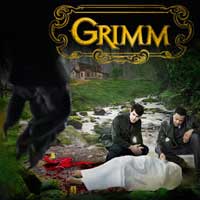
Previously... on GRIMM:  Police Detective Nick Burckhardt (David Giuntoli) is understandably shocked to discover that he can suddenly see some apparently ordinary people transform into their "real" animalistic or demonic faces.  His Aunt Marie (Kate Burton), now unfortunately dying of cancer, delivers the news that as she's becoming weaker, he's inheriting from her the mantle of "Grimm," a descendant of the famous Brothers, who it turns out weren't mere recounters of myths, but reporters of true events and dedicated to the hunting down and eradication of the monsters among us.  While using his powers for the first time on a case, trying to find a modern day Little Red Riding Hood, Nick develops an uneasy partnership with Eddie Monroe, a reformed "Blutbad" (Big Bad Wolf).  What none of them know is that Nick's own commanding officer Captain Renard (Sasha Roiz) is one of the leaders of the monsters, and he's ordered one of his minions, Adalind Schade (Claire Coffee), to murder Aunt Marie before she can tell Nick too much.


Episode 2:  In its first regular season episode, written by series creators David Greenwalt and Jim Kouf, Grimm makes clear its intent to be a supernatural procedural more than a serialized show with heavy (pardon the expression) mythology.  The virtue of this approach from a network point of view is that viewers will be able to skip episodes without missing much, but there are several problems as well, showcased in this episode.  For one thing, there's very little in the way of mystery or suspense:  from the opening moments, when a quote from the Brothers Grimm story tells us the fairy tale of the week is "Goldilocks and the 3 Bears," we know that when the blonde woman breaks into a house with 3 bedrooms, she's going to be attacked and who her attackers really are.  We then have to wait for Nick to catch up with us, which takes roughly half the episode.  (The writers end up melding the Goldilocks story with the old movie The Most Dangerous Game, as the bears set up an elaborate hunt to track and kill the woman and her boyfriend.)  It doesn't help that the episode contains maybe 90 seconds of real action, or that the big sequence where Nick and the bears are after the girl and her boyfriend ends in a dumb and inadvertently funny bear error.

The procedural mode also means that virtually all of the show's monsters will be guest stars, or in the case of Renard and Adalind, vague villains.  (Presumably at some point the show will explain why Renard is the only monster whose true face Nick can't see.)  The only fantasy figure allowed to be a real character is Monroe the Wolf, and Silas Weir Mitchell is currently the only reason to watch the series (it's far from a coincidence that he's also the only character bringing any humor to the proceedings).  This episode is badly hurt by the fact that his character doesn't enter until its second half.  Mitchell certainly doesn't get much help from his co-stars:  Giuntoli is either being held back by the material, or he's a genuinely dull leading man, and Bitsie Tulloch, as Juliette, might as well be named Hero's Generic Girlfriend.  Sadly, the hope that Monroe and Aunt Marie would get some quality time together on screen ended tonight when Aunt Marie was killed off. 

Launched, oddly enough, in the same timeslot as the similarly-aimed Fringe and Supernatural, Grimm got off to a good start in the ratings, and it held its own in its second week (albeit with no bounce from the lack of World Series competition), but currently it's not a particularly satisfying piece of work.  The plotting and all but one of the characters are flat, and although the premise would seem to have plenty of possibility, it's all being restrained in the name of bite-sized episodes.  The show desperately needs to find its own inner monster and set it free.

Original Verdict:  If Nothing Else Is On...

Pilot + 1:  It's No "Fringe"
 

  • Digg
  • Del.icio.us
  • StumbleUpon
  • Reddit
  • RSS

THE BIJOU REVIEW: "Paranormal Activity 3"


PARANORMAL ACTIVITY 3:  Worth A Ticket - More Minimalist Bumps In the Dark

The PARANORMAL ACTIVITY franchise is a movie studio's dream come true.  The concept itself demands a no-star cast, a very limited number of settings and a bare minimum of special effects (the third and latest entry in the series cost a franchise-high $5M) and the storytelling gimmick is so clear and well-known by now that a relatively low marketing spend is all that's required.  All the filmmakers have to do is not screw the thing up, and fresh directors Henry Joost and Ariel Schulman (they were behind the internet documentary(?) Catfish) have managed that very neatly.


Until its last 15 minutes, Paranormal Activity 3 is much the same as 1 and 2, with just a few new twists.  Viewers of the earlier movies will remember that they revolved around sisters Katie (Katie Featherstone), and Krista (Sprague Grayden), and the spirits that mess up their houses and lives.  In Paranormal 3, a brief prologue set shortly before the events of the other two movies has Katie bringing a box of old VHS tapes from their childhood to Krista's house; the rest of the movie is what took place on those tapes, in 1988.

As before, the setting is an entirely banal house, where strange noises and movements start to occur.  The contrivance justifying the "found footage" (there's little attempt to pretend that the footage we're watching was shot on a 1988 camcorder rather than digitally) is that Katie and Krista's stepdad Dennis (Christopher Nicholas Smith) is a wedding videographer, so his response to the mystery is to monitor whatever's going on by planting cameras in the bedroom he shares with the girls' mom Julie (Lauren Bittner), as well as in little Katie and Krista's room (as kids, they're played by Chloe Csengery and Jessica Tyler Brown)--and one more.  In a touch that pays terrific dividends for the movie, he rigs the base of Julie's oscillating fan with a camera, so like an old department store surveillance system, it verrrry slowly semi-rotates from the living room to the kitchen and back again, over and over.  This allows for Joost and Schulman to pull off some marvelously timed effects as we wait tensely for the camera to get back to the room where we know something is about to happen; throughout the picture, the directors do a great job of using silence and framing to set off the scares.  (In its simplicity and almost ascetic visual style, Paranormal is the haunted house antithesis of American Horror Story.)

Until the final reel, the events of Paranormal 3 are mostly the same jolts we're used to:  suddenly slamming doors, objects that bounce around without warning, lights that shatter.  The main innovation of Christopher Landon's script (he also wrote the second installment of the series) is that little Kristi, has an imaginary playmate Toby who's a good deal less friendly than Danny's invisible friend Tony in The Shining

This eventually leads to what will be the one debatable aspect of Paranormal 3:  the last reel.  When the studio and producers decided to make the original film's sequel about the same family, rather than telling an entirely separate story of another family with supernatural visitations, they had to develop a mythology for the events in the first film, and that mythology ultimately takes over this new installment.  For anyone who wants to apply logic to the series, this leads to all kinds of problems--for one thing, given the events in this picture, the portrayal of the adult Katie and Kristi in the first two movies makes almost no sense, even if they paper it over with "their memories were erased."  For another, the more inexplicable events are explained, the less irrationally terrifying they get (and this particular back-story is neither original nor all that interesting).  On the other hand, simply having the same things happen to the same family repeatedly without any explanation could only take the series so far, and there's no question that the last section of Paranormal 3 works.  

Since it's clear even from opening day grosses that Paranormal 3 will be more than successful enough to require a fourth installment, the interesting question will be where the series goes from here.  It may be time to expand the scope of the franchise, but that could create risk in what has been, until now, a virtual studio annuity.  We'll surely find out in just about a year; as long as they don't make it in 3D...

  • Digg
  • Del.icio.us
  • StumbleUpon
  • Reddit
  • RSS

THE BIJOU REVIEW: "Margin Call"


MARGIN CALL:  Worth A Ticket - The Real Sequel to"Wall Street"

MARGIN CALL is smarter and more gripping than Moneyball and The Ides of March combined--and those are two smart, gripping movies.  However, the superb ensemble cast of Margin Call doesn't boast a name as instantly bankable as Brad Pitt's or George Clooney's, so the film needs--and deserves--to be sought out.

The place is Wall Street, and the time is that precise moment when it suddenly became clear to a very few people that the world financial system had a staggeringly serious problem.  Margin Call isn't a documentary about the crisis (for that, see the excellent Inside Job), and it's not, unlike HBO's recent Too Big To Fail, based on a specific true story.  It's triumphantly fictional, with a brilliant script by first-time writer/director J.C. Chandor that illuminates the situation without ever slowing down to plod through the specifics (it's a running joke in the movie that even the people who make their living from these complex financial products don't remotely understand them).


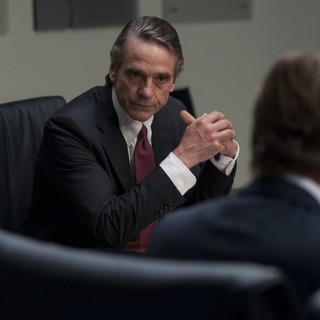
Although Margin Call is clearly inspired by the stories of Lehman Brothers and the other investment banks that packaged high-risk mortgage debts for sale to buyers who were too greedy to stay away, it's largely about the process of crisis itself, the ways people react to the end of their particular world, and how they behave when they have a chance to save themselves at the expense of others.   In Chandor's script, a fired bank executive (Stanley Tucci) gives a low-level analyst (Zachary Quinto, also one of the lead producers) data showing that the bank's bubble of assets is about to burst.  The movie traces how, in the course of a single long night's journey into day, this information makes its way up the chain of command, to successively higher executives played by Paul Bettany, Simon Baker, Kevin Spacey, Demi Moore, and ultimately the master of this universe, Jeremy Irons.  First, there is the stumbling attempt to comprehend what's happening--then the focused, ruthless hunt for a way to, above all, survive.

With its harsh, eloquent speeches about loyalty and greed, and its largely male environment of players who sardonically and savagely scheme against each other, Margin Call begs comparison with David Mamet, and specifically with Glengarry Glen Ross.  The comparisons are apt, and Chandor's dialogue stands up to the competition, but Margin doesn't have Mamet's agenda of describing manhood (or, despite some four-letter words, his spectacular flair for profanity).  These men are less overtly desperate than Mamet's; they're friendly, even courtly, as they slash each other's throats.  These are the guys who did get the good leads, and now they'll do virtually anything to hold on to them.

The cast is the ensemble of the year, handled by Chandor with perfect balance.  Kevin Spacey, as an old hand at the bank who understands both convenience and conscience, almost redeems the terrible movies he's done over the past decade--he leaves behind all his glib mannerisms and cuts down to his character's bone.  Irons, on the other hand, is fabulously superficial; he's the man who is not, under any circumstances, going to lose his private helicopter.   Bettany, Baker and Moore provide other steps on the road to corporate hell, while Quinto and Penn Badgley, as a young man less smart than he thinks he is, represent the newcomers almost instantly out of their depth.  Tucci has the emotionally richest part (none of these people have private lives, not because they're thinly drawn, but because in this context it just doesn't matter), and he manages to goes to town with it and yet not chew the scenery.

The film is low-key and low-budget, but beautifully put together.  Frank G. DeMarco's photography captures the increasing wear and tear of that endless night within the bank's elegant surroundings, while Pete Beaudreau's editing knows when to allow the characters some space and when to leap into the hurtling pace of a thriller.  

Margin Call originally premiered at Sundance in January, and against the odds, it's become only more topical in the last few weeks:  it lays bare the mindset that Occupy Wall Street and its brethren are furiously opposing.  With any luck, that will help the fortunes of a movie that might otherwise be dismissed as a bunch of well-dressed, well-educated, well-spoken people exchanging snappy dialogue in board rooms.  Margin Call has earned the luck; it's an extraordinary piece of work.

  • Digg
  • Del.icio.us
  • StumbleUpon
  • Reddit
  • RSS

THE SKED REVIEW: The Return of The Walking (and Talking) Dead


Since we last saw our rag-tag band of survivors, they've had to endure the loss of their leader, the man most responsible for mapping out their initial strategies and saving them along the way from all manner of deadly predators...  

Oh, wait.  That's THE WALKING DEAD series itself, where the vanished hero is Series Creator/Showrunner Frank Darabont (he's still credited as an Executive Producer, but that seems to be a contractually-required formalism).  Darabont was reportedly unhappy with AMC's treating their one genuine hit (MAD MEN and BREAKING BAD are Emmy magnets, but their ratings are mid-level) by cutting its budget, as well as other network strictures, and so he's walked away, leaving control of the series in the hands of Executive Producer Glen Mazzara.


In truth, and despite Darabont's shiny screenwriting reputation, Walking Dead wasn't known for the pithy wit of its writing, and the show doesn't seem to have suffered at all in his absence.  Tonight's Season 2 premiere, oddly credited to 2 writers on separate title cards (Ardeth Bey and original graphic novel creator/EP Robert Kirkwood), and also to 2 directors (Ernest Dickerson and Gwyneth Horder-Payton), was, despite its supersized 90-minute length, quite compact in scope, and as effective as the show has ever been.  

Our characters who survived the death trap that the CDC in Atlanta turned out to be have a new goal:  Fort Benning, 125 miles away.  But as they start to make their way down the highway, they encounter an impassable jam of crashed cars and trucks, a faulty radiator on the RV, and something new:  a "herd" of zombie Walkers, dozens of them all looking for human flesh.  Luckily, they're still none-too-smart and none-too-fast (and their sense of smell seems to have disappeared), so they're mostly avoided or dispensed with.  But one does go after young Sophia (Madison Lintz), and Sheriff Rick (Andrew Lincoln) goes after her.  When Rick has to dispatch a couple of Walkers, Sophia is lost, and the next day most of the group combines in search of her.  Meanwhile, the characters deal a bit with the aftereffects of last season's storylines:  Andrea (Laurie Holden) is furious that Dale (Jeffrey DeMunn) didn't let her self-immolate at the CDC as she wanted to, while Shane (Jon Bernthal) decides he's going to split off from the group, rather than co-exist with Rick's wife and his former lover Lori (Sarah Wayne Callies).

Among TV's horror series, Walking Dead is unusual for its relatively simplistic plot--since zombies, unlike vampires, witches and other supernatural beings, can't handle much more than lurching and chewing--and also for a tone that relies more on suspense and sheer grossness than narrative thrills.  (Tonight's "yecch" sequence had Rick and Norman Reedus's Daryl cutting open the belly of a Walker to see if any of Sophia's body parts were in there.)  Things bogged down a bit when the group came to an abandoned church and we got not one but two agonized monologues directed to its statue of a crucified Jesus, but the episode did have a strong, and unexpected, cliffhanger ending that should bring people back next week.

AMC also launched something new and different tonight:  THE TALKING DEAD, a weekly half-hour talk-show that will follow every episode of Walking and try to keep fans from changing the channel  It's modeled after the highly successful Watch What Happens series on Bravo (Lifetime has also gotten into the game, with a follow-up to each week's Project Runway), but this is the first time it's been tried in conjunction with a scripted series.  The initial episode, unfortunately, was formatted within an inch of its life and had no substance at all.  Instead of allowing host Chris Hardwick and guests Patton Oswalt and James Gunn (he wrote the script for the Dawn of the Dead remake) to talk with any depth or insight about tonight's episode or the series, they were just permitted to deliver a few one-liners while the show bounced from viewer poll to tweeted question to behind-the-scenes featurette to jokey death count to jokier murder montage.  A brief satellite appearance from Kirkwood was also nothing more than the most superficial kind of celebrity Q&A.  The post-game recap show for a series with committed fans is an idea with real potential, but right now it's as empty of meaningful content as a Walker's brain.

  • Digg
  • Del.icio.us
  • StumbleUpon
  • Reddit
  • RSS

THE BIJOU REVIEW: "The Thing"


THE THING:  Watch It At Home - Not Interesting Enough To Be Scary

The third movie iteration of THE THING is as impersonal as the creature it's about.  This version, the first feature directed by Matthijs van Heijningen Jr and with a script credited to Eric Heisserer (he wrote the remake of A Nightmare on Elm Street and the most recent Final Destination movie), claims to be a "prequel" to John Carpenter's 1982 thriller, but while that's technically true (if you stay for the end credits, you'll see a nice segue sequence that brings us to the beginning of the Carpenter movie), for all intents and purposes, until the last reel, it's basically a remake, since it tells the same story that movie did. 


We're back in the Antarctic, where an alien whatsit has been uncovered in the ice.  Paleontologist Kate Lloyd (Mary Elizabeth Winstead) is recruited by Dr. Sander Halvorson (Ulrich Thomson) to join his mostly-Norwegian crew and help him figure out what The Thing is.  But of course, Sander is just arrogant enough to ignore Kate's advice not to disturb the visitor, and that turns out to be a bad idea.   The alien, you see, has the ability to duplicate the DNA of those around it at a cellular level, so the people you're sitting with and talking to may actually be It.  When discovered, The Thing has a nasty habit of sprouting tangles of messily organic tendrils and mutating into monstrous versions of human tissue on their way to engulfing and/or slaughtering anyone nearby.

The new film goes through its paces efficiently enough, and there are plenty of grossly contorted body parts transformed into man-eating monsters.  But it all feels very perfunctory.  The original version of The Thing from 1951 was an effectively tense allegory about the contemporary issue of worrying who among you was a spy, and its dialogue benefited from the touch of producer (some would say director) Howard Hawks.  Carpenter's movie upped the grossness factor considerably (with superb physical effects by Rob Bottin) but also had a very strong cast of familiar character actors like Wilford Brimley, Richard Dysart, David Clennon and Keith David, so the idea of them being turned into monsters was disturbing.  Plus, of course, 1982 was still Carpenter's heyday, and the movie was memorably suspenseful, with a terrific terse Ennio Morricone score that was much like one of Carpenter's own for his lower-budget films.

In van Hejningen's film, everyone except Winstead (who is appealing, but not memorable) is anonymous.  Joel Edgerton is technically the second lead, but he's so weirdly colorless here that it comes as a surprise to realize that he's actually meant to be important, while Thomson just glowers as the-scientist-who-steps-too-far.  The rest of the cast, much of which speaks Norwegian with subtitles, barely makes an impression, so seeing them get cut down one by one is like watching victims get wiped out in a Friday the 13th movie; you want to check your watch, waiting to see how long before anyone who counts is threatened.

Then, when the movie takes its one shot at doing something the earlier versions hasn't (this time the expedition has uncovered more than the Thing), it falters badly, with a sequence that's just too dumb to hold together.  This is followed, in the way of modern horror movies, with about 3 more endings, until we get to the link to Carpenter's film.

The Thing is technically adept, although the filmmakers haven't solved the problem of CG humans that don't quite move with the weight or density of real people.  It has a sense of atmosphere, and compared to the trend of "found footage" horror pictures these days, at least it has a plot.  But it lacks humor, shading and surprise--mostly, ironically enough, it lacks humanity.  Loud noises and gore can make an audience jump, but they don't make a movie scary.

  • Digg
  • Del.icio.us
  • StumbleUpon
  • Reddit
  • RSS

THE SKED'S PILOT + 1 REVIEW: "American Horror Story"


A lot can happen between the creation of a TV pilot in the spring and production of episodes for the regular season:  a writing/producing team is hired, audience focus groups weigh in, networks and studios (which may have had their own turnover in the off-season) give plenty of notes, both helpful and otherwise, and critics begin to rear their ugly heads.  The results can include changes to tone, pace, casting and even story.  Here at THE SKED, we're going to look past the pilots and present reviews of the first regular episodes of this year's new series as well.

Previously... on AMERICAN HORROR STORY: All manner of dire craziness ensues when the Harmon family moves from Boston to Los Angeles and buys a house with a dense history of murder and worse.  The family was pretty screwed up to begin with--Vivien (Connie Britton) suffered a horrific miscarriage, and Ben (Dylan McDermott) cheated on her with one of his psychiatry students--but that's nothing compared to what they find in their new home.  There's Ben's new patient Tate (Evan Peters) who treasures his Columbine fantasies and lusts after Ben's daughter Violet (Taissa Farmiga); the former owner Larry (Denis O'Hare), who murdered his whole family in the house, was dreadfully burned in the fire that he set, and is now dying of brain cancer; Laura, the maid who appears as a modest elderly lady (Frances Conroy) to everyone except Ben, who sees her as a young temptress (Alexandra Breckinridge); and the next-door neighbor Constance (Jessica Lange), a vaguely menacing presence who's somehow tied in with the house and whose Down's Syndrome daughter can enter the house at will.  And that's not even to mention the various ghosts who haunt the place, the leather-masked stud who may have impregnated Vivien, or the monster in the basement (amongst the jars containing fetuses and body parts) with all the teeth.


Episode 2:  "Is everyone crazy?" Ben asks during this episode, written by creators Ryan Murphy and Brad Falchuk and directed by Alfonso Gomez-Rejon.  And clearly, the answer is yes, and not just crazy, but psychopathic and homicidal.  The episode begins with a flashback to 1968, when two nursing students were brutually murdered in the house (with the show's customary subtlety, the soundtrack literally accompanies the killings with Bernard Herrmann's shower scene music from Psycho).  Other fairly explicit horror references in the hour include M (the thing in the basement seems to be playing with Peter Lorre's ball), Rosemary's Baby (Lange's nosy neighbor channels Ruth Gordon when she realizes Vivien is pregnant), and The Shining (murder by an axe to the chest).  Also, in one scene Lange appears to be playing Alexandra Del Lago in a road company production of Sweet Bird of Youth, so you can't say they don't keep the references eclectic.

Ben might want to consider casting a wider net for his patients:  last week he saw loony Tate (this week, Ben tells the boy he won't be able to treat him due to Tate's disconcerting relationship with Violet, but that doesn't dissuade Tate at all), and this week's nutjob is an actress who, it turns out, is a brutal murder groupie; who shows up at the house with two of her friends to reenact the slaughter of the nurses from the prologue, the victims this time being Vivien and Violet.  Luckily Tate is there to dispatch one of them, and the ghosts of the dead nurses kill the others.  (Tate, Constance and Laura, who hate each other but are somehow linked, dispose of those bodies.)  

Meanwhile, in a storyline slightly closer to earth, Ben finds out that his student girlfriend (Kate Mara) is pregnant, and he has to go back to Boston to be there for her abortion--which is performed at a clinic that apparently doubles as a badly-funded asylum for the criminally insane.  (The promos for next week suggest strongly that the girlfriend will turn out to be a crazy person too.)  That explains why he's not at the house for the attack of the murder groupies.  

American Horror Story is certainly compelling and tense--it's like a mash-up of every horror movie ever--but it's so unceasingly over the top that one has to wonder how long it can sustain itself.  Tonight's episode ended with the only logical moment of the series thus far:  Vivien saying firmly "We're selling this house."  Clearly they don't, or the series would be over; the effectiveness with which Murphy and Falchuk manage to explain just why that doesn't happen will go a long way toward telling us whether the show will be able to hold itself together.  

Original Verdict:  Potential DVR Alert

Pilot + 1:  Good Luck Not Looking At A Bloody Traffic Accident

  • Digg
  • Del.icio.us
  • StumbleUpon
  • Reddit
  • RSS

THE SKED REVIEW: "American Horror Story"


AMERICAN HORROR STORY - Wednesdays 10PM on FX - Potential DVR Alert

The first inkling of just how deranged AMERICAN HORROR STORY is going to be comes with one of the early "normal" scenes.  The location isn't the haunted house, so we're away from the girl with Down's Syndrome who tells people they're going to die in there, the brutally murdered identical twins, the body parts and fetuses preserved in jars... I could go on. But at this point in the story, we're at the private high school where teen Violet (Taissa Farmiga, sister of Vera, who played the younger version of her sister in the recent Higher Ground) is merely smoking a cigarette where it's prohibited, and the local mean girls don't approve (one of their grandmas died of lung cancer).  Yet even this scene is staged with such intense, hyped-up rage that you might think a massacre is about to take place.  The message is clear:  Abandon restraint, all ye who enter here.


"Restraint" isn't a word associated with Ryan Murphy and his co-creator Brian Falchuk in any case (Murphy also directed the pilot)--whatever their strengths and failures, both Nip/Tuck and Glee have been all-in propositions, veering wildly from serious drama to wild perversity often in the course of a single episode.  Letting Murphy and Falchuk loose in the horror area is like granting them a license to kill, mutilate, and generally rampage.  American Horror Story, with its oddly emblematic title ("American" as opposed to what, exactly?  A Portuguese horror story?) embraces all the leeway the genre provides; watching it, you can almost feel Murphy and Falchuk exulting: Where has this genre been all my life?

On the most basic level, American Horror Story has a classic set-up:  the very troubled Harmon family moves from Boston to Los Angeles, where they buy a house with a history of terrible events.  (The gay couple who owned the house previously died in a murder/suicide, and that's just the beginning.)  Vivien (Connie Britton) had suffered an awful late-term miscarriage and hasn't been, psychologically or physically, the same since; after that, her psychiatrist husband Ben (Dylan McDermott) cheated on her with a 21-year old, Vivien walked in on them, and while the couple has remained together, they're completely estranged.  Violet is an outcast who hates LA and cuts herself, but she finds her life livened up when she meets Tate (Evan Peters), one of Ben's patients, who has elaborate fantasies about wreaking Columbine-type vengeance on his schoolmates and is also suicidal.  Plus there's the next-door neighbor Constance (Jessica Lange), mother of the Down's Syndrome woman who "has a way" of getting into the house even when all the doors are locked; Constance has some as-yet unclear involvement with whatever terrors the house contains.

There are many influences here, but the predominant one seems to be The Shining.  Like the novel and especially the Kubrick film, there's the general idea of a family's psychosexual dysfunction being absorbed and amplified by the evil spirits of their dwelling (just as Jack Torrance saw a beautiful, naked woman in place of a rotting corpse, when Ben looks at the elderly housemaid Moira, he doesn't see Frances Conroy, but rather the young, very sexual Alexandra Breckinridge).  More specifically, there's the suggestion that Ben will be coaxed by the house into trying to murder his family, which is apparently what happened to previous owner Larry Harvey (Denis O'Hare).

Luckily for American Horror Story, the genre doesn't require too much in the way of logic, which is typically a weak point for Murphy and his team.  On the other hand, it's very unclear how they're going to sustain this premise beyond a few episodes--after a certain point, there are only so many repellent, terrifying incidents the family can undergo before they'll seem like complete idiots for staying in the house.  For now, though, the show is quite compelling in its crazed way (it certainly isn't dull).  It's also graced by some terrific acting.  Even though Vivien is hardly comparable to Tami Taylor on Friday Night Lights in terms of depth or fullness, Britton brings the same kind of commitment and intelligence to the role, while McDermott, Farmiga, O'Hare, Peters, Conroy and especially Lange offer effective creepiness.

It remains to be seen whether American Horror Story will offer anything beyond superficial scares, let alone a coherent story or meaningful theme.  But the horror genre is, if nothing else, a flexible one, and cheap thrills can be satisfying too, if they're well done.  So far, the show is off to a darkly entertaining start.

  • Digg
  • Del.icio.us
  • StumbleUpon
  • Reddit
  • RSS