RSS
Showing posts with label Comedy. Show all posts

THE SKED'S PILOT + 1 REVIEW: "GCB"


A lot can happen between the creation of a TV pilot in the spring and production of episodes for the regular season:  a writing/producing team is hired, audience focus groups weigh in, networks and studios (which may have had their own turnover in the off-season) give plenty of notes, both helpful and otherwise, and critics begin to rear their ugly heads.  The results can include changes to tone, pace, casting and even story.  Here at THE SKED, we're going to look past the pilots and present reviews of the first regular episodes of this year's new series as well.

Previously... on GCB:  Amanda (Leslie Bibb) grew up in Dallas, where she was the meanest of the mean girls:  head cheerleader, girlfriend of the quarterback, with a major in making life torture for her less popular classmates.  But when Amanda got pregnant and was rejected by her mother Gigi (Annie Potts), she left town, moved to LA and changed her life.  Now she's a really, really nice person, whose life has been upended by the scandalous death of her husband, leaving her penniless and forced to return to her manipulative mother's home with her teen kids. Worse yet, she discovers that the same girls she bullied in high school have grown up to become at least as bad as Amanda was in her heyday.  Their new queen bee is Carlene (Kristen Chenoweth), who's been transformed by multiple plastic surgeries and who wields her flamboyant Christianity like a battle-axe.  Carlene's lieutenants are Cricket (Miriam Shor), a designer with a (barely) closeted husband (Mark Deklin), and Sharon (Jennifer Aspen), not as svelte as the others and insecure about her own husband (Brad Beyer)--with good reason, since he's already made a move on Amanda.  Meanwhile, realtor Heather (Marisol Nichols) is also in Carlene's group, but the only one somewhat sympathetic to Amanda.  Determined to support herself and unable to get a real job, Amanda has had to work at the show's Hooters knock-off, called Boobylicious, and when Carlene publicly humiliates her at church for taking that job, Amanda does some detective work and humiliates Carlene right back by exposing her as the real owner of Boobylicious.


Episode 2:  We pick up shortly after the events of the pilot, as Carlene tries to recover from her public flailing--naturally, by continuing to try to ruin Amanda's life.  In the case of this episode, written by series creator/showrunner Robert Harling and directed by Victor Nelli, Jr, that means turning Boobylicious into a charitably-minded restaurant where the waitresses wear Amish outfits, inviting Amanda to lunch and then leaving her at a truck stop 80 miles from Dallas, making sure no one attends the lunch Gigi is throwing for Amanda, and only vaguely disagreeing with the idea that Cricket's daughter (Alex Elizabeth Gitter) should join the fun by humiliating Amanda's daughter (Lauren Irion) by naming her a "javalina" (a sort of pig) rather than a "fox," cateogires Amanda herself invented in high school.  By the time the episode is over, most of this has backfired on Carlene and her group.

GCB is almost unwatchably coarse and meanspirited, a festival of nonstop female cruelty and ridicule (written almost exclusively by men) with a couple of minutes of sappy sentiment shoved into the end of each episode.  The show revels in ugliness (tonight's episode featured Sharon, the overweight character, attempting to lure her husband into sex with greasy fried foods), and even for someone neither Christian nor devout, its insistent equation of religion with hypocritical maliciousness feels unseemly.  All of this might be fine if the show were a genuine satire, willing to own its apparent anger and disgust toward its characters, but GCB wants to have it both ways, cloaking its ugly hostility in come-on-we're-just-kidding cutesiness.  

Some glints of talent on the part of the actors fight their way free.  Bibb is an appealing lead, and Potts manages to suggest a beating heart underneath her cartoon character.  But it would be hard to imagine a worse role for Chenoweth.  She has a tendency to be over-the-top anyway unless kept under control.  When she is, as she was on West Wing and sometimes on Pushing Daisies, she can bring something fresh and irresistibly likable to her parts.  Placed here into a role that's exaggerated to begin with, she's quickly becoming a grotesque, painful caricature of herself.  

GCB premiered tepidly last week, and although in its 2d airing it may have a higher lead-in than usual (because of a heavily-promoted killing-a-character episode of Desperate Housewives), it should fade quickly from the air.  It may not be the worst single show of the broadcast season--this was the year, after all, of Work It--but it's close enough.
 
ORIGINAL VERDICT:  Change the Channel

PILOT + 1:  Find A Test Pattern To Watch

  • Digg
  • Del.icio.us
  • StumbleUpon
  • Reddit
  • RSS

THE SKED SEASON PREMIERE REVIEW: "Breaking In"


WHERE WE WERE:  Contra Security, a wacky high-tech firm run by the extravagantly enigmatic Oz (Christian Slater).  Contra tests the security measures of its clients by cracking them wide open, staging mock break-ins, robberies, and similar hijinks.  Its roster of idiosyncratic experts include hacker Cameron (Bret Harrison), gadget guy Cash (Alphonso McAuley) and, for the moment at least, lock-picker Melanie (Odette Annable).

WHERE WE ARE:  A somewhat different version of Contra.  BREAKING IN's behind-the-scenes story was at least as interesting as anything that happened on the show.  It aired initially with the giant lead-in of American Idol, and scored not-bad ratings in the mid-2s.  When FOX moved the show away from Idol at the end of the season and gave it Raising Hope as a lead-in, the number plummeted to 1.3.  So one's feeling about the ratings of the show sort of depended on how much one was squinting when looking at them.  In the (sort of) end, FOX didn't renew the series when its network option was up in May.  But Sony Television, which produces Breaking In, didn't give up, and when the cast options were expiring at the end of June (it's typical for cast options to extend beyond the network's, in case the studio can place the show somewhere else with a little extra time), it had talked FOX into splitting the cost of extending the deals for a few more months, so FOX could have a chance to reconsider.  Which, in the (real) end, it did, renewing the show for a midseason run that began tonight--and giving it the hit New Girl as a lead-in.


It's safe to assume that part of the pitch Sony made to the network was a shift in the creative elements of the show, and so the cast of Breaking In 2.0 isn't exactly the same as last year's.  The disguises expert who was part of the team is gone, as is Melanie's buffoonish fiance. And Melanie herself, for that matter, will only recur in some of the remaining episodes (Annable had meanwhile taken a role on FOX's House).  The bigger news is that Contra would have new ownership, with Oz selling the company to a conglomerate personified by the new character of Veronica (Emmy Award-winner Megan Mullally, who's been added to the cast), and her assistant Molly (Erin Richards).  

The season premiere, written and directed respectively by series co-creators Adam F. Goldberg and Seth Gordon, was mostly concerned with setting up the new premise of the show.  Since every single FOX promo had made it clear that Veronica was the new boss, the first half of the episode was unintentionally tiresome as it introduced her as the new perky and annoying assistant to Oz she was pretending to be.  Once the reveal finally took place, the focus was on the Contra employees, so there was still no clear picture of who Veronica is actually going to be.  (Presumably the producers and network are fully aware that having both Mullally and Slater sharing a screen squeezes an awful lot of hamminess into a very small space.)  The Molly character was only briefly introduced, so other than being British and (naturally) acerbic, her role isn't defined yet either.

The basic dynamic of last year's Breaking In was that every week, Cameron and the others would leap to conclusions about what their assignment was and what Oz was really plotting, and every time, it would turn out that Oz was fiendishly playing mind-games with them and was actually 3 steps ahead.  Presumably with Mullally around, that's going to be somewhat different.  The other major thread was Cam's not-quite requited longing for Melanie, and with Annable playiing a limited role, that's not going to be the same this season either.  So the show is going to have some fundamental changes to its DNA.

As for tonight's episode itself, it was at best mildly funny:  Cash's pranks are rarely as clever as the writers seem to think, there was little opportunity for the pop culture jokes that usually abound (apart from an extremely forced Breakfast Club bit), and the script had to do a lot of heavy lifting to contrive both Mullally's arrival and Slater's continuing presence.  Breaking In was far from memorable TV before--we'll find out in the next few weeks if the changes have made it any less disposable.


  • Digg
  • Del.icio.us
  • StumbleUpon
  • Reddit
  • RSS

THE SKED @ PALEYFEST 2012: "New Girl"


There's something infectious about watching the people behind a brand-new TV hit enjoy their success, and at tonight's PaleyFest salute to this year's break-out comedy hit NEW GIRL, the pleasure of the cast and producers bubbled over.  

To an unusual extent that the panelists acknowledged themselves, the dynamics among the cast members and writers seemed not unrelated to the relationships in the show.  By the time creator/showrunner Elizabeth Meriwether had finished kicking off the session and introducing the episode being screened, it came as no surprise later on when star Zooey Deschanel summarized her character Jess by saying she was equal parts the 13-year old versions of herself and Meriwether.  Similarly, the good-natured snarky bickering between Jake M. Johnson (Nick), Max Greenfield (Schmidt) and Lamorne Morris (Winston) could have been outtakes from any given episode, and there seemed to be a gray area between where the actress Hannah Simone left off and her character Cece picked up.


Everyone concerned spoke several times of the show's efforts to deepen and develop the characters as the show goes on, and it turned out that the screened episode "Injured" (which airs tomorrow night) was a standout example of this principle in action.  "Injured" may be the first episode of New Girl that takes place entirely outside of the apartment all the characters except Cece share, and it centers on Nick rather than Jess.  In the course of the episode, Nick has a health scare, and the tone of the episode resembles the bittersweet 50/50 more than New Girl's usual carefree celebration of character eccentricities.  More interestingly, the episode has a very loose, casual feel akin to an F/X comedy.  Not incidentally, "Injured" was directed by Lynn Shelton, whose reputation is in semi-improvised indie relationship comedy-dramas like Humpday and the excellent upcoming Your Sister's Sister--whether "Injured" was actually partly improvised or just very well scripted (by J.J. Philbin), it shows New Girl starting to put some distance between itself and its cutely charming roots.  

There were little in the way of spoiler revelations in the course of the evening--as producer Jake Kasdan noted, the series has few enough continuing storylines, they didn't want to ruin any of them--except that Dermot Mulroney and Jeanne Tripplehorn will appear in an arc (Mulroney as a Jess love interest), and that shippers hoping for the seemingly inevitable Jess/Nick coupling will have to wait for a while.  

With Glee fading, New Girl is now at the center of FOX's Tuesday night, with an audience slightly smaller than CBS' 2 Broke Girls but with far more pop cultural and critical cachet.  The show has plenty of time--years, undoubtedly--to work out how and where they want the series to go.


  • Digg
  • Del.icio.us
  • StumbleUpon
  • Reddit
  • RSS

THE SHOWBUZZDAILY REVIEW: "Wanderlust"


WANDERLUST:  Watch It At Home - Hippy Jokes Thawed Out From 1966

The new WANDERLUST demonstrates the strengths and limitations of amiability in movies.  Its stars, Jennifer Aniston and Paul Rudd, have made very profitable careers out of being professionally likable.  Unlike, say, Tom Hanks, who also began his career in light comedy but proved himself a very serious and varied talent, in the nearly 2 decades since Aniston and Rudd emerged with Friends and Clueless, it's hard to find a single title in their credits that's genuinely dark or even emotionally complicated (Aniston came closest with The Good Girl in 2002).  Their work is--with some exceptions--fairly reliably successful, but looked at in the aggregate, there's a bland professionalism to both their filmographies.


In Wanderlust, they play a New York couple who think they're about to hit new financial peaks:  Linda (Aniston) is pitching a new documentary to HBO, while George (Rudd) is in line for a big promotion.  Of course, they instead find themselves suddenly facing ruin, and have to leave their "micro-loft" in Manhattan and try something else.  Initially they head for Atlanta, where George will force himself to take a job with the porta-potty company owned by his obnoxious, nouveau riche brother Rick (Ken Marino, also co-writer of the script).  But when they rediscover just how awful Rick and his wife Marissa (Michaela Watkins) are, George and Linda remember their brief, idyllic pit-stop at a commune called Elysium, and decide to try the simple life.

This first section of Wanderlust isn't bad:  the script by director David Wain and Marino--longtime writing partners with pictures like Wet Hot American Summer and Role Models to their credit--has some satiric bite (Linda's epically terrible HBO pitch is particularly funny), and there are plenty of laughs as George and Linda seem to be on their own road to hell.  Once the story arrives (and stays) at Elysium, though, it all gets very tired.  Free love!  Naked penises!  Hallucinogenics!  Natural food!  Back in the 1960s, there was a spate of terrible comedies about how silly hippies were, movies like Skidoo and The Happening, and while Wanderlust is far superior to those bombs, it's not in a very different genre.   George and Linda will be shocked and charmed by the quaint spirits who surround them (the group includes Alan Alda, Kathryn Hahn, Joe Lo Truglio and Lauren Ambrose).  Then they'll be tempted by the possibility of opening their marriage (the main threats to fidelity are supplied by Malin Akerman and Justin Theroux).  They'll both go a little overboard (originally, in the version of the film shown to early audiences, Linda's devotion to Elysium's environmental cause included a protest that featured Aniston's first on-screen nude scene in all its mammary glory, but that's been digitally covered up and and editorially removed, reportedly because of Aniston's concerns about real-life boyfriend Theroux's feelings.)  Eventually, though, the couple realizes that this life just isn't for them, and they'll have to find a saner alternative.

Predictability in comedy isn't a fatal flaw (if it were, rom-coms as a genre wouldn't exist), but Wanderlust only intermittently has anything distinctive to add to its cliches.  And Aniston and Rudd, while certainly pleasant company, have such similar appeal that they're like the Witness Protection versions of themselves, unable to draw anything out of each other besides seemingly endless reserves of good-natured likability.  (I can't believe I'm writing this, but Aniston had more comic chemistry with Adam Sandler in last year's Just Go With It.)

Wanderlust is painless, and when it turns up on an airplane or cable network, you won't suffer while watching it.  But if you get interrupted halfway through and never catch the rest, you won't feel like you're missing anything, either.  Increasingly, the movies Aniston and Rudd make feel like that old line about buses:  miss one, and another just like it will be along soon enough.

  • Digg
  • Del.icio.us
  • StumbleUpon
  • Reddit
  • RSS

SHOWBUZZDAILY NY THEATRE JOURNAL: "Venus In Fur"


VENUS IN FUR exists, at this point in its Broadway life, as two overlapping but not identical entities:  it's a deft new play by David Ives, but also, and more prominently, it's become the Star-Is-Born vehicle for its lead actress, Nina Arianda, who's currently giving about as dazzling a performance as you're likely to see on a Broadway stage.  


No one had ever heard of Arianda before she starred in the initial 2010 Off-Broadway production of Venus, and fittingly, in the play she's introduced as an unknown aspiring actress.  Her name is Vanda, and at the end of a long day, hopelessly late, she blows into an audition hall like a scatterbrained force of nature, desperate to try out for the lead in the play Venus In Fur--a character coincidentally also named Vanda.  The only one still in the audition room is writer/directorThomas (Hugh Dancy), who's packing up to leave, but Vanda talks herself, in her seemingly bubble-headed, flaky-funny way, into being allowed to read.  Once she begins, everything changes.

Thomas' play is based on the real late 19th century novel of the same name by Leopold von Sacher-Masoch.  His name became the root of the term "masochism," and that pretty much tells you the subject matter of the work.  It concerns a man named Severin and his obsession with Vanda, before whom he finds sexual satisfaction in abasement and humiliation.  Thomas claims to have written the adaptation out of purely academic fascination, with no personal feelings attached, but when Vanda convinces him to take the role of Severin opposite her, it's no surprise that before long, his real emotions begin to show.

The role of Vanda (the actress) is spectacularly mercurial, presented initially as a sort of savant who doesn't have a thought in her mind when she's being herself, but instantly takes on--embodies--all the necessary characteristics (accent, bearing) as well as the complexities and nuances of Vanda (the character) as soon as she's reading the role.  And there are increasing hints that she may not just be a gifted actress...

Venus In Fur (the play) is ultimately more of a game (and a satire on actor/director politics) than a serious commentary on male/female relationships, as Vanda the actress and Vanda the character constantly shift and begin to merge, and the balance of power between her and Thomas/Severin inevitably comes to resemble the story they're enacting.  But what a game!  The role of Vanda is a gift to a performer in the way that split-personality roles like Sybil and The 3 Faces of Eve have been gifts to actresses in the past:  Arianda gets to become less and more intelligent, submissive and powerful, American and European, seductive and revolted, 21st Century and 19th, all with split-second hairpin turns of body language and voice.  It's the very definition of a tour de force, and she pulls it off gloriously.

Dancy's work is less overwhelming than Arianda's, but shouldn't be underestimated.  He also has to transition between eras, characters-within-characters, and contrasting positions of power, and does so with seeming ease  Ultimately, though, his character's throughline is more clearly preordained, and Thomas is destined to be Vanda's foil.  

Walter Bobbie's direction brings a welcome clarity to what could have been a mess of confusion:  even when we don't know exactly what's going on, or who a character 'is," we always feel comfortable that we know as much as the play wants us to at that given moment, and where we are in Ives' process.  John Lee Beatty's set design and Peter Kaczorowki's lighting design are also notable for squeezing a remarkable variety of changes out of a single fixed set.

Venus In Fur is constantly enjoyable, even if not particularly profound, a satisfying, sexy, funny exercise in theatrical gamesmanship (gameswomanship?).  It's destined to remembered, though, mostly for unleashing Nina Arianda and her powerhouse set of skills onto an audience that finds itself more than willing to yield.

  • Digg
  • Del.icio.us
  • StumbleUpon
  • Reddit
  • RSS

SHOWBUZZDAILY @ SUNDANCE REVIEW: "2 Days In New York"


In 2007, Julie Delpy wrote, directed and co-starred in 2 Days In Paris, a romantic comedy-drama featuring Adam Goldberg and herself as a couple who lived in NY and visited the title city for a tumultuous visit with her character Marie's family.  Paris was only a moderate art-house success in the US ($4.4M), but it did well overseas, and hence, somewhat surprisingly, we have a sequel with a continental switch:  2 DAYS IN NEW YORK, which premiered at Sundance.

A real-time 4 years has passed, and Marie has had a son with Goldberg's character but broken up with him (Goldberg doesn't appear in this film). She now lives with Mingus (Chris Rock) a public- and satellite-radio host, along with her son and Mingus's daughter.  This time, it's her relatives who are visiting New York, including her jolly if unwashed father Jeannot (played by Albert Delpy, the star's real-life dad), ultra-competitive sister Rose (Alexia Laudeau), and idiot ex-boyfriend Manu (Alexandre Nahon), who is now seeing Rose.  (Marie's mother was played by Delpy's real-life mother in Paris, and in the interim, both the actress and the character have passed away.)  They're in town for the opening of Marie's art gallery show, for which the centerpiece is Marie's sale of a piece of conceptual art:  her soul.

2 Days In Paris had a bit of a dark edge:  the disruption caused by Marie's family and her exes scraped at the tensions between Delpy and Goldberg's characters, and it became increasingly clear that they were unlikely to stay together.  New York is more of a sit-com and a fairy tale (it's framed with Marie's narration of a children's puppet show), and it has less substance, but it's often quite amusing.  The 2 Delpys, Laudeau and Nahun are a polished comedy troupe (Landau and Nahun also collaborated on the script), and they get big laughs from culture clash between American and French notions of sexuality, drug use and race--and in Manu, they have the kind of character who's liable to say just about anything at any time and be amiably, unintentionally offensive.  Kate Burton and Dylan Baker turn up as neighbors who become embroiled in Marie's comic deceptions, and there's also a hilarious in-joke piece of casting for the person who purchases Marie's soul.

The surprise of 2 Days In New York, though, may be Chris Rock.  Rock, one of the great stand-up comics of his generation, has had a frustrating movie career, playing sidekicks (often in terrible Adam Sandler vehicles) and bland leading roles, even when he's also been the writer and/or director.  He's never been as relaxed or assured on screen as he is in New York, providing not just a believable movie mate for Delpy, but seemingly content to be the straight man with superb comic timing to the crazy French people.  As Marie becomes increasingly frayed by her family, it's Mingus who holds the movie together, and watching Rock adeptly supply grounding to the silliness around him is a pleasure.

2 Days In New York is in no way a major piece of work, not even as compared to Paris, where the emotional stakes were higher.  Some of Delpy's devices, like Mingus's extended monologues to a cardboard cutout of Barack Obama, are awkward, and as a director, she can't quite pull off the whimsy of her last reel. Still, it's an enjoyable 90 minutes with quite a few pleasant cross-cultural laughs, and while there are very few franchises in indie film, a third installment of the series in a few years' time could be fine.
 

  • Digg
  • Del.icio.us
  • StumbleUpon
  • Reddit
  • RSS

SHOWBUZZDAILY @ SUNDANCE REVIEW: "The First Time"


THE FIRST TIME may be too lovable for its own good.  Jonathan Kasdan's teen romance, which premiered in the Dramatic Competition at Sundance, couldn't be more straightforward:  in its opening minutes, it introduces the adorable Dave (Dylan O'Brien) and Aubrey (Britt Robertson), two hyper-articulate sweethearts who meet outside a suburban LA party neither of them particularly wants to attend, and who chat at length as though they're in a magical moment with the rest of the world in suspended animation around them.  The movie then follows them over the course of the next few days as they gradually acknowledge what we realized instantly, that they're utterly made for each other.


The model, of course, is the John Hughes canon, Hughes having become the J.D. Salinger of 21st Century coming-of-age sagas.  In this case, it's a dash of Some Kind of Wonderful with a pinch of The Breakfast Club's loquaciousness, along with some other post-Hughesians, notably the Kevin Williamson of Dawson's Creek days and the Robert Iscove/R.Lee Fleming She's All That, as well as (although he might not consider himself a Hughesian) Richard Linklater's Before Sunrise/Before Sunset duo. 

Dave and Aubrey really are charming, and listening to them rattle off smart, stuttering dialogue is all kinds of fun.  In his eagerness to bring them together, though, Kasdan fails to come up with much of a conflict to keep them apart.  Hughes himself was strongly aware of the way class figures into high school, and that's a critical undercurrent that often threatens the relationships in his films.  In The First Time, even the competing romantic interests for our hero and heroine are straw people, clearly vapid and unworthy, and the only obstacle Kasdan can think of to put in the couple's way is some unpromising sex (not really spoiler alert territory, given the title of the movie).  The result is a story that feels thin to the point of invisibility, and a romance that can sometimes feel like an exercise.

The First Time creates plenty of rooting interest, but little opportunity to root.  It's extremely pleasant to watch, anchored by Robertson and O'Brien (both CW veterans), and with good supporting work from Craig Roberts (from Submarine, a much more textured teen romance [that nobody went to see]), Victoria Justice, and token adults Josh Malina and Christine Taylor.  There's also lovely photography by Rhet Bear, and special note is due for collages supposedly created by Aubrey, which manage to be impressive but also believably teen-like.  The movie's very weightlessness, however, ultimately weighs it down--having no real surprises or tension, it feels anecdotal and unmemorable.


  • Digg
  • Del.icio.us
  • StumbleUpon
  • Reddit
  • RSS

SHOWBUZZDAILY BIJOU REVIEW: "One For The Money"


ONE FOR THE MONEY:  Not Even For Free - Another Heigl Misfire

Movie stars are, make no mistake, trademarks.  Consumers who invest in 2 hours of George Clooney or Will Smith expect the same kind of reliable enjoyment that they get from a can of Coke or a pair of Nikes.  And no movie star brand in recent years has been mishandled as badly as Katherine Heigl's.

From all indications, Heigl has no one to blame but herself.  After a fairly successful run as a teen actress on Roswell and in some minor movies, she was the breakout star of TV's Grey's Anatomy, gorgeous and with the ability to handle both romantic comedy and fairly heavy drama.  When her first major big-screen role was the smash hit Knocked Up, and she followed it up with the $77M grossing 27 Dresses, the cry of "New Julia Roberts" was heard throughout the land.  And then, almost as soon as she'd made a name for herself, she started doing everything she could to demolish it.


The truth is that none of us have any idea whether George Clooney is the smooth, amiable, happy-go-lucky guy he's established himself to be, or whether Tom Hanks is solid, trustworthy and quick-witted, or Julia Roberts is lovable and sweet.  All those stars may be nothing more than the inspired creations of publicists, brilliantly performed over a period of years.  But whenever they're in public, they appear to live up to their personas, and that's all we, as a public, ask.  Heigl, though, seems incapable of saying 5 consecutive sentences aloud without appearing obnoxious and ungrateful--to the writers and her other colleagues on Grey's, to Judd Apatow and Knocked Up, and just about everyone else.  It may well be that Heigl is more honest than the more easily controlled stars around her, but movie stars sell fantasies of themselves, and Heigl's isn't a fantasy anyone wants to watch.

Combine that with what appears to be fairly atrocious script sense--even 27 Dresses was mediocre at best, The Ugly Truth was flat-out awful, and Killers was worse--and you have a perfect formula for decimating movie stardom in less than 5 years.  The latest painful evidence of Heigl's situation is ONE FOR THE MONEY, a terrible movie that Heigl and her mother/manager helped develop and produce.

The picture is based on a very successful series of crime novels by Janet Evanovich (shades of Kathleen Turner's disastrous V.I. Warshowski), and Heigl plays Stephanie Plum, a tough New Jersey girl who becomes an investigator for her cousin the bail bondsman.  For her first case, she tracks down Joe Morelli (Jason O'Mara), a cop--and ex-boyfriend of Stephanie's--accused of murder.

There's no need to spend much time on the lame storyline or grating dialogue of the movie (the script, which was in development for many years, is credited to Stacy Sherman, Karen Ray and Liz Brixius).  The on-the-lam murder suspect barely bothers to hide himself, and over and over, only Stephanie figures out the obvious place he'll be.  Of course the two end up joining forces to find the real killer, and a look at the cast list makes that identity not too hard to guess.  

Director Julie Anne Robinson, mostly a TV hand (including on Grey's), doesn't do anything to enrich the material.  The movie looks cheap and has no rhythm--an early scene with Stephanie and her family, including her dotty grandma (Debbie Reynolds) is edited so clumsily it would look amateurish on YouTube--and there's no chemistry whatsoever between Heigl and O'Mara, despite the movie's strenuous efforts to suggest some.  (Scenes with Daniel Sunjata as Stephanie's bounty hunter mentor are more promising, but that's entirely because of Sunjata.)  The "New Joisy" stereotypes are painful, and there's not even any mindless action to enjoy.

Heigl seems to have realized that her career is in free-fall--her recent interviews have included nostalgic wishes to go back to Grey's and revisit her character, and she's doing an ensemble piece next, The Wedding with Robert DeNiro, Diane Keaton and Amanda Seyfried.  For now, she's the actress version of The Devil Inside--a big opening, followed by a horrific 2d weekend fall.  Nobody expects or wants a sequel to movies like that.

  • Digg
  • Del.icio.us
  • StumbleUpon
  • Reddit
  • RSS

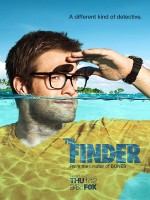
THE SKED PREMIERE REVIEW: "The Finder"


THE FINDER - Thursdays 9PM on FOX - If Nothing Else Is On...

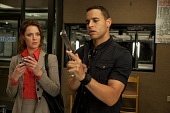
THE FINDER has already had a pilot of sorts, which aired last season as an episode of BONES.  While the series is based on the character Walter Sherman from the "Locator" novels by Richard Greener, technically it's presented as a jerry-rigged spin-off of Bones, with Walter supposedly being an old Army friend of the Seeley Booth (David Boreanaz) character.  (Both The Finder and Bones are "created" for TV purposes by Hart Hanson.)  That Bones episode had a somewhat different supporting cast and also featured Bones cast members, so we'll consider tonight's episode the "real" pilot.


Walter Sherman (Geoff Stults), in all incarnations of the character, is a former soldier who now runs a tropical bar (in Florida for the TV series).  He suffered a brain injury that has wired his mind in such a way that he can make connections between seemingly random pieces of information and use them to track down any person or object that's been lost.  He also has a deep-rooted psychological need to locate such people and things. Hence, he's "The Finder."  His right-hand man, lawyer and muscle is Leo (Michael Clarke Duncan).  Since the original TV episode, he's lost the tough bartender played by Saffron Burrows, and instead liaises with a tough, self-described "smoking hot" cop named Isabel Zambada (Mercedes Masohn), with whom he has the obvious mix of irritated professional respect and sexual tension.  He and Leo, for reasons that aren't yet entirely clear, also have the care of teen gypsy Willa (Maddie Hasson), who's on probation from juvie living in a trailer on their land; Walter and Willa mutually pretend not to care about one another.

As in Bones, the particular mystery of the week is less critical than the banter and relationship between the characters.  In the premiere episode, Walter was hired by the military-school student son of a pilot whose life Walter had saved in Kosovo, and ultimately he proved that the father, while sadly deceased, had been a hero and a caring dad.  

The Finder hasn't quite discovered its voice yet, but then Bones took most of its first season before it hit its stride.  Right now the show feels underpopulated, compared to the ensemble rom-com that Bones turned out to be; with only 4 leads, they're all being asked to do too much.  Also, Walter is an emotionally stunted character in the mode of Brennan on Bones, but his foils aren't yet being given the material to carry his emotions for him, the way the other characters do on that show.  

That being said, The Finder is a perfectly pleasant hour of television for now.  Stults, Clarke and the women are personable and seem like a good fit, and Hanson provides the tone of wry mystery that's worked for him on Bones.  The show will have a limited number of episodes this year, as it plugs the gap in Bones episodes caused by Emily Deschanel's pregnancy, and if it doesn't lose too great a portion of Bones' rating (it will doubtless be helped by having American Idol as a lead-in starting next week, and next week also brings a visit from Bones' John Francis Daley playing his character Sweets), it should have sufficient time to develop its potential and prove whether FOX has found a companion piece for its long-running procedural hit.

  • Digg
  • Del.icio.us
  • StumbleUpon
  • Reddit
  • RSS

Heroes Are Extinct Volume 1 (Paperback)

Heroes Are Extinct Volume 1
Heroes Are Extinct Volume 1 (Paperback)
By Ryoji Hido

Buy new: $12.95
21 used and new from $0.02
Customer Rating: 2.4

Customer tags: manga(5), power rangers(4), superhero(3), comedy(3), humor(2), manga -- science fiction, heroes are extinct, ryoji hida, satire, ryoji hido, age 13 and up, manga -- comedy

Review & Description

A hero from a distant star arrives on Earth to pit his strength against Earth's famous superheroes! Only problem is Earth doesn't really have any superheroes. Growing up watching super-hero TV shows from Earth - think Power Rangers or Ultraman, our fearless hero decides to amass an army on his home planet and invade Earth to pit his strength against them. Only when the invasion starts, no one comes to stop him. What is an alien on Earth supposed to do with entire army and no one to fight?!?

Product Details

  • Amazon Sales Rank: #1704761 in Books
  • Published on: 2007-07-31
  • Original language: English
  • Number of items: 1
  • Binding: Paperback
  • 200 pages

Click Check Price & More Reviews

  • Digg
  • Del.icio.us
  • StumbleUpon
  • Reddit
  • RSS

THE SKED SEASON PREMIERE: "Californication"


CALIFORNICATION has been a fairly reliable performer for Showtime, although not a breakout hit (last season, airing at 9PM, it was doing around a 0.2 in 18-49s, about the same as The Big C and a little below the network's other signature comedies Weeds and Nurse Jackie).  It returns for its 5th season in a new 10:30PM slot, after Showtime's premiering House of Lies. 

WHERE WE LEFT OFF:  After screwing up his life, career and family in Los Angeles for 4 seasons, novelist and screenwriter Hank Moody (David Duchovny) was moving back to New York, thousands of miles away from the estranged love of his life Karen (Natascha McElhone) and their teen daughter Becca (Madeleine Martin).  Meanwhile, Hank's best buddy and agent Charlie Runkle (Evan Handler) found out he was going to be a father, albeit with his ex-wife Marcy (Pamela Adlon), who was now with big-shot producer Stu (Stephen Tobolowsky).


WHERE WE ARE:  3 years, more or less, have passed since we last saw Hank and his comrades.  Hank himself has written what appears to be a successful memoir of his life in LA (called, coyly, "Californication"), and as we re-meet him, he's about to have an ugly break-up with his girlfriend of 1 year (played all-too-briefly, unless they find a way to bring her back, by Justified's Natalie Zea).  Hank returns to LA to try and get a screenwriting job with the rapper Samurai Apocalypse (RZA) who wants to get into movies, and is already poised to hook up with Samurai's girlfriend (Meagan Good), with whom Hank had a meet-cute on the plane to LA.

In domestic news, Karen is now seemingly happily marred to Richard (Jason Bates), and the two are raising Becca, who is now attending college and having sex with a 24-year old boyfriend who both Hank and Richard consider a douchebag (Karen is quick to point out that the lad resembles no one so much as a young Hank).  Charlie, meanwhile, is sharing custody of his and Marcy's son, who doesn't speak and who has a bad habit of wandering into Marcy and Stu's most intimate moments.  

The main thematic pull of Californication has always been Hank's passionate yearning for Karen, and the endlessly self-destructive ways he's made their relationship futile, so it'll be interesting to see how the show deals with her being in an apparently settled marriage with a decent guy.  The same goes for the Marcy/Runkle relationship, now that she seems firmly together with Stu.  The season premiere, written by series creator Tom Kapinos and directed by Showtime house helmer John Dahl, does a brisk job of bringing everyone back together, although the plotline with Samurai Apocalypse and his girlfriend doesn't seem hugely promising at first glance.  By the show's standards, the season premiere is mostly character-based, with a sex quotient that's relatively modest; one assumes that will change as the season continues.

The cast of Californication continues to be stalwart.  Duchovny does a great job conveying the mix of world-weariness, sarcasm, self-indulgence and often fruitless hope that drives Hank, and McElhone manages to keep Karen's complicated feelings for Hank believable.  Handler and Adlon are simply two of the most valuable supporting cast members on television (Adlon is also superb in her recurring role on Louie), funny, outrageous and yet also somehow grounded.  

Californication isn't great television, but it's been an entertaining, engrossing ride since it started, a little darker and more romantic than Entourage ever bothered to be, and sparked by a uniformly fine cast.  If the show can continue to find stories worth telling, there's no reason it shouldn't keep going on Showtime's slate.
 

  • Digg
  • Del.icio.us
  • StumbleUpon
  • Reddit
  • RSS

THE SKED PILOT REVIEW: "House Of Lies"


HOUSE OF LIES - Sundays 10PM on Showtime - If Nothing Else Is On...

Showtime took a major step forward this season with its gripping new drama series Homeland, a show worthy of being mentioned with anything on TV.  The network's new comedy HOUSE OF LIES, though, is considerably less of an event.

The setting may be the world of management consulting rather than show business, but based on its pilot, House of Lies is trying too hard to copy its hour-mate Californication.  Don Cheadle has the David Duchovny unprincipled-but-talented role, playing Marty Kaan; it's no accident that his last name is pronounced like "con," because Marty's consulting business is essentially a con game--he manipulates jargon and statistics to tell huge companies what they want to hear in a way they're not expecting, and rakes in their cash.  In the pilot, he finds a way to spin a Wall Street firm's desire to justify its huge bonuses despite the recession, so that they'll look socially conscious even as they're buying yachts.  Marty is cynical and more than a little soulless, but he's our hero because he also has a breezy sense of humor and great charm.  (And because he's played by Don Cheadle.)


Marty has a team (he calls it the "pod") of young colleagues:  Jeannie (Kristen Bell), who's lovely and who, inevitably, Marty wants to sleep with (for now, at least, they merely exchange flirtatious banter); Doug (Josh Lawson), who went to Harvard; and Clyde (Ben Schwartz), who didn't.  So far Marty is the only character with a back-story:  he lives with his retired shrink father (Glynn Turman) and his young son (Denis Leonard, Jr), who's experiencing gender issues (in the pilot, we know he's potentially gay because he wants to play Sandy in a school production of Grease and go shoe-shopping).  Marty's token bit of depth comes with the disclosure that his mother committed suicide, although at this point we don't know anything about the circumstances.  Meanwhile, the show features the ever-popular contrivance of Marty's ex-wife (Dawn Olivieri) also being his most ferocious competitor in the consulting trade, as well as a terrible mother, a pill-popper and Marty's sometime bed partner.

House of Lies was created by Matthew Carnahan (based on a novel by Martin Kihn), who was previously the creator of Skin, the similarly cynical show about tabloid journalism with Courtney Cox that stumbled through a couple of seasons on FX.  Carnahan's work here is glib and superficial in a way that's moderately entertaining, but so far not emotionally involving at all.  Unlike Californication, there are no bonds of believable friendship between the characters, and nothing to compare to the thread of doomed romance between Duchovny's character and Natascha McElhone's that has always given that show its center.  Carnahan's plotting in the pilot seems aimed more at finding spots for gratuitous pay cable sex (a strip club is a key location for the episode, and a key plot point requires 2 of the female characters to jump each others' bones within about 30 seconds of meeting) than anything else. which is another unwise attempt to ape Californication's free-wheeling softcore style.

The one thing House of Lies clearly has going for it is its cast.  Cheadle, of course, is one of the best character actors around, skilled at comedy and drama, and he's capable of holding audience affection no matter how much of a snake Marty is.  (One of the show's more effective gimmicks is letting Marty step out of scenes to explain the consulting business directly to viewers.)  It's a pleasure to see Kristen Bell back playing a character with sharp, witty dialogue after her disastrous attempts to become a movie star, while Ben Schwartz has been hysterical as Jean-Ralphio on Parks & Recreation, and is clearly capable of doing more than the pilot allows.   

House of Lies has plenty of potential.  It's a smooth piece of work (the pilot was directed by Stephen Hopkins), painless to watch, with likable leads and a decent premise.  What it needs, though, is something to be about other than its own dexterity.

  • Digg
  • Del.icio.us
  • StumbleUpon
  • Reddit
  • RSS

THE BIJOU REVIEW: "We Bought A Zoo"


WE BOUGHT A ZOO:  Worth A Ticket - Cameron Crowe Pays His Dues and Keeps His Dignity

There's a classic line in Albert Brooks's incredibly prescient 1979 Real Life where Brooks, as the prototype of a reality-television director, tries to decide whether to do something unethical.  His rationalization for going ahead:  "What are they going to do--put me in movie jail?"

Of course there really is a movie jail, but it's not about ethical shakiness--you're sentenced there if your movies flop.  And there's little chance of appeal, no matter how pristine your prior record has been.  Cameron Crowe has given us such classics as Say Anything..., Jerry Maguire and Almost Famous, but he's been in movie jail since 2005, when he committed the felony known as Elizabethtown, a purported romantic-comedy that combined dreadful reviews (28% on Rotten Tomatoes) with awful boxoffice ($27M in domestic gross).  As you'd expect, there's only one way for him to win his freedom now:  make a hit.


WE BOUGHT A ZOO is Crowe's petition to the parole board, an amiable, fairly smart and quite charming big-tent family movie for the holidays.  Based on the British writer Benjamin Mee's memoir, and written for the screen by Crowe with Aline Brosh McKenna (who on the one hand wrote The Devil Wears Prada and on the other was responsible for I Don't Know How She Does It), the Mee of Crowe's movie has been relocated to Southern California and turned into Matt Damon.  Benjamin and his children Dylan and Rosie (Colin Ford and Maggie Elizabeth Jones) are at loose ends after the death of their wife and mother, and when Benjamin quits his job and decides to relocate, they impulsively buy a house that comes attached to a dilapidated, privately-owned zoo.  (In real life, the family first bought the zoo and after that Mee's wife became fatally ill, which would have made for a less cheerful movie.)  They find themselves responsible for operating it and for dealing with the motley team of suspicious zoo employees, headed by Kelly Foster (Scarlett Johansson) and including Patrick Fugit, Elle Fanning, Angus MacFadyen and Carla Gallo.

Naturally the zoo has to be brought up to code if it's to re-open, and naturally it has to re-open if the adorable animals are to be kept, and naturally there's a drop-deadline by which that has to happen and an officious inspector (John Michael Higgins) who's impervious to the heart-tugging efforts of the family and crew.  This is the kind of movie that pretends to have suspense, but everyone knows the ending is thoroughly preordained (maybe a Lars von Trier version would work out differently), so the point isn't so much the destination as the journey.

Luckily for everyone, Cameron Crowe can do heartfelt like nobody's business, and even at its most predictable and cloying, We Bought A Zoo is enormously likable.  Just when things are getting too sentimental, Crowe and McKenna will have Ben's world-weary brother (Thomas Haden Church) show up, or get us to a surprisingly tough-minded argument between Benjamin and his son.  The dialogue is often sharp and amusing, and it can deliver strong emotion when it's time for the movie to land its heavy punches.  

One of Crowe's greatest skills has always been his work with actors--it's remarkable how many of the performances given in his films rank with the best of those actors' careers, from John Cusack in Say Anything..., to Kate Hudson in Almost Famous, to Tom Cruise in Jerry Maguire.  Damon underplays beautifully here, a self-effacing piece of work that illuminates the performances of his co-stars.  Even de-glamorized, it's not hard to figure out what Johanssen is ultimately doing in the story, but Crowe and McKenna smartly push romance to the back of the movie's mind, and Johanssen gives a flinty, believable performance.  Colin Ford is strong as Ben's resentful son, and he has the great good fortune of sharing scenes with Elle Fanning, as luminous a young presence as any on screen these days.  The rest of the cast is populated by charmers, with Haden Chuch particularly good at hitting Crowe and McKenna's lines out of the park.

Zoo is also a lovely piece of craft, with glowing photography by Rodrigo Prieto, an easygoing pace set by editor Mark Livolsi,  and of course, this being Cameron Crowe, a great musical combination of score by Jonsi and selected songs.

We Bought A Zoo is, to be sure, shallow and obvious--you won't learn much of anything about the real-life challenges, let alone the moral issues, of zoo operation.  Plot turns are convenient and sometimes generic.  But there's nothing wrong with a little holiday warmth when it's played right, and Crowe has earned his way out of his studio cage--er. enclosure.

  • Digg
  • Del.icio.us
  • StumbleUpon
  • Reddit
  • RSS

THE BIJOU REVIEW: "The Sitter"


THE SITTER:  Not At Any Price - Adventures In Bad Moviemaking

Jonah Hill is awfully lucky to have made Moneyball this year.  In that film, fueled by a brilliant Aaron Sorkin/Steven Zaillain script, he gave a marvelous performance as half of the year's most unlikely comedy team with Brad Pitt, but since then it's been downhill.   His aggressively unpleasant FOX animation series ALLEN GREGORY has one more episode to run, dumped on a night otherwise filled with reruns, and now there's THE SITTER, a dismally bad and unoriginal formula comedy.


The movie's pitch meeting must have lasted about 15 seconds:  "It's Adventures in Babysitting meets Date Night... but it's dirty!"  "We love it!"  Hill plays Noah, a schlubby college dropout who spends his days living at home with his mother (his prosperous dad, having left them to start a new family, doesn't pay his alimony or child support) and his nights casually abused by Marisa (Ari Graynor, in a variation of her Nick and Norah's Infinite Playlist role), who he'd like to think is his girlfriend.  Guilted by mom into babysitting for a neighbor's kids so she can have a night out with a potential romantic interest, Noah is trapped with the seemingly Asbergian Slater (Max Records, from Where the Wild Things Are), aspiring young celebrity-slut Blithe (Landry Bender), and adopted, violent Rodrigo (Kevin Hernandez).  When Marisa calls to offer Noah the promise of sex if he'll just buy some drugs for her and bring them to a party in the city, he can't resist even if it means bringing the kids with him, kicking off the evening's run-ins with danger, corruption and supposed hilarity.

The saddest thing about The Sitter is that the script credited to Brian Gatewood and Alessandro Tanaka doesn't even let Hill do what he does best.  Despite its R rating and dirty mouth, The Sitter is at heart squeaky-clean; it never lets the children get into any serious danger, and before long Noah's attitude to them is therapeutic, making them better youngsters even as they transform him into more of a responsible adult.  (In the movie's single most bizarre sequence, Noah rediagnoses Slater's compulsions--apparently accurately--as stemming not from a personality disorder requiring medication, but something entirely different.)  Noah even finds true love as his reward for becoming a more mature human being.  Hill's comic strength has mostly come from sarcasm and unjustified hostility, but Noah is a lump and then a reluctant role model, which simply isn't a very funny template.  (Oddly, it's not dissimilar from his role in Get Him to the Greek, where he was straight man to Russell Brand's rampaging id; if Hill is going to develop his own vehicles--he's a producer of The Sitter--he needs to do a better job of figuring out what works for him.)  The movie is so cowardly that it doesn't even have the nerve of the most recent Harold & Kumar movie:  in this picture, when a container of cocaine explodes in the car with Noah and the children, miraculously the kids don't inhale a single grain of it and are entirely unaffected.

The Sitter also poses the question of what the hell is going on with director David Gordon Green.  Green started as the artiest of indie directors, with movies like George Washington and Snow Angels that were seen only by film critics and festival attendees.  He'd always wanted to be in the comedy world, though--Danny McBride, an old friend, played a supporting role in Green's All the Real Girls--and in 2008, he completely switched gears and directed the breakout hit Pineapple Express.  Since then he's been wholeheartedly in the Hollywood camp, directing many episodes of McBride's Eastbound and Down series and concentrating on comedy.  But his taste and skill have been steadily degenerating:  Your Highness was a slack parody all too thrilled with its own inbred cleverness, and The Sitter is much worse, a piece of second-rate hackery that's uninteresting to watch (even though Green's customary cinematographer Tim Orr is behind the camera) and choppily edited (by Craig Alpert) to barely reach feature length at 81 minutes. 

The movie isn't complete misery:  Sam Rockwell (who in a different life was a star of Snow Angels) livens things up whenever he's on the scene as Marisa's murderous drug supplier, because that's what Sam Rockwell does, and occasionally Hill gets to riff for a few seconds when someone like J. B. Smoove shows up.  But The Sitter is largely tiresome and almost completely unfunny, a vanity project for Jonah Hill that doesn't even show him to best advantage.  After this and Allen Gregory (also developed by Hill), he may want to go back to his Moneyball model and put himself into the hands of people who are smarter and more capable of burnishing his talents than he appears to be.

  • Digg
  • Del.icio.us
  • StumbleUpon
  • Reddit
  • RSS

THE BIJOU REVIEW: "Young Adult"


YOUNG ADULT: Worth A Ticket - Theron + Oswalt = The Real Thing

Charlize Theron plays the hell out of her character Mavis Gary in the new YOUNG ADULT.  Theron has had a curious Hollywood career, with the usual big-budget flops (remember Aeon Flux?) mixed with a clearly wholehearted commitment to difficult, independent projects like The Road, The Burning Plain, Sleepwalking (which she also produced) and In the Valley of Elah.  She's been shown industry respect with an Oscar, of course, but in Monster she was laden with the kind of heavy make-up and prosthetics that make the Academy genuflect reflexively.  In Young Adult it feels like Theron's got the role, written and directed by Diablo Cody and Jason Reitman of Juno fame, that she's spent years trying to find, one in which she's still recognizably Charlize Theron but in a way that's darker and more acerbic than her natural looks and the system have allowed her to be before.


Theron is superb, and so is Patton Oswalt in a smaller role.  Young Adult as a whole, however, is more problematic.  The movie's narrative line is very simple:  Mavis is a native (she'd consider herself a survivor) of the small Minnesota town of Mercury; she now lives in Minneapolis.  She was the mean girl cheerleader who dated the quarterback in high school, and she considers herself infinitely superior to those she left behind, although really now that she's in her mid-thirties, she's deeply unhappy if she'd only admit it to herself:  barely successful as a ghost-writer for a teen romance book franchise, a too-heavy drinker, and a habitue of the kind of anonymous sex that she seems to enjoy only slightly more than Michael Fassbender does in Shame.  She decides to go back home to relive the triumphs of her youth by taking back her old beau Buddy (Patrick Wilson), despite the inconvenient fact that he's married and a brand-new dad.

Young Adult is the story of Mavis' time back in Mercury, her relentless delusions and assortment of  self-destructive acts.  It's immediately apparent to everyone except Mavis herself that Buddy is blissfully happy with wife Beth (Elizabeth Reaser) and their baby, and not interested in being more than old-pal polite to Mavis.  On some level, Mavis is aware of this, but Theron does a beautiful job of digging into Mavis' hard core of denial.  Mavis does manage to make an old-new friend:  Matt (Oswalt), another drinker who's a lot more clear-eyed about his own problems (he was severely beaten back when he was beneath Mavis' contempt as a loser teen), but despite his claimed contentment with the life he's made for himself, he still has his own fantasies about Mavis seeing him as more than a drinking companion.

As great as it is to watch Theron and Oswalt bounce off each other in their scenes together, ultimately the problem with Young Adult is that it has nowhere to go.  The other characters are mere shadows (Buddy doesn't experience even a flicker of temptation no matter how much Mavis tries to seduce him), and the movie isn't going to let Mavis have any kind of epiphany, so she just keeps humiliating herself over and over, keeping her head inside the bubble where her actions make sense.

It's interesting that some of our pop culture arbiters, notably the NY Times, insist on not only appreciating Young Adult for its real qualities, but overpraising it as more than it is.  This is, I think, the result of the odd aftereffects of the great success of Juno.  Juno has turned out to be one of those movies that come along every few years (other recent examples are Cider House Rules, A Beautiful Mind, and Chicago) that get generally favorable reviews and awards attention, make lots of money... yet somehow leave a bad aftertaste in critical mouths, such that the film's makers subsequently have to prove themselves better than those movies suggested.  Jason Reitman escaped the worst of this by doing something very different with Up In the Air, but following up with the high-school flop Jennifer's Body doomed Diablo Cody--now the success of her projects is judged by how much they differ from Juno.  (No smug one-liners?  Check.  No happy ending?  Check.  No likable protagonist?  Check.)

Ironically, although Young Adult is being praised for dodging romantic-comedy cliches, it falls right into plenty that are just as hoary and familiar.  The big-city guy or gal acting all superior to the small-towners, who it turns out are the ones possessing real wisdom and grace--that's a staple that goes back to old-time westerns.  There's even a DNA strand of the theme that runs from Doc Hollywood to Northern Exposure to the current Hart of Dixie.  The fact that Mavis doesn't recognize (or more accurately refuses to openly acknowledge) that this is the case doesn't change the fact that it's made utterly clear to the audience.  And the character of Matt?  The semi-drunken, more or less asexual, reliable if sarcastic ear to the blowzy heroine's troubles?  The only thing keeping him from being a cliche of the "gay best friend" is that the whole town thinks Matt is gay but he really isn't.  (The misconception that Patton Oswalt is gay seems like a stretch, but whatever.)  The seemingly glamorous arrival in town who really turns out to be close to the skids?  Practically out of the Tennessee Williams playbook.  

It doesn't help that although the movie is super-polished (Reitman uses his usual technical team of cinematographer Eric Steelberg, composer Rolfe Kent, and editor Dana Glauberman), the actors besides Theron and Oswalt have little to do.  Wilson is a vaguely pleasant presence, and Reaser is less interesting than she seems meant to be (her new-mom character is in a band), while Mary Beth Hurt and Jill Eikenberry provide elder insight.  They're all so collectively nice that they might as well be made of dough.

Young Adult is a showpiece for 2 great performances, but as a film it lacks both the scope of a novel and the perceptiveness of a great short story; it's a sketch that, like its heroine, refuses adamantly to delve beyond easy surfaces.

  • Digg
  • Del.icio.us
  • StumbleUpon
  • Reddit
  • RSS

SKED PILOT REPORT: PREMIERING TONIGHT - "I Hate My Teenage Daughter"


Disclaimer:  Network pilots now in circulation are not necessarily in the form that will air in the Fall.  Pilots are often reedited and rescored, and in some cases even recast or reshot.  So these critiques shouldn't be taken as full reviews, but rather as a guide to the general style and content of the new shows coming your way.

I HATE MY TEENAGE DAUGHTER -  Wednesday 9:30PM on FOX:  Change the Channel

Have you seen the title, I HATE MY TEENAGE DAUGHTER?  Do you get it?  Good:  you've just saved 23 minutes out of your life--30 if you watch the commercials.  Teenage Daughter is one of those pilots so dreadful that you can't help but wonder just how bad a show had to be not to get on its network's fall schedule.  This one isn't just painful but more than a little ugly.


You don't believe me.  How bad can it be, you say?  Well, try this for repartee:  An ex-wife (Katie Finneran) criticizes her ex-husband's parenting by saying "Maybe you should get a job, instead of playing golf with your stupid buddies!"  Retorts he:  "I'm a golf pro!"  (Apparently there just wasn't enough of this brand of sparkling humor, because later in the pilot, the other ex-husband complains "How can I be a bad parent?  I'm never even here!"  And he means it.)   The other mother of the piece (Jaime Pressley), accused by her mean girl daughter of not understanding her life, due to being a social outcast herself in high school, protests:  "You know who else was an outcast?  Jesus, and I think he's pretty popular!"  I could go on.  And on.

Teenage Daughter was written by the team of Sherry Bilsing and Ellen Kreamer, who've been writing together since Friends, most recently on The New Adventures of Old Christine.  So it's anyone's guess why this thing is so bad.  More troubling is the rancid point of view it takes.  The premise of the show, as you can tell from the title, is that Pressley and Finneran, both tormented in high school (one was sheltered by religious fanatic parents, the other was extremely overweight and had a skin condition) have spoiled their own daughters, who have become exactly the sort of popular, rotten girls who made their lives miserable.  This could have been an entry point for some perceptive comedy, but instead the joke is that the mothers are both still pathetic losers at heart.  So we get Finneran (the previously overweight one), in a moment of stress, digging her hands into a pie and shoving it into her mouth (playing the rest of the scene with gooey pie all over her face), while Pressley, who has a crush on her ex-husband's brother (Kevin Rahm, recently one of the gay neighbors on Desperate Housewives), turns into a gushing imbecile in his presence.  (This, let me remind you, is a show written and produced by women.)  The daughters (Aisha Dee and Kristi Lauren) are manipulative monsters, and so is their school principal, who was once one of the girls torturing Finneran.  The laugh track howls at everything (flat multicamera direction by Andy Ackerman); I felt like Malcolm McDowell strapped down with his eyeballs held open in A Clockwork Orange.

The two things Teenage Daughter does have going for it are its stars.  Pressley was marvelous on My Name Is Earl, and Finneran stole "Promises, Promises" out from under Sean Hayes and Kristen Chenoweth on Broadway; both are naturally likable and have expert timing (although they're both clearly far smarter than their idiot characters).  Against all odds, they occasionally manage to suggest human beings in this shambles, but their fans would be better off waiting for their next projects.

Teenage Daughter may not be the flop it deserves to be:  FOX has given it a prime timeslot, following the Wednesday installment of X-Factor, and Mitch Metcalf's projection has it behind Criminal Minds and Happy Endings, but ahead of the aged audience for NBC's Harry's Law.  Success, though, isn't the same as quality, and the best to be said about this so-called comedy is that it conveniently already has the word Hate in its title.


  • Digg
  • Del.icio.us
  • StumbleUpon
  • Reddit
  • RSS

THE BIJOU REVIEW "The Descendants"


THE DESCENDANTS:  Worth A Ticket - Flawed But Heartfelt

It's taken an unaccountable 7 years for Alexander Payne to follow up Sideways, the biggest hit of his career,  with THE DESCENDANTS, which will hit theatres in time for a serious awards season push in late November.  Sideways and Payne's earlier Election are two of the best films anyone's made in the past dozen years (and his other features Citizen Ruth and About Schmidt are hardly slouches either), setting the bar pretty high for his next film.  That may be why The Descendants, while pleasing and dramatically satisfying, feels a little bit soft.


The film, written by Payne with Nat Faxon and Jim Rash (they're better known as actors--Rash plays the mad Dean on Community), and based on a novel by Kaui Hart Hemmings, is set in Hawaii, where Matt King (George Clooney) is facing multiple crises.  Matt's wife has been horribly injured in a boating accident, and lies in a coma, with the decision of whether or not to end her life up to him.  Whatever he decides, he's now singlehandedly responsible for raising their two daughters:  the angry, rebellious Alexandra (Shailene Woodley) and her younger sister Scottie (Amara Miller).  Meanwhile, as one of the heirs to a huge tract of family land that is being sought for development, he also has to cast a critical vote as to whether to sell his family's legacy or pass up a huge amount of money.

And his travails are just beginning:  he learns (this is revealed in the film's trailer, so no spoiler alert) that his wife had been having a serious affair at the time of her accident, further complicating his feelings about her and his family.  Then there's Alexandra's moronic boyfriend, who she insists accompany them everywhere...

All of this provides plenty of rich material for Payne and his co-writers, and the film moves smoothly between exasperated comedy and strong drama.  As you'd expect with its Hawaiian setting, The Descendants looks wonderful too.  Phedon Papamichael provides lush, gorgeous photography, the settings and landscapes could be provided by the Hawaii Tourist Bureau, and there's good use of native music on the soundtrack.  The acting is of a very high standard--apart from those named above, Judy Greer (especially) and Matthew Lillard are very fine as key figures in what turns out to be Matt's wife's secret life, Robert Forster is priceless as his father-in-law, and Beau Bridges plays one of Matt's cousins and a co-heir of the land.

And yet somehow The Descendants doesn't quite have the impact of Payne's best films.  It's a little too accomplished for its own good, typified by Clooney's presence in the starring role.  Here's a wildly inconsistent statement:  Clooney gives a wonderful performance, one of his best, and it's easy to imagine him as a strong contender for the Best Actor Oscar, yet he's fundamentally wrong for the role.  Unlike Paul Giamatti in Sideways or Matthew Broderick in Election, Clooney is so un-average, so inherently glamorous, that the idea of Matt as an ordinary guy never fits--you have to keep reminding yourself that Matt is in trouble, and he won't be able to just glide over his problems.  (Imagine Giamatti playing Matt--his recent role in Win Win wasn't all that different a character--and you have a completely different movie, just as Win Win would have been with Clooney in the lead.) This lowers the emotional stakes, and makes the movie lighter and more escapist than it seems intended to be. 

There are other flaws--Alexandra's boyfriend Sid (Nick Krause) is a cartoon until the writers decide to unconvincingly give him depth late in the game, there's never any doubt what Matt is ultimately going to do with his family land--and the overall effect is of an entertaining picture that doesn't go quite deep enough.

The Descendants is very enjoyable, and it could well supplant Sideways' $71M as Payne's biggest hit; no doubt it will be on the short list of Oscar candidates.  There's certainly nothing wrong with that.  But it's probably the first movie Alexander Payne has made that could be called "comfortable," and it's a little bit disappointing to see him settle for pleasing the crowd.

  • Digg
  • Del.icio.us
  • StumbleUpon
  • Reddit
  • RSS

THE BIJOU REVIEW: "Jack and Jill"


JACK AND JILL:  Not At Any Price - 2 Adam Sandlers is 2 Too Many

Does anyone really expect an Adam Sandler movie to be good anymore?  Seriously, if you put aside his occasional relatively serious efforts (Funny People, Reign Over Me, Spanglish, Punch-Drunk Love, all boxoffice failures), and the occasional passable vehicle like Just Go With It earlier this year, what was the last Sandler movie that was actually enjoyable?  Grown Ups?  Bedtime Stories?  You Don't Mess With the Zohan?  I Now Pronounce You Chuck and Larry?  Click?  The Longest Yard?  How far back do you want to go?


And yet, except for those "serious" misfires, every one of those movies has made money.  So JACK AND JILL, which even by Sandler standards is pretty awful (it's currently at a 2% rating on Rotten Tomatoes, with 1 favorable review against 51 negatives), is likely to do the same.  

The concept of J&J is that if you love Sandler alone, you'll pass out with  bliss if there are 2 of him.  So Sandler plays both commercial producer Jack Sadelstein, who has a palatial house, a lovely wife (Katie Holmes, mutely pleading for even once chance to be funny) and 2 kids, and the bane of Jack's existence, his twin sister Jill.  Jill is whiny, needy, unattractrive, passive-aggressive, loaded with personal hygiene issues and generally pathetic, and Jack is hard-pressed to put up with her even for a 4-day Thanksgiving weekend.  But then he has to encourage her to stay even longer, because in a monumental contrivance, he needs to sign Al Pacino to appear in a Dunkin Donuts commercial (this is the actual Al Pacino playing Al Pacino), and Pacino is head over heels in love with Jill.

The laziness of Jack and Jill is staggering.    While Sandler deserves due credit for fully committing when he works with real filmmakers,when it comes to the star vehicles produced by his Happy Madison production company, he knows he doesn't have to exert himself.  J&J, like most of those vehicles, is made almost exclusively by Sandler's old buddies:   director Dennis Dugan (his 7th Sandler vehicle) writer Steve Koren (with Sandler himself), and a supporting cast that features such Happy Madison stalwarts as Allen Covert, Nick Swardson and David Spade. 

Sandler's performance(s), too, couldn't be more lacking in effort.  Playing Jill, he just puts on a funny voice out of his SNL skits and wears ugly outfits.  (When Jack himself goes into drag to impersonate Jill, there's no difference between the "real" Jill and Jack's version of her--and it's not because Jack is a brilliant actor.)  No one involved with the movie had any interest in creating believable characters or involving relationships--it's all rudimentary plot mechanics, fart and diarrhea and belching jokes, with a little cloying sentimentality and politically correct crypto-racism (the gardener played by Eugenio Derbez intersperses Latino stereotype gags with grimaces of "I'm keeding!") mixed in.  

The only one who didn't seem to get the memo about how little effort is required here (how did this movie cost a reported $80M?  Does Dennis Dugan quietly put half his budgets in land investments?  Is Happy Madison laundering Colombian drug money?) is, of all people, Al Pacino.  Pacino seems to think he's in Tootsie, or at least he's going to pretend he is, and he throws himself into the woeful material with absolute conviction, mining every conceivable laugh with a limitless willingness to mock himself, and shaming everyone around him.  

It's probably too much to hope, let alone expect, that Adam Sandler would take any of the intelligence and skill he's shown in his infrequent forays out of his comfort zone, and put them into his franchise movies.  As they are, they clearly entertain people, or else audiences wouldn't flock to them every year.  Sandler, who by all accounts is a genuinely good guy, gets to pal around with his friends for a few months every year, mug for the camera, and bank millions of dollars--who can blame him?  If he could just make them a bit less actively painful... but no, not likely.  Jack and Jill will doubtless feed the beast that is the Sandler fanbase.

  • Digg
  • Del.icio.us
  • StumbleUpon
  • Reddit
  • RSS

THE BIJOU REVIEW: "Carnage"


CARNAGE:  Watch It At Home - Polanski and All-Star Cast Miss the Bullseye

The trick about CARNAGE, which is based on the Tony Award-winning play God of Carnage by Yasmina Reza, is that despite its pedigree, and the big names usually associated with it, it's more of a game than a revelation.  The story of a civilized pair of upper-middle-class urbanite couples who inevitably devolve, as the title implies, to a state of unruly barbarism, there's really no more to the story and theme than that; the pleasures of the work come from the clockwork precision with which the foursome's gears break down.

Roman Polanski's film version (he co-wrote the screenplay with Reza as well as directing), which showed this week at the AFI Film Festival before beginning its theatrical run on December 16, makes few substantive changes to the original work, apart from the not-inconsiderable insertion of a new beginning and ending. (Oddly, the movie also changes the names of the female characters and the children.)  However, even though it delivers a fair share of entertainment and may well find a mainstream audience, Carnage never quite masters the tone needed to maximize the play's nasty fun. 

The action of Carnage is almost completely confined to the apartment of Penelope and Michael (Jodie Foster and John C. Reilly), whose 11-year old son Ethan has been hit in the face with a stick by Zachary, the son of Nancy and Alan (Kate Winslet and Christoph Waltz), resulting in the loss of 2 teeth.  The parents have gotten together to try and work out a plan of action for their children, with some recognition of wrongdoing and an apology. It all begins cordially enough, the four of them impressed by their own graciousness, but as Michael and especially Penelope press the savagery of the beating, Nancy and Alan start to defend their son, and gradually the bickering between the four moves from their sons' actions to the ways they're all getting on each others' nerves.  Alan, a lawyer defending a pharmaceutical firm accused of selling unsafe products, won't get off his cell phone; Penelope has a tendency to stridency; Michael is extravagantly uninterested; and Nancy is increasingly sick to her stomach, which won't end well.  Things continue to escalate, until race, politics, and gender are part of the verbal warfare, and good manners are but a dim memory.  The general idea, of course, explicitly stated by one of the characters, is that the God of Carnage rules over us all, and underneath our sheen of sophistication, we're all a bad afternoon away from becoming animals.

A film like this, with few actors and minimal settings, is so focused that every creative decision is subject to an acid test; the gold standard is probably Mike Nichols' adaptation of Who's Afraid of Virginia Woolf?, a play to which God of Carnage certainly owes a great debt.  That cast of Elizabeth Taylor, Richard Burton, George Segal and Sandy Dennis were permanently etched into the history of their roles (Taylor and Dennis spent much of the rest of their careers playing variations of those parts), and the film made the reputations of Nichols and cinematographer Haskell Wexler.

Polanski's decisions in Carnage are less successful, beginning with the cast.  It's not that any of the actors are less than superbly talented, but especially for anyone who's seen the US cast of the NY/LA production, they're not ideal for their roles, especially since Polanski plays the action naturalistically, instead of for stylized comedy. John C. Reilly, not unexpectedly, is by far the most skilled at catching every laugh in his part, but he doesn't have the aura of threat James Gandolfini had on stage (when Gandolfini said that his wife had dressed him up as a liberal for the occasion, it made perfect sense).  Waltz, on the other hand, may have been better suited for the role of Michael--his aggression as Alan seems second-nature, not surprising as it was when Jeff Daniels played the part.  Foster simply isn't as funny as Marcia Gay Harden was on stage, and Winslet, who probably fares the best of the four, doesn't have the demure quality that made Hope Davis' explosive illness so hilarious in the play.  

There are other flaws.  Polanski's decision to show the boys at the beginning and end leads to a far too pat conclusion.  The editing choices, often breaking up the action for overly emphatic close-ups, hurt the rhythm of the performances.  Although Dean Tavoularis' well-financed Brooklyn apartment design is impeccable, Pawel Edelman's digital photography is unimpressive. 

Carnage is, despite these shortcomings, an entertaining, fluidly staged piece of work--and certainly brisk, at 80 minutes including full credits.  It's always fun to watch classy actors fight tooth and nail, and whether or not they're perfectly cast, these four are fine company.  The play was never a masterpiece to begin with, so it's not as though the potential for a classic was wasted here.  Much like its characters, though, this Carnage doesn't manage to live up to its best possible self.  
.

  • Digg
  • Del.icio.us
  • StumbleUpon
  • Reddit
  • RSS