RSS
Showing posts with label melancholia. Show all posts

SHOWBUZZDAILY 2011 IN REVIEW: THE HONORABLE MENTIONS


It's actually harder to come up with a manageable list of Honorable Mention movies than a Top 10, because there are so many films that are eminently worth seeking out and seeing, but perhaps a little bit flawed--sometimes too thin, sometimes too audacious for their own good.  It wouldn't have been much of a stretch to add 10 more to the very worthy titles listed (in alphabetical order) below:

50/50:  Writer Will Reiser turned his own serious experience with cancer into a satisfying, perceptive comedy-drama, with earned laughs and a minimum of sentimentality.  Terrific performances by Joseph Gordon-Levitt, Seth Rogen (playing a version of himself--a friend of Reiser's, he was also one of the film's producers), Anna Kendrick and Bryce Dallas Howard, and unmannered, self-effacing direction by Jonathan Levine.

BEGINNERS:  Mike Mills' semi-autobiographical tale of a man (Ewan McGregor) whose elderly dad (Christopher Plummer) comes out of the closet after decades of marriage and is then stricken with cancer was quirky (the subtitled dog) but also grounded in real emotion, and a seamless exercise in jumping between timeframes and moods.  Plummer deserves all the year-end honors he's getting, and McGregor and Melanie Laurent, as the new love in his life, were splendid.

BELLFLOWER:  The craziest, most exciting writing/directing debut of the year, Evan Glodell's fantasia was about pop culture, apocalyptic fantasy, doomed romance and fatal friendships.  It was all too much and too strange and sometimes miraculously brilliant.

CERTIFIED COPY:  A writer (William Shimell) meets a fan (Juliette Binoche), she takes him sightseeing, and as a lark they pretend to be a longtime couple--or was the pretense that they just met?  Abbas Kiarostami's exploration of shifting identities and realities is utterly different from the neorealist stories of his native Iran that made his reputation, an eloquent and probably unsolvable intellectual game.


CONTAGION:  The good news is that just when Steven Soderbergh seems to near his deadline for early retirement, he adds another project to his list.  Contagion was the scariest movie of 2011, a matter-of-fact, all too believable piece of fiction about a random virus that kills millions of people in mere weeks.  Even an uneven script (the Jude Law and Marion Cotillard episodes didn't work) and an all-star cast couldn't minimize the creepiness of the film's flawless semi-documentary execution.

THE DESCENDANTS:  Not as insightful or accomplished as its fans claim, but still a very good movie.  Alexander Payne's comedy-drama sacrifices believability for the star power of George Clooney and some easy gags, and it bogs down in a predictable, banal subplot.  The dialogue and performances, though, are mostly quite fine.

THE DOUBLE HOUR:  A couple meet at a speed dating night, and robbery and murder ensue.  But is that really what's going on?  Giuseppe Capotondi's romantic thriller was the twistiest, trickiest dazzler of the year, and one that mixed genuine emotion with its structural gamesmanship.  

DRIVE:  Nicolas Winding Refn's thriller was spectacularly well shot and edited, beautifully performed by a cast that included Ryan Gosling, Carey Mulligan, Bryan Cranston and especially the career-redefining Albert Brooks, and about absolutely nothing but its own devotion to the subgenre of 1970s moody action films.  As pastiches go, though, it was far less vapid than Super 8 or ponderous than War Horse.   

HARRY POTTER AND THE DEATHLY HALLOWS (PART 2):  A worthy conclusion to the best franchise of the decade.  Not quite the jewel that chapters 3 and 4 were, but director David Yates, screenwriter Steve Kloves and the gigantic cast do J.K. Rowling's spectacular finale proud.

HIGHER GROUND:  A genuine rarity:  Vera Farmiga's directing debut, written by Carolyn S. Briggs and Tim Metcalfe, is a truly serious American movie about religion, its comforts and limitations.  Farmiga's performance was of course luminous, and she proved herself a strong, intelligent director of other actors (including Joshua Leonard, Dagmara Dominczyk, John Hawkes, and her own sister Taissa Farmiga) and exceptionally challenging material.

HUGO: Martin Scorsese isn't Ernst Lubitsch, and the portions where he tried to achieve that kind of effortless light touch were weak.  But the last section of the film, with its heartfelt salute to Georges Melies, one of the founders of cinema, and Scorsese's superbly crafted embrace of the latest in 3D technology (much in Melies's spirit) were exhilarating.

LIKE CRAZY:  Drake Doremus's highly improvised film owed a huge amount to its stars Anton Yelchin and Felicity Jones (and in a smaller role, Jennifer Lawrence), but its beautifully captured tone of fragile and desperate young love was its own.

MARGARET:  Kenneth Lonergan's cursed, long-delayed, still-not-finished post-9/11 drama doesn't hang together, and we may never know if it possibly could have (unless Fox Searchlight sets it free for a Criterion homevideo release).  It's tantalizingly close to brilliance, though, a narrowly-etched epic about teen idealism, selfishness, guilt and narcissism as embodied in Anna Paquin's remarkable performance, and the deeply troubled adults who surround her.

MARTHA MARCY MAY MARLENE:  Elizabeth Olsen gave one of the year's truly breathtaking performances as a cult escapee, but no one went to see Sean Durkin's troubling, difficult, constantly-shifting drama.  John Hawkes' work as the cult's leader was even more frightening than his Oscar-nominated role in Winter's Bone


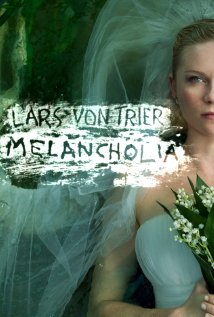
MELANCHOLIA:  The first half of big-mouth Lars Von Trier's epic was excellent dark comedy about a truly terrible wedding, sparked by a lovely performance by Kirsten Dunst.  The second was a moody end-of-the-world saga that partook a bit too much of European art film cliches.

A SEPARATION:  Asghar Farhadi's brilliant Iranian drama is the story of a collapsing marriage, class struggle, religion, the impossibility of true justice, and ever-so-subtly, that country's contemporary politics.  It's a deeply human story that manages to be incisive, emotionally complicated and a window on a very alien culture all at once.

TINKER, TAILOR, SOLDIER, SPY:  Fitting John LeCarre's legendarily complicated story into 2 hours was a Rubik's cube of a challenge, and Tomas Alfredson's film, written by Bridget O'Connor and Peter Straughn, pulled it off--the only drawback was that having managed that feat, there was little room for the depth and nuance that made the novel and BBC dramatization into classics.  Gary Oldman, almost but not quite eclipsing the memory of Alec Guinness, headed a great British cast,

THE TREE OF LIFE:  Ah, Terence Malick!  Gorgeous, fabulously realized images of a Texas childhood, brilliantly performed by Brad Pitt, Jessica Chastain and Hunter McCracken-- mixed with incredibly pretentious, flat-footed footage of dinosaurs, the formation of planets, and Sean Penn looking glum.  The year's most starkly mixed bag.

TYRANNOSAUR:  Nobody's idea of a fun night out at the movies, but Paddy Considine's directing debut, a paean to human misery and the search for love, featured towering performances by Peter Mullan, Olivia Colman and Eddie Marsan.

X-MEN:  FIRST CLASS:  Matthew Vaughn's prequel was itself the class of this year's superhero movies, a daring mix of CG magic and the Cuban Missile Crisis that was hurt only by Kevin Bacon and January Jones's lackluster villainy.  The exceptional cast included James McAvoy, Michael Fassbender, Jennifer Lawrence, Rose Byrne and Nicholas Hoult.

  • Digg
  • Del.icio.us
  • StumbleUpon
  • Reddit
  • RSS

BIJOU BOXOFFICE: WEEKEND STUDIO SCORECARD


BREAKING DAWN PART 1:  Although BD1 had greater declines on Friday (as opposed to Thursday midnight) and Saturday than New Moon did in 2009, Summit's weekend estimate assumes exactly the same 34% drop for Sunday.  So it's possible their $139.5M figure could come down a bit in the actuals tomorrow (which could move the film behind Pirates of the Caribbean 2's $138.6 and make it the 6th rather than 5th biggest opener ever).  BD2 also launched worldwide and made $144M overseas--that's huge of course, but while New Moon's international opening weekend was "only" $132.5M, that was in just 25 territories rather than BD1's 54.


HAPPY FEET TWO:  $22M is just this side of wretched, and even that number assumes a very low 28% drop for Sunday.

THE DESCENDANTS:  Off to a good start with a very strong $42K per theatre average, but the test will come when it expands semi-widely on Wednesday.

HOLDOVERS:  Despite its big opening, IMMORTALS won't do much more than break even in the US (and that's accepting Relativity's claim that after foreign presales it only carried $25M of the production cost), and like many an action movie before it, will have to do big business overseas to hit profit.  JACK AND JILL is likely to be the first Adam Sandler comedy vehicle to actually lose money in a very long time.  J. EDGAR's 47% drop is quite bad for a picture that's hoping to linger in theatres and play a part in the Oscar race, and it's going to need some support from the early awards at the end of this month if it's to have any chance.  The smartest scheduling decision of the entire year may have been DreamWorks Animation's one-week move of PUSS IN BOOTS, which has turned out to be the difference between a moderate success (probably around the level of Megamind's $148M) and what would have been a serious disappointment.  It's looking like PARANORMAL ACTIVITY 3 won't manage to outgross the original's $108M to become the franchise's highest grosser, but Paramount will be quite fine with $105M or so, thanks very much.  

INDIESLIKE CRAZY expanded nicely to 108 theatres with what should be about a $5K average in each.  MARGIN CALL continues to hold extremely well, with a $2500 average at 173, and now seems like it should get to $5M in theatrical revenues alone (not counting the simultaneous VOD release).  THE SKIN I LIVE IN expanded to 111 theatres and had an OK $2500 average.  MELANCHOLIA expanded to 56 theatres with a pretty good $5500 average.   MARTHA MARCY MAY MARLENE isn't finding much traction with a $2100 average in 180.  TAKE SHELTER will need some awards support for Michael Shannon, as it fell to a $1400 average in 74.  In smaller openings, ANOTHER HAPPY DAY, boosted by Q&As with Ellen Barkin (a producer as well as star), made it to an average of about $4500 in 2 theatres, which was a lot better than TYRANNOSAUR's $1500 average in 5.

Next week:  an odd mix of big-budget family movies and some of the year's most serious Oscar hopefuls.

  • Digg
  • Del.icio.us
  • StumbleUpon
  • Reddit
  • RSS

THE BIJOU WEEKEND BOXOFFICE FOOTNOTES - November 13


IMMORTALS is claiming the same drop for Sunday as it had on Saturday, so that total may come down in actuals.  Even so, as long as the final amount is over $30M (which it certainly should be), that's a win for Relativity, no matter what the movie's budget actually was.  Immortals also launched widely overseas, including in such important territories as China, the UK, Germany, Italy, Japan and South Korea, and should hit a solid $36M there.  


JACK AND JILL's $26M opening is the lowest for any Adam Sandler comedy vehicle since The Wedding Singer in 1998.  Sony seems to be counting on a multiple like the one that got Bedtime Stories over $100M in 2008, but this picture will likely be long out of theatres before the lucrative Christmas week bonanza kicks in, and J&J will be one of Sandler's lowest-grossing pictures ever.  Is that meaningful, or did audiences just sense what a stinker this one was?  We won't know until Sandler's next movie opens (I Hate You, Dad in June).

If you want to know what "older-skewing" means, look no further than J. EDGAR:  two-thirds of its audience was over 50 years old.  Although an $11.5M opening is nothing to cheer about, that audience is generally in no rush to get to theatres (it takes a while to maneuver those walkers), and Warners is hoping for a slow build that lasts through the end of the year.  Last year's Hereafter dipped 47% in its second weekend, and that was the end of it, as it only reached $33M in total--J. Edgar will need to hold better than that.

PUSS IN BOOTS had another great hold in its final weekend before kiddie movie competition arrives.  TOWER HEIST's 45% drop seals its fate as a money-loser, unless overseas audiences take to it in a big way.  A VERY HAROLD & KUMAR 3D XMAS was, as expected, a one-weekend-and-out proposition, and despite the 3D ticket prices, it may not even get to the $38M grossed by the last picture in the series.  PARANORMAL ACTIVITY 3 went over $100M, and has a shot at exceeding $108M and becoming the highest-grossing of the franchise.

In limited release, ANONYMOUS plummeted, and is unlikely even to reach $5M on a $35M budget.  MARGIN CALL expanded a bit more to 199 theaters, and should have an average of around $3K.  It could get to $5M in theatrical alone (not counting VOD), which would be a triumph for a picture that cost $3.5M and has spent very little on marketing; in addition, distributor Roadside Attractions has decided to make a well-deserved awards run for the film, so it's all good.  

MARTHA MARCY MAY MARLENE almost doubled its theatre count to 183 and saw little incremental income with a $2700 average.  LIKE CRAZY widened to 70 theatres at a promising $7500 average.  THE SKIN I LIVE IN increased to 91 theatres at a $3400 average.  TAKE SHELTER seems to have reached its limit (barring a strong showing by Michael Shannon in critics' awards) with a $1600 average at 82.  

The only notable indie opening was Lars Von Trier's MELANCHOLIA (also on VOD and HDMovie Net), which did a very nice $14K in each of 19 theatres.  Werner Herzog's death-penalty documentary INTO THE ABYSS had a $4200 average at 12.  These will likely be dwarfed next week by the arrival of THE DESCENDANTS, which will open in 5 theatres on Wednesday and then go to 27 on Friday.

  • Digg
  • Del.icio.us
  • StumbleUpon
  • Reddit
  • RSS

THE BIJOU: Friday Boxoffice Footnotes - November 12


Whether or not IMMORTALS holds together at the boxoffice after its opening few days, the impressive launch is good news for Relativity, which is trying to prove it can survive as a standalone distributor of Hollywood-level movies.  That doesn't necessarily mean Immortals will hit profit (its financial picture is complicated by various distributors handling it around the world, and uncertainty about what the budget actually was), but it does mean Relativity can claim a #1 opening for a picture with no huge stars to promote.  (Also happy:  Warner Bros, which can now say that its new Superman has already been the star of a hit.)


The JACK AND JILL opening looks to be in line with Adam Sandler's last family outing, 2008's Bedtime Stories, which started with a $27M weekend.  However, that picture opened on Christmas Day and had the benefit of the giant boxoffice week that follows, resulting in a total that was 4x its first 3 days.  J&J probably won't have a trajectory anything like that, which will likely make this--amazingly enough--his first "non-serious" starring vehicle not to hit $100M since Little Nicky in 2000.  In fairness, it will be far more successful than that flop, although it does bear the burden of a $80M budget (which means total worldwide costs of probably $200M+ once marketing is added in).

J. EDGAR was always intended as a longterm play that would stay in theatres throughout the holiday/awards season.  Its opening looks to be in line with Hereafter's $12M, but that picture got no awards traction and petered out at $33M (although it made more than double that overseas).  J. Edgar should open better than either Invictus or Changeling, but neither of those got to $40M either (even with a Best Actress nomination for Angelina Jolie on the latter).  The movie's fate will rest on word of mouth and how it fares in early critics' awards.

The great news for DreamWorks Animation is that PUSS IN BOOTS was actually up from last Friday (thanks in part to the Veterans Day holiday), meaning another solid hold for the weekend.  The less-great news is that an avalanche of kids movies is about to fall, with Happy Feet 2 arriving Friday, followed less than a week later by The Muppets, Hugo and Arthur Christmas, making this the movie's last wide-open weekend.

TOWER HEIST isn't going to have a terrible drop (that's the advantage of an older-skewing audience), but seems unlikely to get much past $75M, which won't pay the bills once marketing costs are figured in.  The overseas openings to date haven't been promising either.  

We're still a couple of weeks away from the explosion of indie movies that will arrive for awards season, but Lars Von Trier's MELANCHOLIA, riding mostly excellent reviews, should do around $15K in each of 18 theatres (it's also available on VOD and aired last week on the HDMovie network).  LIKE CRAZY expanded to 70 theatres and should have a pretty good $8500 average.

Although as noted the family holiday season kicks off next weekend with HAPPY FEET 2 (the original opened with $41M in 2006), next week is all about THE TWILIGHT SAGA:  BREAKING DAWN PART 1, which should easily own every multiplex in the country as of 12:01AM Thursday night.  New Moon, the last chapter of the saga to open on a Friday, holds the 4th highest opening weekend of all time with a staggering $143M in its first 3 days (including $26M from Thursday midnight shows), so that's the number to beat.    

  • Digg
  • Del.icio.us
  • StumbleUpon
  • Reddit
  • RSS

THE STATUETTE STAKES: AFI Fest Announces Titles


Los Angelenos will have a chance to get advance looks at some of this year's Oscar candidates at the AFI Film Festival, which begins in just about 2 weeks.  Today the Festival announced the Gala and Special Screenings, which typically make up the bulk of the high-profile titles, and they include quite a few films featured at this fall's film festivals.


The festival begins with the world premiere of Clint Eastwood's J. EDGAR, and other Galas include THE ARTIST, Polanski's CARNAGE, MY WEEK WITH MARILYN and SHAME, as well as Luc Besson's THE LADY, which premiered at Toronto.  Special Screenings include, among others, Ralph Fiennes' film of CORIOLANUS, The Duplass Brothers' JEFF WHO LIVES AT HOME, the Dardenne Brothers' THE KID WITH A BIKE, Lars Von Trier's MELANCHOLIA, and Wim Wenders' documentary PINA, as well as RAMPART, BUTTER, I MELT WITH YOU and WE NEED TO TALK ABOUT KEVIN.  (The festival hasn't yet announced its closing-night presentaiton.)

Veterans of the AFI Festival's "free ticket" policy know that actually getting one of those tickets can be a chore--and sometimes the theatres are overbooked, meaning that even having a ticket is no guarantee of admission.  The Festival does, however, include a great many films worth the effort.

Check out SHOWBUZZDAILY'S STATUETTE STAKES roll of Awards contenders:

     PART I
     PART II
     PART III
 

  • Digg
  • Del.icio.us
  • StumbleUpon
  • Reddit
  • RSS

THE BIJOU REVIEW: "Melancholia" and Oscar Games


MELANCHOLIA - Watch It At Home - The Title Tells the Tale

Here's a quick primer in Oscar rules and how studios can get around them.  In order for a film to be Oscar-eligible (other than in a few special categories like Documentary and Foreign Film), it needs a theatrical release in the LA area for at least 7 days before it's available on any other platform, like VOD or homevideo.  The Academy insists on this because they don't want to become the Emmys, giving awards to productions that are primarily made for television.  All well and good.  But over the last few years, the distribution model for independent films has changed greatly, and indie studios like Magnolia and IFC, among others, routinely release their films simultaneously in a limited theatrical run and on VOD (maximizing the value of their marketing efforts, among other things).  Technically, films released that way are not eligible for Academy Awards.


So, what to do?  The loophole in the rule turns out to be that word "area," and the fact that there are no other specific rules for the initial release.  Studios can thus have a token run in a single theatre somewhere in the vicinity of Los Angeles, with no advertising and no screenings for critics, just to obtain Oscar eligibility--and then really open the film months down the road.

All of which explains why I schlepped out to join a few dozen other maniacs at the Laemmle theatre in West Hills, CA (about 25 miles from downtown LA), where Magnolia is barely releasing Lars Von Trier's MELANCHOLIA for an under-the-radar 7 day run that will end on Thursday July 28.  (Just to discourage prospective audiences even more, the film only runs once per day, in midafternoon.)   The film will soon be in more deluxe surroundings:  the Toronto Film Festival announced its inclusion yesterday, and it's already won the Best Actress award for star Kirsten Dunst at Cannes.  (This was after Von Trier, not known for his tact, indulged in some ill-advised sarcasm on the subject of Adolf Hitler at a post-screening press conference, causing an international furor and rendering him "persona non grata" at the festival.)

After all that, you ask, how is the movie?  Absorbing and--if you have a high tolerance for European art-film pretentiousness--worthwhile, but even by Von Trier's standards, a tough sit.  Think of it as the profoundly depressing other side of Another Earth's coin:  as in that film, a previously unknown planet is discovered and is approaching Earth, but while that prospect is greeted with hope and wonder in Another Earth, here it's the cause for dread and acknowledgement of inevitable death.  (Not really a spoiler, since the destruction of the planet is the film's dreamy opening sequence.)

Once the end of the world has been established, the film is divided into 2 parts, each named for one of the sisters at its center.  The first half takes place at the grand wedding reception for Justine (Dunst) and Michael (Alexander Sarsgard), which is being hosted by John (Kiefer Sutherland), the fabulously rich husband of Justine's sister Claire (Charlotte Gainsbourg)--their estate has an 18-hole golf course, among other things.  The party begins festively enough, but tensions are everywhere--between Justine and Claire, Justine and her boss Jack (Stellan Skarsgard, Alexander's real-life father--although this being Von Trier, they have no scenes together), and between the girls' divorced parents, the irresponsible Dexter (John Hurt) and bitter Gaby (Charlotte Rampling).  More seriously, it becomes increasingly clear that Justine suffers from a severe case of the title malady, and during the course of the evening, her facade of happiness and normalcy cracks, with disastrous results.

The second half of the story is still at the estate, but all the supporting characters are gone:  Justine has suffered a complete breakdown, and she comes to stay with Justine and John and their young son.  Meanwhile, the newly-discovered planet, which turns out to have the none-too-subtle same name as Justine's mental state, is coming closer to its catastrophic collision with Earth, and everyone is either pretending not to believe it's going to happen, or accepting oncoming death with something like calm satisfaction. 

Some would say Von Trier is as much a cinematic provocateur as he is a filmmaker:  he was at the forefront of the "Dogme" movement that abolished use of background music and artificial light in its films, among other strict rules (not that his own movies often followed them); later projects included the dark musical Dancer In the Dark with Bjork; the surreal miniseries The Kingdom; The Idiots, with its mentally damaged cast members and hardcore sex; Dogville, filmed on an extremely stylized and almost empty soundstage; the racially explosive Manderlay, The Boss Of It All, shot with mechanized, pre-programmed cameras; and Antichrist, which featured explicit sexual mutilation.  So he's not the guy likely to direct the next Marvel superhero movie.  The worth of all these films are open to debate, but they're all fascinating to watch; Melancholia is less so.  After playing with super-slo-mo in the prologue sequence, Von Trier doesn't have much to contribute cinematically other than an insistently jittery hand-held video camera, which is hardly revolutionary these days.  Although the film is well crafted and edited, it's probably the least visually daring thing he's ever shot.

Melancholia continues the mood of grief and psychological violence that marked Antichrist (but without the stomach-turning carnage).  While it's tempting to say somebody should buy Von Trier a box of Cracker Jacks and a DVR Season Pass for Modern Family, there are passages in Melancholia that are emotionally powerful.  Dunst gives a strong, well-thought performance, especially in the first half, as she's dragged inextricably down into the pit of her own disorder, and Gainsbourg, no stranger to art-house misery, brings fresh anguish to the film's second half.  The movie doesn't really go anywhere--it's like a much more pretentious version of Stanley Kramer's On the Beach, where the characters waited to be engulfed by the nuclear clouds that would kill them--but it has respect for its character's despair.

Notwithstanding Magnolia's clever maneuvers, it's doubtful Melancholia will have much of a presence in the Oscar race.  The only real possibility is Dunst's performance, and the fact that her character is deemphasized in the second half doesn't help; also, how many Academy members are likely to watch all 136 minutes of this exercise in doomsday depression?  If the studio gets its hopes up, the film's title is likely to be their mood when the year's nominations are announced.

  • Digg
  • Del.icio.us
  • StumbleUpon
  • Reddit
  • RSS