RSS
Showing posts with label indie. Show all posts

SHOWBUZZDAILY REVIEW: "Being Flynn"


BEING FLYNN:  Watch It At Home - Troubling Story That Doesn't Go Deep Enough

There's a scene in Paul Weitz's new film BEING FLYNN where Jonathan Flynn (Robert DeNiro), the alcoholic, narcissistic, pitiful, self-destructive father of Nick (Paul Dano), reads to his son from a publisher's rejection letter.  Jonathan sees himself as one of the greatest of all American writers--albeit unpublished--his only peers being Mark Twain and J.D.Salinger, and he considers it a great compliment that in rejecting his novel, the publisher termed it a "virtuoso display of personality."  The phrase comes awfully close to describing DeNiro's performance and Being Flynn itself.


Being Flynn is based on Nick Flynn's memoir "Another Bullshit Day In Suck City," and it tells a mostly pathetic and depressing story.  Jonathan was arrested for bad checks when Nick was just a child, and even when he was released from prison, he was never a meaningful part of Nick's life.  He did, however, send his son scores of letters, mostly desperately self-aggrandizing, and his presence overshadowed Nick's youth and the single mother (Julianne Moore) who diligently raised him but ultimately committed suicide.  Nick, passive and rootless, and also an aspiring writer, drifted into a job at a homeless shelter, and it was there that he and his father, who had been sleeping on the streets, truly met, and and the two began a painful, dysfunctional relationship. 

This is extremely difficult material, much of it no picnic to watch, and Weitz, whose work ranges from the lovely About A Boy to the execrable Little Fockers, doesn't find a tone to make it work.  The film's Jonathan is all mannerism with very little substance.  While it's great to see DeNiro stretching to give a real performance, something he's rarely done in the past 15 years (it's hard to avoid the feeling that Weitz and DeNiro felt so mutually disgusted with Little Fockers that they both needed to cleanse themselves afterward with something serious), he never finds Jonathan's center.  His work feels full of effort and yet superficial.  From the actor who gave us indelible portraits in Taxi Driver and Raging Bull, it's subpar.  

DeNiro isn't helped by Weitz's script, which while heartfelt never really draws a bead on who Jonathan is.  For all its gritty detail--no recent Hollywood product (even the indie part of Hollywood) has dealt so seriously with homelessness in quite a while--the film sidesteps complications and settles for bland emotion (and toward the end, sentimentality) too often.  

Dano has a more straightforward role:  he's the guy who hits bottom (getting to know his father leads him to some serious drug use) and manages to climb back up, turning out to be terrifically talented to boot.  Yet while his arc is the more simplistic and undeveloped part of the film, Dano's own odd qualities as an actor make Nick more interesting for a while.  Dano doesn't have a lot of gears, at least not that he's shown thus far--his killer app is a sort of intense distraction that can be played for humor or for surprisingly powerful repressed anger--but they serve him well here.  Olivia Thirlby, as the only sane person around, does so much with very little that one wishes she'd been given more of a part, and Moore, only briefly on screen, is her usual expert self.   

Being Flynn is a hard movie to recommend, because the hard truth is that filmmakers who deal with challenging, uncomfortable material have far less margin for error.  The work is transcendent or it's trite, and Weitz's film isn't transcendent.  It's intermittently powerful and worth watching for some strong scenes and interesting performances, without ever quite achieving a satisfying whole.


  • Digg
  • Del.icio.us
  • StumbleUpon
  • Reddit
  • RSS

SHOWBUZZDAILY @ SUNDANCE REVIEW: "Goats"


Virtually every screening at Sundance is followed by a Q&A with the filmmaker, and while these sessions can be informative and charming (although 3 questions that need never be asked again are How long did you shoot?  What was the budget? and How much was improvised?), they can also be quite sad.  Watching them, you realize that even bad independent movies require an enormous amount of effort, usually with little compensation, over many years, and that no one sets out to invest that kind of sacrifice into a movie that's not worth watching.


GOATS is a very bad movie, but not because anyone who made it was lazy or horribly untalented.  It's just a misconceived, uninvolving story that falls into all too many indie-movie traps.  Based on a novel by Mark Jude Poirier (who also wrote the script) and directed by first-timer Christopher Neil, it's a compendium of the genre's cliches, from sensitive teen Ellis (Graham Phillips, best known as Juliana Margulies' son on The Good Wife) going away to his first year at school, to the wackily eccentric New-Agey mother (Vera Farmiga) and pot-growing surrogate father (David Duchovny) he leaves behind, to his difficult relationships with both mom and estranged biological dad (Ty Burrell). 

If you're going to embrace this kind of hackneyed material, you'd better bring something new to the party, but Goats just loads on self-conscious idiosyncracy.  Duchovny's character, apart from being a pot grower, is called Goat Man because he raises and is constantly accompanied by goats, which he takes on spiritual survivalist journeys.  Farmiga is the kind of only-in-the-movies trust fund mother who teems with extravagant narcissism (she seems to be auditioning to play Auntie Mame), and as her boyfriend, Justin Kirk does a snide variation of his role on Weeds.

None of this works.  Naturally the point is for Ellis to Grow Up and learn Life Lessons from his time at school (the movie's title, apart from referring to Duchovny's compansions, presumably is meant to suggest Gates, the name of the prep school) and his evolving relationships with his parents and Goat Man, but since none of the characters are believable or interesting, it all feels forced.  (There's also a jarringly ugly tone to the semi-friendship that forms between Ellis and a girl who works at the school that the movie never acknowledges.)

Even though Neil has been an acting coach (he's also a member of the Coppola family) and has gathered a fine cast, he lets each of the actors go in their own direction, so there's no sense of an ensemble or unifying tone.  Goats marks one of the very rare times you'll ever see Vera Farmiga give a bad performance, and the only ones who really fare well are Duchovny, whose detached, ironic humor at least makes Goat Man interesting, and Burrell, who gives an admirably controlled performance as Ellis's dad. 

Goats is technically quite accomplished, convincingly set in several areas of the country despite limited budget and locations, and handsomely shot by Wyatt Troll.  It moves along and has a few mild laughs.  the film was made with what seems to be true affection for its material, but that affection was misplaced.  It's an overfamiliar, unenlightening and ultimately tiresome piece of work that, sadly, took years out of people's lives. That's the less pleasant side of Sundance.

  • Digg
  • Del.icio.us
  • StumbleUpon
  • Reddit
  • RSS

THE BIJOU REVIEW: "Tinker, Tailor, Soldier, Spy"


TINKER, TAILOR, SOLDIER, SPY:  Worth A Ticket - An Epic of Betrayals

John LeCarre is (I guess one should say "arguably") the greatest of all spy novelists, and his 1974 TINKER, TAILOR, SOLDIER, SPY is "arguably" his finest work.  Incredibly, the 1979 BBC miniseries adaptation lived up to the level of the novel, featuring an (please--this isn't even arguable) iconic performance by Alec Guinness that was legendary even in the context of his great career.


So, no pressure on the filmmakers determined to remake it... and squeeze an exceptionally labyrinthine plot into 128 screen minutes.  And yet, to a remarkable degree, those filmmakers, led by director Tomas Alfredson, screenwriters Peter Straughan and Bridget O'Connor, and with Gary Oldman in the Guinness role, have succeeded, making a cerebral thriller faithful to the spirit and much of the letter of LeCarre's novel. 

Oldman, like Guinness before him, plays George Smiley, the recessive and brilliant mandarin of the British Foreign Intelligence Service, known colloquially as the Circus.  Shortly after the story begins, the head of the Circus, known only as Control (John Hurt) and Smiley, his closest aide, have been forced into retirement after a mission in Budapest turned disastrous.  That mission was intended to unearth information about a mole at the highest level of the Circus, a double agent Control had narrowed down to his 5 closest aides:  Percy Alleline (Toby Jones), code-named "Tinker," Bill Haydon (Colin Firth), known as "Tailor," Roy Bland (Ciaran Hinds) or "Soldier," Toby Esterhase (David Dencik), the "Poor Man"... and Smiley himself, presumably the "Beggarman."  After the Budapest mission and Control's exit, the search for the mole went away.  But when the rumor of a mole arises again, and with the 4 main suspects now running the Circus themselves, a politician with oversight authority over the Service brings Smiley back to unofficially determine whether Control was, after all, correct.

This sets off a virtuoso set of ever-deepening complications, as Smiley and his (unseen) Soviet counterpart Karla, along with their respective minions, try to outmaneuver each other by crisscrossing false leads, cover-ups and intentional dead ends.  The recurring theme is betrayal, as everyone involved, on both a professional and very personal basis, ruthlessly undercuts whoever gets in their way, often taking from them what they most value in the world.  Ideology hardly figures into the game--as a traitor explains at one point, devastating choices can be made for reasons of aesthetics as much as for political convictions.  Everyone involved is brilliant, cunning and fully capable of making big-picture decisions under deadly pressure. 

Alfredson previously directed the vampire art movie Let the Right One In (remade in the US--not by him-- as Let Me In), and his commitment to LeCarre's exhausted, almost existential viewpoint is faithful almost to the point of fetishism.  Although Alfredson is more than able to deliver a suspenseful crescendo when one is called for, no one involved with Tinker, Tailor seems to have worried about hyping up the action component of the story to find a wide audience (and probably the film won't)--Hoyte van Hoytema's photography seems gray even in sunlit scenes, and Alberto Iglesias' score is uninsistently mournful. 

The wonderful supporting cast comports with the film's overall style, although here is where the novel's compression into 2 hours takes its toll.  In order to squeeze a comprehensible version of the plot into a feature running time, something had to go, and in this case it was the complexity of some of LeCarre's characterizations.  One of the film's real problems is that none of the prime suspects gets to establish a memorable presence, which makes the emotional component of the search for the spy less involving than it should be.  (The final confrontation between Smiley and the mole doesn't have nearly the fireworks that it did in the miniseries.)  Only Tom Hardy, as a Circus agent caught in the crossfire between Karla and Smiley, and Mark Strong, as the agent involved in the Budapest fiasco, really have the chance to develop backstories. 

As for Oldman, he gives several subtle nods to Guinness's definitive Smiley, from the shape of his eyeglasses to some of his inflections.  It can't be said that he displaces Guinness as the actor who will first come to mind when the character's name is mentioned--Oldman doesn't quite have Guinness' minimalist genius for suggesting waves of feeling under an impassive countenance (then again,who does?)--but as the story develops and gradually, almost imperceptibly, Smiley emerges from the shadows to take his place at center stage, Oldman's performance becomes increasingly more commanding and richer in shading.  

Tinker, Tailor isn't, frankly, for everyone--it's the anti-24 as spy stories go, offering satisfactions of the mind rather than the gut.  It takes its time, to an extent almost revolutionary in contemporary Hollywood entertainment, and forces the audience to think, and consider, along with its characters.  Like the technology of its 1970s setting, it's hand-crafted, a little slow, and quite marvelous to behold.

  • Digg
  • Del.icio.us
  • StumbleUpon
  • Reddit
  • RSS

THE BIJOU REVIEW: "50/50"


50/50:  Worth A Ticket -  A Genuinely Feel-Good Cancer Comedy

With The Big C renewed for its third season on Showtime, the concept of a comedy getting laughs from the experiences of a cancer patient is no longer especially shocking, which means that the new 50/50 has to be judged on its comedy-drama merits, rather than its daring.  Happily, the movie is quite good--better, in fact, than Big C--and stands up just fine to the scrutiny.


As is widely known by now, 50/50 is based on the real-life experiences of its screenwriter, comic Will Reiser. Transformed into the fictionalized Adam (Joseph Gordon-Levitt), a writer for radio, he's diagnosed at the age of 27 with a rare cancer that gives him a 50% chance of survival.  (It shouldn't require a spoiler alert to read any of his own publicity interviews for the movie and discover that Reiser is, in fact, very much alive.)  In real life, one of the close friends who supported Reiser was Seth Rogen, and he's been fictionalized here too, playing a version of himself as Adam's pal Kyle, who assures Adam his cancer will make him catnip to the ladies.  (Rogen is also one of the film's producers.)  

The material could easily have been mawkish and silly, but 50/50 finds just the right tone.  Unlike a fantasy like Restless, 50/50 doesn't shy away from the physical effects of illness and chemotherapy; it feels honest, and its blackly comic laughs are fully earned.  Gordon-Levitt, who's been tapdancing around the edges of stardom for the last few years, deserves to make the leap with this one--he perfectly captures he tidal wave of emotions that Adam goes through in the course of his illness, dealing with indifferent doctors, a family (including Anjelica Huston as his mom) that tries too hard to be compassionate, a girlfriend who finds the situation pushing against her limits (Bryce Dallas Howard, excellent in the small role), and his own sheer terror.  Rogen manages to be hilarious without overdoing his comedy-relief status, and he comes across as a genuinely good friend to have.  The other leading role, Adam's inexperienced therapist-in-training, may seem too gimmicky at first, but luckily for everyone the wonderful Anna Kendrick (from Up In the Air) has the part, and she's splendidly clumsy and then increasingly vulnerable. 

50/50 also marks a strong step forward for director Jonathan Levine.  His first picture All the Boys Love Mandy Lane was a fairly routine slasher picture, and he followed it with the hit-and-miss The Wackness.  In 50/50, he shows a sure hand for very difficult material, navigating the tonal shifts between gallows comedy and serious drama with ease, and guiding the cast beautifully past the many potential potholes.  The modestly budgeted movie isn't a visual feast, but it's handsomely shot by Terry Stacey (his credits include Adventureland and In Her Shoes), and has a fine score by Michael Giacchino.

50/50 is entertaining without being too slick, and truthful without being dreary.  The odds against it working were considerably higher than its title, and the very talented filmmakers have survived to pull their challenging project off.

  • Digg
  • Del.icio.us
  • StumbleUpon
  • Reddit
  • RSS

THE BIJOU REVIEW: "Puncture"


PUNCTURE:  Worth A Ticket - A Bracingly Dark Ride

No one is going to see PUNCTURE in theaters, and that's a shame, because unaccountably, it's one of the best pictures around.  "Unaccountably," because this is a film that doesn't even seem to know there's a radar to fly below:  although it contains an award-caliber performance by Chris Evans--yes, Captain America Chris Evans; No, I don't get it either--it made little stir when it screened at the Tribeca Film Festival last spring, it's playing in 2 theaters in NY and 1 in LA (the latter was half-full for a weekend show), and according to Amazon, a January date has already been set for the DVD release.  So like the story it tells, the film itself is something of a lost cause, but one that deserves to be championed.


At first, Puncture seems like it's going to be the FX version of TNT's goofy TV show Franklin & Bash  That's the one about a pair of wacky young lawyers who are brilliant in the courtroom but who party hard and constantly after hours.  (It being TNT, "hard-partying" means a great deal of beer and some bong jokes.)  Mike Weiss (Evans) is a lot farther gone, with tastes that include coke, crack, pills and a copious number of hookers.  Mike has driven off his wife, his colleagues, and really almost everyone else except his best friend and partner Paul Danziger (Mark Kassen, who also directed with his brother Adam); he's a genuinely, if sometimes barely, functioning drug addict.

Puncture is one of the rare "based on a true story" movies that actually feels as if it is one, and that's probably due in part to the fact that Danziger himself gets co-story credit on the script with Ela Thier, and that he's clearly a believer in the "warts and all" school of storytelling; the screenplay itself is by Chris Lopata.  (This is the first feature for both directors and all of the writers.)  When the partners, in the late 1990s, take on the case of a nurse (Vinessa Shaw) stricken with AIDS due to a dangerous type of hypodermic needles used in hospitals, and then the inventor (Marshall Bell) whose far safer needle is being kept from sale by the medical supply conglomerates, their interests are more ambitious than charitable.  And even when they commit to the case, they falter as much as they succeed, often at the mercy of the conglomerate's lawyer Nathaniel Price (Brett Cullen, in a marvelously smooth villainous turn).

The film is, to a large extent, about human frailty and corruption, and it doesn't spare anyone, going far darker than you'd ever imagine it would (this isn't Erin Brockovich).  Even the characters whose hearts are in the right place fail their friends and colleagues, and the story has the challenging ring of real life.  Evans is stunningly convincing as someone whose brain simply will not turn off (he practices his closing statements on the hookers, pimps and druggies who hang out with him), a man on the precipice between the possibility of rescuing himself and falling apart.  To its credit, and indicative of Puncture's startling tone, the movie never has the scene where anyone tells Mike moralistically how he's ruining his life, or where he almost runs over a child or commits some other heinous act while under the influence so he can understand that he has to change his life; when he tries to reform himself, it's for the most pragmatic reasons.  

With the exception of Bell's stubborn client, in his own way as self-destructive as Mike, the other characters are thinner--Danziger is little more than the responsible partner with a pregnant wife, Price's corporate evildoer is straight out of every John Grisham novel--but all are extremely well played.  Even in small parts, Shaw as the pitiable nurse and Kate Burton as a blunt Senator whose influence the lawyers court are worth noting.  Despite what must have been a very low budget, there is crisp photography by Helge Gerull, hurtling editing by Chip Smith, and a distinctive score by Ryan Ross Smith, all of them also doing their first notable feature work.  

Puncture isn't fully satisfying.  There's a plot device late in the story that's played far more sentimentally than anything in the rest of the movie, and although what happens in the final scene makes sense, it's something that also would have made sense had it happened 45 minutes earlier, and there's no attempt to explain why it didn't happen then.  But the film is head and shoulders above what we usually see in this genre, and it's marked throughout by what appears to be a high degree of honesty.

Puncture will probably vanish from any theater near you in the next week or so.  But get it on your Netflix queue, and check for it in early 2012 to stream or record on your DVR.  It's worth the effort.

  • Digg
  • Del.icio.us
  • StumbleUpon
  • Reddit
  • RSS

THE BIJOU REVIEW: "Machine Gun Preacher"


MACHINE GUN PREACHER:  Watch It At Home -  A True Story Rings False

MACHINE GUN PREACHER simply isn't good enough for the story it wants to tell.

And the story, a true one, is remarkable:  Sam Childers (played by Gerard Butler in the film) was a drug addict and violent criminal who found Jesus and became a contractor and Pennsylvania country preacher (in a church he built himself), but in a different sense never renounced violence.  Childers was inspired to build an orphanage and church in the brutal area of Northern Sudan and Uganda, and became committed to saving the children in those lands, where war-lords and government heads have murdered, mutilated, raped and enlisted the very young unwillingly in their armies; in that cause, Childers picked up his guns and has served as a very active warrior.


Childers is a complicated figure.  Although he's done undoubted amounts of good, his wife and daughter (Michelle Monaghan and Madeline Carroll) have had to bear his absences and the psychological scars he bears from what he's witnessed in Africa.  He's also a personification of the uneasy relation between religiously-inspired charitable good and the decision to respond to the ugliest kind of violence in a simiilarly deadly way, as well as the place foreigners have in a deep-rooted native conflict.  

Jason Keller's script gets credit for addressing all of this, but it does so in a flat, superficial way.  The hard truth is that tackling difficult subject matter doesn't allow for more leeway in the quality of the effort; on the contrary, even the smallest inadequacies become glaring in a context as demanding as this.  Far too much of Keller's dialogue and plot turns are painfully ham-handed and cliched (there's a painful subplot involving a scarred boy Childers befriends), and the film lurches from one part of Childers' life to the next, without any real insight or subtlety.  The result is odd, because the portions dealing with Childers' religious conversion seem to be aimed at fundamentalist audiences, but the rest of the movie is full of R-rated language and violence, and even some sexuality.

The cast is not ideal.  Butler is a good physical match for Childers but gives a very blunt, unenlightening performance, switching from stolidity to screaming intensity without much modulation.  Monaghan has nothing to play but "the wife," and the Africans with whom Childers comes into contact are one-dimensional.  Only Michael Shannon, in the small role of Childers' desperate childhood friend, bursts with troubled life; when he shares the screen with the other actors, he unintentionally makes them look bad.

Marc Forster, the film's director, remains a frustratingly uneven filmmaker.  Forster did very strong work on Monster's Ball, and seemed surprisingly comfortable with Stranger Than Fiction, but his excursions into genre like Stay and the Bond movie Quantum of Solace have been disastrous.  Machine Gun Preacher most resembles his The Kite Runner, a dogged and worthy but unsatisfying adaptation of the novel.  Forster isn't able to make the stateside scenes emotionally convincing, and even his African action sequences feel routine.  

Disparaging a movie as well-meant and serious as Machine Gun Preacher doesn't make one feel good; it's a film that tries to do justice to an extraordinary life, but just doesn't have the goods.  A noble failure, unfortunately, is a failure nonetheless.


  • Digg
  • Del.icio.us
  • StumbleUpon
  • Reddit
  • RSS

THE BIJOU @ TIFF: "Butter"

Jim Field Smith's comedy BUTTER, which premiered at the Toronto Film Festival, ambitiously makes a play for both the heartwarming indie Little Miss Sunshine audience and the satire-minded Election crowd.  That may be one play too many, but the movie is worth seeing anyway.


Jason A Micallef's first produced script is set in the unfamiliar (for those of us not hailing from the midwest, at least) world of competitive butter sculpting.  In the small Iowa town where the story is set, Bob Pickler (Ty Burrell) is a local legend, winner of the local contest for 15 consecutive years as the creator of epic artworks that include a life-size recreation of Da Vinci's "Last Supper" and another inspired by Schindler's List.  Bob is so unbeatable, in fact, that his town has decided, in the most respectful possible way, to disqualify him from further competition.  

This is unacceptable to Bob's wife Laura (Jennifer Garner, essentially playing Reese Witherspoon's Election character in middle age), an unstoppable engine of ambition; when it becomes clear that Bob really won't be allowed to compete, Laura decides to enter the fray herself.  Her competition consists of Bob's biggest fan (Kristen Schaal), a stripper with a very specific grudge against the Pickler family (Olivia Wilde)--and most dangerous of all, a preternaturally composed 10-year old African-American foster child not accidentally named Destiny (Yara Shahidi).  When it becomes clear that Destiny has a natural gift for butter sculpting, for Laura the war is on.

When Butter sticks to the personalities of the butter sculptors and those around them, it can be very funny and even heartfelt; it sometimes recalls Michael Ritchie's 1976 smalltown beauty pageant gem Smile.  Destiny's wary relationship with her new foster parents (Rob Corddry and Alicia Silverstone) is lovely; Shahidi is charming,  and Corddry may be indie film's most lovable dad since J.K. Simmons in Juno.  (The two of them have an irresistible bit--you can see it's improvised in the outtakes that accompany the end credits--where Corddry tries to help the girl gather the courage to enter the contest by trading the most horrible possible outcomes with her.)  Olivia Wilde has all the best lines (not to mention the best storyline) as the stripper, and she's got genuine comic spark to go along with her almost-invisible outfits.  Burrell pretty much plays his Modern Family part (not that there's anything wrong with that), and Hugh Jackman turns up late in the game and overplays his silly part, but Garner--also a producer of the film--seizes her role by the throat and plays her with absolute conviction, fully realizing both Laura's fiendishness and the desperation that drives her.  

Butter gets into trouble when it tries to shoehorn itself into political allegory.  (Instead of Smile, its model seems to become Nasty Habits, a 1977 flop that transferred Watergate into a nunnery.)  The picture's opening sequence pushes the parallels hard, with Garner instantly identifiable as a Palin/Bachmann clone, and after establishing Bob Pickler as an apolitical blank, having him mix his DaVinci and Spielberg sculptures with a Newt Gingrich portrait feels like an out-of-character gag.  Smith's only other feature film was the cruddy comedy She's Out Of My League, and subtlety isn't his strong point--giving him material that calls for a "You get it?  Do you get it?" emphasis is a bad idea.  (There's also a clumsily obvious post-production alteration to the third-act plot, effected with voice-over narration.  It's easy enough to see why the change was made--the eternal Hollywood need for characters to be likable--but it weakens the story, and the slipshod way it's been done doesn't help.)

Butter is a mixed bag, and its efforts to Make A Statement tend to melt away more often than they work.  When the movie is content to simply depict its slightly mad millieu and daffy characters, though, it's a sharp, satisfying entertainment.

  • Digg
  • Del.icio.us
  • StumbleUpon
  • Reddit
  • RSS

THE BIJOU @ TIFF: "Hick"


Derick Martini's HICK is like a Sundance movie that took the wrong indie-film exit and wound up in Toronto.  For whatever reason, Toronto's film festival tends to find itself with fewer stories of young people from small towns who come of age on the road, so Hick has a little air of distinction here.


The movie's other striking quality is the way it slides from a seemingly light tone to a surprising amount of darkness.  We meet Luli (Chloe Moretz, best known as Hit-Girl in Kick-Ass), on the eve of her 13th birthday.  It's the late 70s, and Luli lives in the kind of white trash millieu in Nebraska beloved by indie filmmakers:  her birthday presents include a gun, and her parents (mom is Juliette Lewis, as subtle as ever) are soon drunkenly screaming at each other in the parking lot.  Soon enough, both desert Luli, who sees a TV special on the barely-working set and decides she'll hitch her way to Vegas.

And so her adventures begin.  Before long, she's encountered an earnest cowboy who doesn't like people making fun of his limp (Eddie Redmayne), and a hustler (Blake Lively) who enlists Luli into her plans.  No one, however, is quite who they seem to be.  Luli finds herself exposed to far more of the adult world than she--or we--anticipated.

Martini, who previously directed Lymelife (which did premiere at Sundance and was even acquired for distribution, although it was barely released), is very cunning about the way the adult characters are gradually revealed.  For a long time, we and Luli aren't sure how much serious trouble she's in (the answer:  a lot), and that makes the third act reveals quite disturbing, although still wildly melodramatic.  (This can't be fully appreciated without seeing the movie, but it's pretty remarkable that in the Q&A after the screening, the co-screenwriter and author of the original novel, Andrea Portes, noted that many of the events in the novel and film are semi-autobiographical.)  

As in Lymelife, Martini is very good with actors (Alec Baldwin and Rory Culkin, two of the leads in Lymelife, return in small roles here).  Moretz, whose specialty in Kick-Ass and Let Me In has been overt menace, here still has strength but is able to channel it into a more age-appropriate innocence.  Redmayne is able to show colors he's never played on screen before, and Lively gives her first genuinely effective big screen performance.  

Hick isn't likely to be much more successful than Lymelife was--it's stuck in a familiar indie-film subgenre, and its quirks make it interesting but not remarkable enough to break out of that box; also, many audiences will find its subject matter distasteful.  Martini remains a filmmaker to watch, though; it can't be an accident that so many actors give notable performances in front of his camera.

  • Digg
  • Del.icio.us
  • StumbleUpon
  • Reddit
  • RSS

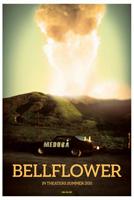
THE BIJOU REVIEW: "Bellflower"


BELLFLOWER - Worth A Ticket:  A Uniquely Mashed-Up Vision


Watching BELLFLOWER, you keep thinking that it's going to resolve itself into some categorizable genre.  Mumblecore romance, maybe, or low-budget apocalyptic action, or slacker comedy.  But while the film sips at all of those conventions, it has a striking, oddball originality all its own:  it's the kind of picture that makes the term "festival movie" look good.

Bellflower, which premiered at Sundance, is the brainchild of Evan Glodell, who wrote, produced, directed, edited, and starred in the film.  In his spare time, he modified the digital cameras used to photograph the movie in order to ensure a customized look, and created the unique vehicles that form part of the plot.  (He had a bit of help on some of these duties.)  The entire budget of the film was reportedly $18,000, which wouldn't pay for a single CG shot in some Hollywood blockbusters.

All of this hard work and thrift wouldn't pay off, though, if the picture weren't dramatically compelling, which for the most part it is.  The protagonists are Woodrow (Glodell) and Aiden (Tyler Dawson), friends from the midwest who share a house in one of the nether regions of LA.  The two share a pastime that's also an obsession:  having devoured Mad Max, they want to create working artifacts that would fit the movie's apocalyptic universe.  Visions of the end of the world dance in their heads, and make them very happy.  They put together their own working flame-thrower, and their dream is to create a car they call the Medusa, complete with flame-belching exhausts and video surveillance cameras whose views can be watched from the front seat.  The two guys have a thriving if somewhat odd bromance. 

As will happen in the movies, a woman changes everything.  Milly (Jessie Wiseman) has an extremely gross meet-cute with Woodrow, and on their first date, they set off on an impromptu trip to Texas, in answer to Milly's challenge that Woodrow take her to the most disgusting restaurant he's ever seen.  (Their ride for that journey is a car custom-fitted with a whiskey dispenser on the dashboard, which is probably illegal but way cool.)  Woodrow is fumblingly head over heels, but when Milly tells him he'd be better off not thinking of her as his girlfriend, she's not kidding.  What could fairly be called an apocalyptic case of heartbreak follows, and Woodrow's post-apocalypse universe engulfs Milly's best friend Courtney (Rebekah Brandes) and roommate Mike (Vincent Grashaw) as well.  One of the conscious ironies of the movie is that for these characters, fantasies about packs of murderous thugs don't faze them, but they can be utterly toppled by an ordinary bad romance. 

Bellflower doesn't always make sense, and it's got some considerable flaws--it falls into the mumblecore trap of dialogue that tries so hard to be "real" that it only draws attention to itself, some of the secondary characters are seriously undeveloped, and and at one point there's a fantasy sequence so long and intense that the reveal feels like a cheat.  But it's completely unpredictable, and there's never a moment that isn't fascinating to watch.  Joel Hodge's cinematography, using those custom cameras, plays with the focus, isolating characters amid blur or preserving dirt on the lens; there's also experimentation with the exposure levels of the images that makes landscapes ominously flat or bright.  The actors, who generally have little screen experience, give strong performances, and their presence, along with the increasingly rapid pace of the editing, make for a gripping story with genuine suspense and surprise.

Bellflower is a discovery that's impressive not because it was done on the cheap or has some technical tricks up its sleeve, but because it uses its resources in the service of an involving (if sometimes unpleasant) vision  It's exactly what an "independent film" is supposed to be.
 

  • Digg
  • Del.icio.us
  • StumbleUpon
  • Reddit
  • RSS

THE BIJOU REVIEW: "The Guard"


THE GUARD - Worth A Ticket:  The Art of Performance, Crispy and Well-Done

I don't know that there's an actor in movies today more fun to watch than Brendan Gleeson.  Gleeson is probably best known for playing Mad-Eye Moody in several of the Harry Potter movies, but he's been giving sensational performances since John Boorman's The General, and has popped up in Hollywood pictures like Braveheart, AI, Gangs of New York and Green Zone. He's a throwback, in a way, to the old-time Charles Laughton kind of actor, not because he's also a big guy, settled in his flesh, but because he lets his joy in the art of acting inform his performances.  His work, even in very serious roles, puts a smile on your face.


In THE GUARD, Gleeson plays Sergeant Gerry Boyle, a genially unprofessional policeman in a small Irish town.  Boyle isn't corrupt, exactly, but he mostly doesn't give a crap, not about solving crimes and certainly not about following procedure.  (He's perfectly content to let a speeding car go by his observation post until it crashes off a nearby road.)  Boyle doesn't just frequent prostitutes, he imports them from Dublin for cheerfully elaborate fantasies (the girls are the cops).  He finds his own insistent political incorrectness hilarious, and he's a thorn in the side of just about anyone who has to deal with him.

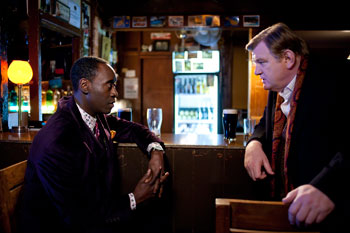
Luckily for audiences, the person who has to deal with him most is another sterling actor:  Don Cheadle as FBI Agent Wendell Everett.  Everett, who hails from Wisconsin by way of the Ivy League, comes to town to hunt a $500M cocaine shipment (or maybe it's $200M--everyone knows the cops exaggerate street value),and he's as horrified by every sentence that comes out of Boyle's mouth as he is disgusted by his work ethic; naturally, this is a buddy comedy.  

Watching Gleeson and Cheadle banter John Michael McDonagh's dialogue back and forth is like witnessing a Wimbledon championship match--each actor knows exactly how far he can push his character's eccentricities, and each is a master at squeezing the maximum amount of sly juice out of every line.  Boyle deliberately provokes Everett just for the sport of it, and Everett knows he's being played, but can't help himself from responding; it's predictable, and irresistible  If the Road Runner and Wile E. Coyote had repartee, it might sound like this.

As a movie, The Guard is a fairly insubstantial riff on the Guy Ritchie Lock, Stock and 2 Smoking Barrels/Snatch black comic thriller mode.  (It even features Mark Strong, a Ritchie stalwart, as one of the villains.)  The picture doesn't have the meat of In Bruges, a comic thriller that starred Gleeson with Colin Farrell a few years ago, and which was written and directed by this McDonagh's brother, the celebrated playwright Martin.  John Michael M  hadn't directed a feature before, and his action chops are rudimentary., although the photography by Larry Smith (he shot Eyes Wide Shut) is very attractive  McDonagh knows enough, though, to stand back and let his actors do their thing with his sharp dialogue, and that's all The Guard really needs.

The Guard plays like the pilot for a TV series you'd instantly program into your DVR--it's a procedural, but perfectly cast.  Gleeson and Cheadle bring style and infinite charm to their every scene, and overall, the movie is tremendously entertaining.  These two need to make another film together, as soon as possible.

  • Digg
  • Del.icio.us
  • StumbleUpon
  • Reddit
  • RSS

THE BIJOU REVIEW: "Point Blank"


POINT BLANK - Worth a Ticket:  A Thrill-Ride with Subtitles

The most gripping Hollywood thriller of the summer is... in French.  (But not for long.)  This isn't a complete surprise:  POINT BLANK's director/co-writer Fred Cavaye may not be a household name, but he made the film Anything For Her, the 96-minute thriller that in classic big studio fashion was dumped with hardly any US release because its remake rights had been acquired--and was then remade by Paul Haggis as the bloated 122-minute flop The Next Three DaysPoint Blank, which is also awaiting US translation, is at least being shown now in its original form.


Point Blank makes Anything For Her look epic in length:  it clocks in at 84 nonstop minutes, including credits.  The scenario, by Cavaye and Guillame Lemans, is a twist on the familiar story of an innocent man caught in circumstances beyond his control.  Gilles Lellouche is Samuel, a nurse's aide at a Paris hospital whose wife Nadia (Elena Anaya) is 7 1/2 months into a difficult pregnancy.  Samuel happens to be on duty when the victim of a motorcycle accident is brought into his ward.  But that man, Sartet (Roschdy Zem), isn't just an accident victim, and Samuel--not even sure what's going on--saves Sartet when men try to murder him in his hospital bed.

After that, things happen very fast.  The people who tried to kill Sartet kidnap Nadia and tell Samuel they'll kill her and the unborn child if Samuel doesn't deliver Sartet to them.  Samuel is willing to cooperate:  Sartet is apparently a murderer himself, and all Samuel cares about is rescuing his family.  But of course nothing is as simple as it seems.  Before long, Samuel is on the run from just about everyone, the subject of some of the most exciting chase scenes this side of a Bourne movie, and trying to figure out just who the good and bad guys are.

Once Point Blank's plotline become clear, it's not the most original story in the world, and given how little time there is to fit in all the twists (Cavaye even manages to squeeze in an epilogue!), the characters aren't exactly drawn in depth.  But Cavaye and Lemans have a few surprises to spring along the way, and Cavaye brings sustained kinetic excitement to the movie; it's a hugely satisfying ride.  Much of this is because Cavaye keeps all the action human-scaled:  there are no CG stunt doubles in the picture, no impossible leaps or unsurvivable explosions.  Chases are edited with sustained shots of actual people, who get short of breath when they have to run and who are clever without being masterminds.  Those kinds of movies used to be the bread and butter of Hollywood thrillers, but in this world of massively budgeted, overheated fantasies, they've almost disappeared.  Point Blank is an electrifying reminder of how much fun this genre can be.

Point Blank isn't an actors' movie, but Lellouche, Zem, Anaya and Gerard Lanvin as an enigmatic cop are all convincing, with performances that smooth out many of the bumps in their pencilled-in characters.  As for Cavaye, on the one hand one wishes he'd get the chance to direct a Hollywood movie himself--on the other, it's easy to fear that if he had a $100M budget to play with, he might get as lazy as the rest of the big-studio crew.  For now, Point Blank is definitely worth chasing after--catch it before Hollywood screws it up.

  • Digg
  • Del.icio.us
  • StumbleUpon
  • Reddit
  • RSS

THE BIJOU REVIEW: "Melancholia" and Oscar Games


MELANCHOLIA - Watch It At Home - The Title Tells the Tale

Here's a quick primer in Oscar rules and how studios can get around them.  In order for a film to be Oscar-eligible (other than in a few special categories like Documentary and Foreign Film), it needs a theatrical release in the LA area for at least 7 days before it's available on any other platform, like VOD or homevideo.  The Academy insists on this because they don't want to become the Emmys, giving awards to productions that are primarily made for television.  All well and good.  But over the last few years, the distribution model for independent films has changed greatly, and indie studios like Magnolia and IFC, among others, routinely release their films simultaneously in a limited theatrical run and on VOD (maximizing the value of their marketing efforts, among other things).  Technically, films released that way are not eligible for Academy Awards.


So, what to do?  The loophole in the rule turns out to be that word "area," and the fact that there are no other specific rules for the initial release.  Studios can thus have a token run in a single theatre somewhere in the vicinity of Los Angeles, with no advertising and no screenings for critics, just to obtain Oscar eligibility--and then really open the film months down the road.

All of which explains why I schlepped out to join a few dozen other maniacs at the Laemmle theatre in West Hills, CA (about 25 miles from downtown LA), where Magnolia is barely releasing Lars Von Trier's MELANCHOLIA for an under-the-radar 7 day run that will end on Thursday July 28.  (Just to discourage prospective audiences even more, the film only runs once per day, in midafternoon.)   The film will soon be in more deluxe surroundings:  the Toronto Film Festival announced its inclusion yesterday, and it's already won the Best Actress award for star Kirsten Dunst at Cannes.  (This was after Von Trier, not known for his tact, indulged in some ill-advised sarcasm on the subject of Adolf Hitler at a post-screening press conference, causing an international furor and rendering him "persona non grata" at the festival.)

After all that, you ask, how is the movie?  Absorbing and--if you have a high tolerance for European art-film pretentiousness--worthwhile, but even by Von Trier's standards, a tough sit.  Think of it as the profoundly depressing other side of Another Earth's coin:  as in that film, a previously unknown planet is discovered and is approaching Earth, but while that prospect is greeted with hope and wonder in Another Earth, here it's the cause for dread and acknowledgement of inevitable death.  (Not really a spoiler, since the destruction of the planet is the film's dreamy opening sequence.)

Once the end of the world has been established, the film is divided into 2 parts, each named for one of the sisters at its center.  The first half takes place at the grand wedding reception for Justine (Dunst) and Michael (Alexander Sarsgard), which is being hosted by John (Kiefer Sutherland), the fabulously rich husband of Justine's sister Claire (Charlotte Gainsbourg)--their estate has an 18-hole golf course, among other things.  The party begins festively enough, but tensions are everywhere--between Justine and Claire, Justine and her boss Jack (Stellan Skarsgard, Alexander's real-life father--although this being Von Trier, they have no scenes together), and between the girls' divorced parents, the irresponsible Dexter (John Hurt) and bitter Gaby (Charlotte Rampling).  More seriously, it becomes increasingly clear that Justine suffers from a severe case of the title malady, and during the course of the evening, her facade of happiness and normalcy cracks, with disastrous results.

The second half of the story is still at the estate, but all the supporting characters are gone:  Justine has suffered a complete breakdown, and she comes to stay with Justine and John and their young son.  Meanwhile, the newly-discovered planet, which turns out to have the none-too-subtle same name as Justine's mental state, is coming closer to its catastrophic collision with Earth, and everyone is either pretending not to believe it's going to happen, or accepting oncoming death with something like calm satisfaction. 

Some would say Von Trier is as much a cinematic provocateur as he is a filmmaker:  he was at the forefront of the "Dogme" movement that abolished use of background music and artificial light in its films, among other strict rules (not that his own movies often followed them); later projects included the dark musical Dancer In the Dark with Bjork; the surreal miniseries The Kingdom; The Idiots, with its mentally damaged cast members and hardcore sex; Dogville, filmed on an extremely stylized and almost empty soundstage; the racially explosive Manderlay, The Boss Of It All, shot with mechanized, pre-programmed cameras; and Antichrist, which featured explicit sexual mutilation.  So he's not the guy likely to direct the next Marvel superhero movie.  The worth of all these films are open to debate, but they're all fascinating to watch; Melancholia is less so.  After playing with super-slo-mo in the prologue sequence, Von Trier doesn't have much to contribute cinematically other than an insistently jittery hand-held video camera, which is hardly revolutionary these days.  Although the film is well crafted and edited, it's probably the least visually daring thing he's ever shot.

Melancholia continues the mood of grief and psychological violence that marked Antichrist (but without the stomach-turning carnage).  While it's tempting to say somebody should buy Von Trier a box of Cracker Jacks and a DVR Season Pass for Modern Family, there are passages in Melancholia that are emotionally powerful.  Dunst gives a strong, well-thought performance, especially in the first half, as she's dragged inextricably down into the pit of her own disorder, and Gainsbourg, no stranger to art-house misery, brings fresh anguish to the film's second half.  The movie doesn't really go anywhere--it's like a much more pretentious version of Stanley Kramer's On the Beach, where the characters waited to be engulfed by the nuclear clouds that would kill them--but it has respect for its character's despair.

Notwithstanding Magnolia's clever maneuvers, it's doubtful Melancholia will have much of a presence in the Oscar race.  The only real possibility is Dunst's performance, and the fact that her character is deemphasized in the second half doesn't help; also, how many Academy members are likely to watch all 136 minutes of this exercise in doomsday depression?  If the studio gets its hopes up, the film's title is likely to be their mood when the year's nominations are announced.

  • Digg
  • Del.icio.us
  • StumbleUpon
  • Reddit
  • RSS

THE BIJOU REVIEW: "Another Earth" - Deep Space


ANOTHER EARTH - Worth A Ticket:  Tiny Story With Big Ambitions
 
For ANOTHER EARTH, the Sundance Film Festival went exactly the way it's supposed to.  The low-key picture was made on a miniscule budget (a few hundred thousand dollars) by complete unknowns, director/cinematographer/editor/co-writer/co-producer Mike Cahill and star/co-writer/co-producer Brit Marling, with far less buzz than many of the other titles at the festival, but by the time Park City emptied out, it had won a Festival award and something more valuable:  a US distribution deal through Fox Searchlight.  (Marling had an even better week:  another movie she starred in, co-wrote and co-produced, Sound of My Voice, was also acquired by Searchlight and will be opening soon.) 


Another Earth became a festival darling because it takes a lot of typical Sundance elements--a quest for personal redemption mixed with troubled romance and much contemplation of fate--and gives them an original, unexpected sci-fi bounce.  Marling plays Rhoda, a gifted science student who does something horribly careless the night she finds out that she's gotten into MIT, something that changes her life forever.  It also changes the life of John (William Mapother, perhaps best known as Ethan on Lost).  Some years later, Rhoda tries to apologize to John, who now lives a secluded existence far from others, but she can't quite make herself do it; instead, she becomes part of his life by pretending to be from his housekeeping service.  The two become increasingly close, but of course her secret will ultimately have to come out.

So far, so indie film.  What makes Another Earth different is that its title is (among other things) quite literal:  as all these events are transpiring, the world has discovered that a parallel planet to Earth exists, and is drawing closer to this one.  Communication is established between the planets, and travel to the second Earth is going to begin.  There is the revelation (mild spoiler alert--it's in the trailer) that at least to some extent, the new planet is a duplicate of ours, even including the people who inhabit it.  On a thematic level, this underscores the movie's exploration of the possibility of new beginnings, and the question of whether the lives we lead are in fact our destinies.  

Cahill and Marling do a marvelous job balancing the personal story of Rhoda and John with the (extremely low-tech) fantasy plot, culminating in an ending that manages to be satisfying even as it makes one hope for a sequel.  Another Earth is both emotionally involving and intellectually provocative, a neat trick even for filmmakers who have lots of extra zeroes on their production budgets.  Cahill provides evocative photography, and there's effective music by the group Fall On Your Sword.  The sparing special effects are lyrical, and despite the tiny budget, there's a terrifically executed trick sequence in the first reel. 

Wearing her acting hat, Marling gives a lovely performance as Rhoda, torn between guilt and yearning; Mapother, who's often played negative characters in the past (he was In the Bedroom's terrible ex-husband) does a fine job with a far more rounded role.  The story of the two of them could have been a satisfying film by itself; the added layer of speculative fiction makes it more than that.

Another Earth has some of the flaws familiar in low-budget indie films--metaphoric details (Rhoda works with a wise, disabled Indian man) are obvious, there are awkward stretches of concentrated moodiness.  But the picture works, and it identifies potentially major new talents.  That's a lot to accomplish with little more than dreams as overhead.
.

  • Digg
  • Del.icio.us
  • StumbleUpon
  • Reddit
  • RSS

THE BIJOU LIMITED RELEASE REVIEW: "A Better Life"


A BETTER LIFE - Watch It At Home:  Earnest Isn't Enough

Impending disaster hangs over every early scene of Chris Weitz's new film A BETTER LIFE.  As soon as we're introduced to Carlos Galindo (Demian Bichir) and learn that he's an illegal immigrant, eking out a life as a gardener in Los Angeles as he doggedly tries to support his sullen 14-year old son Luis (Jose Julian), while doing whatever he can to avoid being arrested or deported, we know Something Bad is going to happen.  When Carlos exerts himself to the utmost and uses all his hard-earned resources to buy a used truck that will allow him to have his own small business and, he believes, finally improve his son's life, it's just a matter of time.  Sure enough, Something Bad happens, and then Something Worse, and the movie ends up exactly where we figured it would from the start. 


There's no joy in saying unkind things about a movie like A Better Life, which was made with heartfelt commitment and a fair amount of skill.  Weitz, coming off a hit Twilight movie, no doubt could have chosen to direct any number of big-budget Hollywood projects, but instead he opted to work on a no-frills, no-star, independent film.  Bichir and Julian head a fine ensemble cast, and the movie has been beautifully shot (by Javier Aguirresorobe, whose credits include Vicky Cristina Barcelona and The Road) and scored (by Alexandre Deplat).  The pace is fluid, and there's some excitement in the middle section of the story, when father and son try to cope with the Something Bad.

Ultimately, though, the movie is content to tell a predictable story in a mostly unnuanced way.  Eric Eason's script (from a story by Roger L. Simon), is so strongly influenced by The Bicycle Thief that at times it feels like an unoffical remake, but it falls short even at that when it depicts Carlos as a paragon of paternal goodness and wisdom, with little shading.  Luis is made a kid tempted by the dark side, but only so before the movie ends, he can appreciate the greatness of his dad.  For all the care and serious effort that's gone into A Better Life, it doesn't add up to more than a particularly gritty Hallmark Hall of Fame; it's as though Weitz and Eason feared political incorrectness if they suggested that their characters were merely human.  

A Better Life isn't a great movie, but it has emotional impact, and if properly sold it could reach an audience.  Summit has decided to start its campaign with a very small (4 theatre) art house run, the kind of release that requires better reviews than the film is getting; it's in danger of disappearing entirely if the studio can't forget about its awards-season strategy and rethink its approach.  Otherwise, it'll be the kind of picture people find on cable TV, and wonder why they never heard of it.

(A BETTER LIFE - Summit - 98 minutes - PG 13 - Director:  Chris Weitz - Script:  Eric Eason - Cast:  Demian Bichir, Jose Julian, Joaquin Cosio - Limited Release)

  • Digg
  • Del.icio.us
  • StumbleUpon
  • Reddit
  • RSS

THE BIJOU @ LIMITED RELEASE REVIEW: "Road To Nowhere"


 Not At Any Price:  "Art" More Than Art

The name Monte Hellman doesn't mean much to the vast majority of moviegoers, but Hellman is among the cultiest of American cult directors.  He came up the Roger Corman path in the 1960s with Jack Nicholson and Dennis Hopper (his films from that era include The Shooting and Ride In the Whirlwind), and then in 1971 he directed Two-Lane Blacktop, the cornerstone of his reputation.  Months before that film opened, Esquire Magazine published the entire screenplay in a cover story headlined "Our Nomination For The Movie Of the Year."  But even at that moment when cult films were reaching the mainstream, Blacktop was a flop.  Revisionist fans blame this on unsympathetic executives at Universal, which (barely) released the film, but the fact is that as a loosely-plotted reverie about cars, isolation, and the American road, Blacktop was likely too esoteric ever to find much of an audience, despite a now-legendary lead performance by Warren Oates.  (The 2-DVD set from Criterion, crammed with extras, is well worth a look.)

Since the failure of Two-Lane Blacktop, Hellman hasn't directed much (movies with titles like Cockfighter, Iguana and China 9, Liberty 37), and his first feature in more than 20 years is the new ROAD TO NOWHERE.  A slow, shaggy-dog whatsit-noir, Nowhere harkens back in many ways to an older day of art films.  It exists among several parallel timelines and levels of "reality," like Resnais' Last Year At Marienbad or Muriel; concerns itself with the mechanics of filmmaking as a metaphor for personal disconnection, like Godard's Contempt; and its portrayal of a film set recalls Fassbinder's Beware A Holy Whore.  Unlike those pictures, in the end Nowhere doesn't have all that much to say.

It's difficult to describe the "plot," because the film (script by Steven Gaydos) intentionally twists itself into a structural pretzel where "reality" is hard to identify.  There's a film crew headed by director Mitchell Haven (Tygh Runyan), making a movie supposedly based on a true incident in which a Southern politician and his mistress stole $100 million in municipal funds and killed themselves.  Except maybe they didn't kill themselves, and maybe they're taking part in the very making of this film about them.  Meanwhile the director is besotted with his star (Shannyn Sossamon), who may or may not be a a professional actress, and there's a technical advisor (Waylon Payne) on hand, who may or may not be an insurance investigator looking into the original fraud.  When it's all more or less unwound at the end, it seems to be little more than an exceptionally pretentious film noir.

Noirs at least can be fun.  Hellman and Road to Nowhere take themselves excruciatingly seriously, with agonizing pacing, lengthy poetry readings, portentous a capella songs, and extended clips from better movies.  It's hard to judge the acting, in the sense that the performers are almost all playing versions of versions of versions, but it's pretty clear that while Sossamon has a magnetic presence (she's one of those actresses who's always seemed one good role away from stardom), many of the other actors are either trying too hard to give stylized performances or just not faring very well.  Even though the movie is in English, it has the slightly disembodied feel of a foreign film that had to be postsynched.

Road to Nowhere is the kind of picture where cops yell at someone to "Drop the weapon!" when the person in question is just holding a camera--and they say it 3 times, so we'll all get the parallel being offered between a movie camera and a gun.  Doubtless all the dissertations being written about The Cinema of Monte Hellman will require new chapters to assess the film's thematic and metaphorical additions to the Hellman canon.  But not every cult filmmaker is a Terence Malick.

(ROAD TO NOWHERE - Monterey Media - 122 minutes- R - Director:  Monte Hellman - Script:  Steven Gaydos - Cast:  Tygh Runyon, Shannyn Sossomon, Cliff DeYoung, Waylon Payne - Limited Release)

  • Digg
  • Del.icio.us
  • StumbleUpon
  • Reddit
  • RSS

LIMITED RELEASE: "Beginners"


Worth a Ticket:  A funny, moving story about navigating the twists of life.

 
Mike Mills' BEGINNERS is about the fumble for love, the wrong turns and mistakes that can delay--although luckily not always prevent--true happiness.  Mills has said that this story is semiautobiographical:  like his protagonist Oliver (Ewan McGregor), Mills learned after the death of his mother that his 75-year old father (Hal in the film, played by Christopher Plummer) was and had always been gay.  Uncloseted at last, Hal, like Mills' father, lived as an openly gay man for the last years of his life, finding love with the younger Andy (Goran Visnjic) before succumbing to cancer.  


Beginners takes place along 3 simultaneous timelines in Oliver's life, intercutting between them:  his childhood relationship with his mother Georgia (Mary Page Keller), who was troubled and dissatisfied for reasons Oliver would only come to understand decades later; the period after her death when he became closer to his father as his dad happily explored his own sexuality; and shortly after his father's death, as Oliver enters into a relationship with a beautiful French actress, Anna (Melanie Laurent).  As the movie develops, we see how each period of Oliver's life affected the next, and the ways echoes of his youth have shadowed his adulthood.  He comes to understand that neither of his parents did anything wrong, exactly, and certainly not to hurt him; they were just trying to live within the strictures of their times and upbringing (Oliver gives us mini-documentary slideshows within the film to tell us about the differences and similarities of the eras).  Still, it's all affected him in ways he'll need to move beyond if he's to have fulfilling relationships of his own. 

Mills has come a long way from his pretentious debut Thumbsucker (which was based on a novel rather than his own material).  Beginners flows beautifully between its chronologies, with humor and imagination--once Oliver has inherited Hal's lovable Jack Russell terrier, the dog occasionally makes his (subtitled) observations known to Oliver.  All the characters are layered--even Andy and Anna, who could have been pure fantasy figures for their respective men, have their own issues, rooted reasons for the ways they act.  Mills presents them all with compassion and generosity.  The actors give lovely performances.  McGregor can be a weak presence in some films, but here that drifting quality works well for Oliver, while Plummer does some of the most likable work of his career; Laurent, who played the Jewish partisan Shosanna in Inglourious Basterds, brings shadings of darkness to Anna.  Mills' understated, effective use of music, by Roger Neill, Dave Palmer and Brian Reitzell, is also notable 

There are innumerable traps in making a gentle, eccentric film like Beginners, and Mills has sidestepped most of them.  It's a quietly moving, illuminating story about the ways in which we're formed, and the possibility that we can learn to live beyond them.  

  • Digg
  • Del.icio.us
  • StumbleUpon
  • Reddit
  • RSS

LIMITED RELEASES: "Queen to Play," "Ceremony" and "Meet Monica Velour"

Today, 3 films from first-time directors:

Caroline Bottaro's marvelous QUEEN TO PLAY is, in a sense, a sports movie.  We have the out-of-nowhere player whose newly-discovered talent shakes up her whole life, the wise and somewhat eccentric mentor, even the climactic competition.  The game here, though, is chess, and the film (in French, with subtitles--despite the fact that Kevin Kline and Jennifer Beals are in the cast) is considerably more subtle and surprising than the usual inspirational story.  Helene (Sandrine Bonnaire, who film fans may remember from Vagabond and Monsieur Hire) is a chambermaid at a Corsican hotel, with a construction worker husband and a teen daughter.  To earn extra money, she also cleans for a slightly mysterious professor (Kline) who owns a house in the town.  She's dutiful and not unhappy, but there's no excitement in her life.  One day, inspired by a couple at the hotel and their flirtatious game of chess, she impulsively asks the professor if he'll teach her--and to the astonishment of all, she's a natural.


What starts as a hobby becomes an obsession, and she finds herself on a completely different wavelength than her family (when her husband tries to talk to her, she's moving breadcrumbs on the tablecloth she's turned into an imaginary board).  I don't know that chess has ever been presented as sensually as Bottaro does here; although Helene's relationship with the professor remains chaste, when her husband suspects an affair between them he's not completely wrong--the two have a scene just reciting chess moves to one another that's flat-out steamy.  Bonnaire is captivating, taking us along with her on every emotional step of Helene's journey, and Bottaro finds ways to consistently make a visually static game cinematically interesting.  By the time things becomes more conventional as Helene enters the local chess club's contest, we're so vested in her that it doesn't feel forced.  An enjoyable and genuine story of empowerment:  you'd think a US producer would have snatched up the remake rights already   Worth a Ticket.  (QUEEN TO PLAY - Zeitgeist Films - 97 minutes - unrated - Director/Script:  Caroline Bottaro - Cast:  Sandrine Bonnaire, Kevin Kline, Francis Renoud, Alexandra Gentil, Jennifer Beals - 6 Theatres)


The word "insufferable" might have been invented for Max Winkler's movie CEREMONY.  Winkler (for those who like celebrity connections, he's Henry's son) has spent far too much time reading J D Salinger and watching Wes Anderson and Whit Stillman movies--there's even a character here named "Whit," in case we miss the influence--and he's given us his version of their arch, self-contained eccentric worlds.  Our supposed hero is Sam (Michael Angarano), who had a brief fling with the beautiful older woman Zoe, probably as in Salinger's "Franny and Zooey" (Uma Thurman).  Sam manipulates his best friend Marshall (Reece Thompson) into driving him to the Long Island beach house where Zoe is about to marry the aforementioned Whit (Lee Pace), so he can crash the proceedings and convince Zoe of his true love.  (Perhaps I forgot to mention another influence:  The Graduate.)  Now, give Winkler credit for a high-class group of inspirations, but it takes a very distinctive talent to pull off this kind of story--even Anderson and Stillman don't manage it every time--and on the evidence of Ceremony, Winkler doesn't have it.  Without that style, all the characters here are just odder and more crazily colorful than they need to be--Sam writes horrible children's books (we're subjected to hearing them aloud) and Whit is an explorer and documentarian--and not a single one is recognizably human.  Even worse, Sam's nonstop monologues that are supposed to make him striking and redeemable instead underscore how obnoxious and selfish he is, and create an urgent need to find the Mute button.  None of this is the actors' fault, and to be fair, Winkler keeps the picture moving and reasonably handsome looking.  But this is the equivalent of that first novel that an ambitious young writer should keep on his hard drive.  Not Even For Free.  (CEREMONY - Magnolia - 89 min. - R - Director/Script:  Max Winkler - Cast:  Michael Angarano, Uma Thurman, Reece Thompson, Lee Pace, Rebecca Mader - 3 Theatres/VOD)


Kim Cattrall gives a genuine performance in MEET MONICA VELOUR, and frankly it comes as a shock after years of her increasingly cartoonish turns in Sex and the City and its horrible sequel.  Cattrall plays the aging porn star of the title (her real name is Linda Romanoli), and it's not only remarkable in Hollywood terms that she betrays no vanity about her age or body whatsoever; she creates a very real, detailed and moving character.  If only the rest of the movie deserved her!  Keith Bearden's first feature isn't really about Monica:  the protagonist is Tobe (Dustin Ingram), a dreary Napoleon Dynamite wannabe who has to Learn A Lesson about Becoming His Own Man instead of living in his fantasies about Monica.  Bearden relies far too much on cutesy touches, like the wienermobile that Tobe drives across the country so he can sell it, providing the plot hook for him to meet Monica (and set up the utterly obvious ending), or the fact that Tobe lives with the kind of eccentric grandpa (Brian Dennehy) who only exists in movies--or did I have a deprived youth, and do grandfathers in general walk around naked from the waist down?  The plotting is broad and contrived, but Bearden had the talent to create Monica and stay out of Cattrall's way, so there's hope for him.  For Cattrall, unfortunately this is extremely fine work that's unlikely to be seen by much of an audience; one hopes she'll press on and not jump into the next Samantha-like paycheck role that comes her way. Watch It At Home.  (MEET MONICA VELOUR - Anchor Bay - 97 min. - R - Director/Script:  Keith Bearden - Cast:  Kim Cattrall, Dustin Ingram, Brian Dennehy, Sam McMurray - 2 Theatres)

  • Digg
  • Del.icio.us
  • StumbleUpon
  • Reddit
  • RSS

LIMITED RELEASES: "In A Better World," "Rubber" and "Super"

In recent years, the Oscar for Best Foreign Language Film has come to stand for not much more than a fair level of craftsmanship and a comfortable pitch of moral predicament (The Secret In Their Eyes, Departures, and The Counterfeiters are the most recent undistinguished winners).  This year's winner, Susanne Bier's IN A BETTER WORLD, won't change that.  Bier, based in Denmark, is a very Hollywood-friendly foreign director:  not only did she direct the Halle Berry/Benicio del Toro vehicle Things We Lost In the Fire, but her Brothers became the basis for Jim Sheridan's Tobey Maguire/Jake Gyllenhaal remake.  In A Better World, written by Anders Thomas Jensen, is a parable about the Cycle of Violence and the Nature of Evil, and how good people deal with the misfortune and cruelty that cross their paths; it's all thoughtful, well-meaning and entirely schematic.  A chunk of the action takes place in an unnamed African country where a Danish doctor (Mikael Persbrandt) treats grievously wounded villagers, some of them the victims of a vicious warlord; eventually, the doctor will have to decide how to treat the warlord himself when he needs care.  Meanwhile, back in Denmark, the doctor's son (Marcus Rygaard) has to deal with his parents' impending divorce and bullying at school.  The boy is befriended by a new student (William Johnk Nielsen), who is himself coping badly with his mother's recent death; he protects the doctor's boy from the bully, but it becomes clear he's burying his sorrow under increasingly terroristic violence.  We intercut between these sets of moral dilemmas, and despite fine acting, none of the characters ever rises above their place in the overall structure.  In the end, just about everyone survives their trial while learning something from the difficult experience, and they all but hug it out in the pat last reel.  Substitute New England for Denmark, and it's a Lifetime movie.  There was a time when the Foreign Film Oscar went to adventurous, exciting works of art like Rashomon, La Strada, The Virgin Spring and The Tin Drum.  Now, sadly, the winners feel like they should have commercial breaks.  Watch It At Home.  (IN A BETTER WORLD - Sony Pictures Classics - R- 112 min. - Director:  Susanne Bier - Script:  Thomas Anders Jensen - Cast:  Marcus Rygaard, William Johnk Nielsen, Mikael Persbrandt - 4 Theatres)


A psychopathic killer lurks in the desert:  he is remorseless, possessed of psychokinetic powers, obsessed with a beautiful young woman, willing to cut down anyone who gets in his path... and he's a tire.  That's right, the focal character of the new RUBBER is a discarded car tire who comes to life and launches a vicious killing spree, rolling his way across the Southwest.  Quentin Dupieux's horror (?) comedy (?) is, if nothing else, a truly original spin on a very old story.  It's also a postmodern piece of meta-film, as characters break the fourth wall to explain thematic points and question their own reality, and "spectators" stand on a hill, watching the action through binoculars and commenting on the story.  To his credit, Dupieux (who wrote, photographed and edited as well as directed), never cracks a smile, and his cast, which includes Stephen Spinella and Wings Hauser, play it entirely straight as well.  Despite the ultra-low budget, the splattery murder effects and eerie sound design are handled very well.  Dupieux also realizes that a performance art piece like this will get--sorry--limited mileage, and keeps the film to a trim 75 minutes before credits.  Rubber isn't exactly scary, and it's not exactly funny, but I guarantee you've never seen another movie like it.  Worth a ticket.  (RUBBER - Magnet/Magnolia - R - 82 min. - Direction/Script:  Quentin Dupieux - Cast;  Stephen Spinella, Roxane Mesquida, Wings Hauser - 5 Theatres/VOD)


The problem with SUPER isn't that it's a year late with the same basic premise as Kick-Ass and Defendor (an ordinary guy decides to fight crime by dressing as a super-hero, wreaking violent havoc along the way), but that writer/director James Gunn doesn't come remotely close to finding a tone that would make the thing work.  Although the budget was low, there was clearly an aesthetic decision to make the film look as ugly as possible (Gunn's last picture, the enjoyable Slither, had perfectly competent design, and cinematographer Steven Gainer has worked in the past with visual stylists like Larry Clark and Gregg Araki); presumably this is to match its squalid view of human nature.  It's possible, of course, to find aesthetic glory in visual and moral ugliness, Taxi Driver being a masterful example--but Super is not Taxi Driver.   Super takes its premise to an extreme by making its "hero" (Rainn Wilson) stupid and essentially psychotic:  when his junkie wife (Liv Tyler) leaves him for a drug dealer (Kevin Bacon), Wilson attacks people with a wrench, bashing their brains in (the violence throughout is extremely graphic).   But then again, every character in the story is an idiot, and Gunn goes for broad laughs by having Wilson get a comic-geek sidekick (Ellen Page, easily the best thing in the picture), and letting Bacon play his part like a villain on the old "Batman" TV show.  If the idea is that caped genre vigilantes represent the darker side of humanity rather than being heroes, Super is a long, unpleasant way to make the point. Not Even For Free.  (SUPER - IFC - unrated - 96 min. - Director/Script:  James Gunn - Cast:  Rainn Wilson, Ellen Page, Liv Tyler, Kevin Bacon - 11 theatres/VOD)

--Mitch Salem

  • Digg
  • Del.icio.us
  • StumbleUpon
  • Reddit
  • RSS

LIMITED RELEASES: "Miral," "Potiche" and "Peep World"


People have been accusing Julian Schnabel's MIRAL of being propaganda for the Palestinian cause, but in a way that's an insult to propagandists, who are usually focused and effective at what they do.  Miral is more of a mess than that, a no-doubt heartfelt story about one of the most historically complicated situations in the world.  Adapted for the screen by Rula Jebreal and based on her autobiographical novel, it tells the interconnected stories of four Palestinian women in a tale that extends through several generations.  Sometimes it presents Israelis as demons, sometimes as human beings; sometimes it appears to be sympathetic to terrorism, sometimes it rejects violence and hopes for negotiated peace.  It's by far the weakest of Schnabel's films as a director:  although the film looks great (photography by Eric Gautier) the narrative line wobbles and so do the performances:.  Frieda Pinto, as Miral, is only adequate, but Hiam Abbass, as the head of a Palestinian orphanage where Miral grows up, is outstanding.  Vanessa Redgrave makes a great-lady cameo, presumably to preserve her place as the fairy godmother of Palestianian-themed movies.   Watch It At Home.  (Weinstein Company - 112 min. - 4 Theatres)

Francois Ozon isn't a household name, even among foreign film fans, but his films include notable works in an extremely varied set of genres.  They range from the genuinely horrifying thriller See the Sea to the aggressively offensive satire Sitcom, from the campy mystery/musical 8 Women to the moving character study Under the Sand.  His new POTICHE is a not-so-scintillating entry in his campy comedy resume.  It's set in the 1970s, and concerns the respectable wife (Catherine Deneuve) of a chauvinistic factory magnate (Fabrice Luchini), who takes over the factory when he has a heart attack and liberates herself and many around her, including,among other things, through a romance with a local communist politician (Gerard Depardieu).  Also, there's singing.  It's mildly charming but very arch, and watching it, one has the feeling that it would take greater knowledge of French politics and films to get all the jokes.  Watch It At Home.  (Music Box - 103 min. - 7 Theatres)

Barry Blaustein's PEEP WORLD, from a script by Peter Himmelstein, plays like a compendium of cliches about dysfunctional families.  There's the seemingly respectable family man (Michael C Hall) with a sexual kink and his trying-to-be-supportive wife (Judy Greer), the brother who's bitter about being an abject failure (Rainn Wilson), the wannabe-actress sister (Sarah Silverman), the tyrannical patriarch (Ron Rifkin) and long-suffering ex-wife (Lesley Anne Warren)--and of course the catalyst, the brother (Ben Schwartz) who's written a tell-all book about the whole brood.  The only good thing one can say about it is that it's sometimes a display of what good actors can do with shoddy material.  Not Even For Free. (IFC and VOD - 89 min. - 3 Theatres)

  • Digg
  • Del.icio.us
  • StumbleUpon
  • Reddit
  • RSS